Angola
Flag of Angola
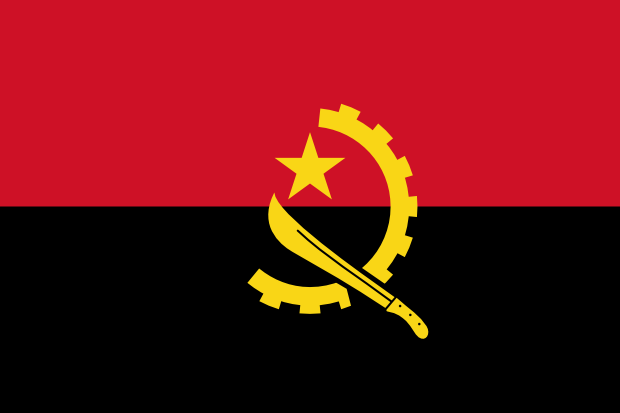
Flag is available in resolutions
| Icon 88x59 |  |
| Icon 32x21 |  |
Angola
Angola: A Land of Contrasts and Resilience
Angola, a nation located on the western coast of Southern Africa, is a country of remarkable contrasts and a rich, complex history. Its vast territory, bordering the Democratic Republic of Congo, Zambia, Namibia, and the Atlantic Ocean, encompasses diverse landscapes, from the arid deserts of the south to the lush rainforests of the north, and a coastline stretching for over 1,600 kilometers. This geographical diversity has shaped its history, economy, and the lives of its people, who are a vibrant tapestry of ethnic groups, languages, and traditions. The countrys journey has been marked by periods of colonial rule, a protracted and devastating civil war, and a subsequent, albeit challenging, path towards reconstruction and development. Understanding Angola requires delving into its multifaceted identity, appreciating its natural beauty, and acknowledging the resilience of its population.
The population of Angola is estimated to be around 30 million people, making it one of the most populous countries in sub-Saharan Africa. The demographic landscape is characterized by a young population, with a significant proportion under the age of 25. This youthful demographic presents both opportunities and challenges for the nations future. The ethnic composition is diverse, with the Ovimbundu being the largest group, primarily residing in the central highlands. Other significant ethnic groups include the Bakongo in the north, the Mbunda in the east, and the Ovambo in the south. These groups have distinct cultural practices, languages, and historical narratives, contributing to the rich mosaic of Angolan society. Portuguese is the official language, a legacy of colonial rule, but numerous indigenous languages, such as Umbundu, Kikongo, and Chokwe, are widely spoken and play a crucial role in preserving cultural heritage. The majority of Angolans are Christian, with a significant presence of both Catholicism and Protestantism, alongside traditional African beliefs and a small Muslim minority. Urbanization has been a significant trend in recent decades, with major cities like Luanda, the capital, experiencing rapid growth. Luanda is a bustling metropolis, a hub of economic activity and cultural expression, but also a place where the disparities between wealth and poverty are starkly visible. The civil war, which lasted for nearly three decades, had a profound impact on the population, leading to widespread displacement, loss of life, and a disruption of social structures. However, the Angolan people have demonstrated remarkable resilience in rebuilding their lives and their nation.
Angolas history is deeply intertwined with its colonial past, primarily under Portuguese rule. The Portuguese first arrived in the 15th century, establishing trading posts and engaging in the transatlantic slave trade, which had devastating consequences for the region. For centuries, Angola was a source of enslaved people, contributing to the depopulation and social disruption of many communities. The struggle for independence began in earnest in the early 1960s, with various liberation movements vying for control. The most prominent among these were the Popular Movement for the Liberation of Angola (MPLA), the National Union for the Total Independence of Angola (UNITA), and the National Front for the Liberation of Angola (FNLA). Following the Carnation Revolution in Portugal in 1974, which led to the countrys decolonization, Angola declared independence on November 11, 1975. However, independence was not followed by peace. Instead, it plunged the country into a brutal civil war, fueled by Cold War rivalries and proxy conflicts. The MPLA, supported by Cuba and the Soviet Union, clashed with UNITA, which received support from the United States and South Africa. The war ravaged the country, destroying infrastructure, displacing millions, and leaving a legacy of unexploded ordnance that continues to pose a threat. The conflict finally ended in 2002 with the death of UNITA leader Jonas Savimbi. The post-war period has been dedicated to national reconciliation, reconstruction, and economic recovery, though the scars of the war remain deeply embedded in the national psyche. The country has made significant strides in rebuilding its infrastructure and institutions, but the challenges of poverty, inequality, and corruption persist.
Geographically, Angola is a land of striking contrasts. The country can be broadly divided into several distinct regions. The coastal plain, characterized by its arid and semi-arid climate, stretches along the Atlantic Ocean. This region is home to major cities like Luanda and Lobito, and its economy is heavily influenced by fishing and port activities. Inland, the Angolan plateau rises dramatically, forming a vast central highlands region. This area enjoys a more temperate climate and is characterized by fertile land, making it suitable for agriculture. The eastern part of the country is dominated by savannas and woodlands, while the north features dense tropical rainforests, particularly in the Cabinda exclave, which is rich in oil reserves. The country is crisscrossed by numerous rivers, the most important being the Kwanza, which flows through the central highlands and is a vital source of water and hydroelectric power. The Zambezi River, Africas fourth-longest river, also originates in Angola, flowing eastwards into Zambia. Angolas natural resources are abundant, with oil being the most significant export commodity, accounting for the vast majority of the countrys export earnings. Diamonds are also a major export, with significant deposits found in the northeast. Other mineral resources include iron ore, copper, and phosphates. The countrys biodiversity is considerable, with national parks and reserves protecting a range of wildlife, though many species have been affected by decades of conflict and habitat destruction.
The Angolan economy has undergone a significant transformation since the end of the civil war. For decades, the economy was heavily reliant on oil production, which brought substantial revenue but also led to what is often termed the resource curse, with a lack of diversification and vulnerability to global oil price fluctuations. The oil sector is dominated by foreign companies, with the state-owned Sonangol playing a central role. In recent years, there has been a concerted effort to diversify the economy and reduce its dependence on oil. Agriculture is a sector with immense potential, and the government is investing in its development to boost food security and create employment. Key agricultural products include maize, cassava, beans, bananas, and coffee. The fishing industry, particularly along the extensive coastline, is also a significant contributor to the economy. The manufacturing sector is relatively underdeveloped but is gradually growing, focusing on areas such as food processing, textiles, and construction materials. The Angolan government has been actively seeking foreign investment to stimulate economic growth and create jobs. However, challenges such as corruption, bureaucratic inefficiencies, and a lack of skilled labor continue to hinder progress. The country is also working to improve its infrastructure, including transportation networks and energy supply, which are crucial for economic development.
Despite the challenges, Angola offers a wealth of tourist attractions, showcasing its natural beauty and cultural heritage. The capital city, Luanda, is a vibrant hub with a mix of colonial architecture and modern development. The National Museum of Anthropology offers insights into the countrys diverse cultures, while the Mausoleum of Agostinho Neto, the first president, is a prominent landmark. The coastline provides opportunities for beach tourism, with popular spots like Ilha de Luanda offering stunning ocean views and seafood restaurants. Further south, the Benguela province boasts the beautiful beaches of Praia da Baía Azul and the historic city of Lobito, with its picturesque bay. For nature enthusiasts, the Kissama National Park, located south of Luanda, is a must-visit. It is one of the few places in Angola where wildlife, including elephants, lions, and antelopes, has been reintroduced and is thriving. The remote and rugged landscape of the Serra da Leba offers breathtaking mountain scenery and challenging hiking opportunities. The Kalandula Falls, one of the largest waterfalls in Africa, is another spectacular natural wonder. The eastern regions of Angola, with their traditional villages and unique cultural practices, offer a glimpse into the authentic rural life of the country. The Chokwe people, known for their intricate wood carvings and mask making, are a significant cultural draw. While tourism infrastructure is still developing, the potential for Angola to become a significant tourist destination is undeniable, particularly for those seeking off-the-beaten-path experiences and a deeper connection with nature and culture. The journey of Angola is far from over, but its resilience, resourcefulness, and the spirit of its people offer a compelling narrative of hope and a promising future.
Information about Angola
The information comes from the publication CIA The World Factbook.
Automated text translation, excuse errors, please!
Country Angola is situated in a location / continent Africa. Angola has an area of 1 246 700 km2 and 18 056 072 residents. The highest point has a height 2 620 above sea level. and it is called Morro de Moco. The lowest point is located at the level of 0 above sea level and it is named Atlantic Ocean. System of government is republic and the date of independence 11th November 1975. The capital city is Luanda. Angola has the international abbreviation AO.
Angola - economy
Total gross domestic product (GDP) is 117 200 000 000 $. Total gross domestic product per capita in purchasing power parity is 6 000 $. GDP grows by 3.40 % a year. Inflation (consumer price index) is equal to 13.50 % a year. Angola have 8 240 000 working-age population (from a total population 18 056 072 people). Angola issued 4.60 % GDP to healt care and 3,60 % GDP to army. The public debt of the country is 17.40 % GDP. The total amount of foreign debt is 18 160 000 000 USD.
Angola - demography
As suggested above, Angola has 18 056 072 people. Population growth is in the amount 2.78 % per year. Number of children born per 1000 population per year is 39.36.Every mother has average 5.54 children. The infant mortality rate is 83.53 and maternal mortality 450.00 deaths per 100,000 births. Average estimated life expectancy makes 54.59 years. Mortality is 12.06 people per 1000 population per year.
Angola - transport and telecommunications
Angola has 51 429 km of roads, 2 764 km of railway lines and 176 airports. The total length of waterways (navigable rivers, canals, etc.) is 1 300 km. There is registered 7 ships.
Number of active mobile phones (sim card) in the country Angola is 9 491 000. Number of active fixed telephone lines is 303 200. Angola has 606 700 internet users, who have the available 20 269 Internet connections. Angola has been assigned a domain first Choose range .ao.
Angola - energetics
Angola consumes a year 3 659 000 000 kWh of electricity. Annual electricity production is 4 080 000 000 kWh in power plants with a total installed electrical capacity 1 155 000 kW. Angola exports 0 kWh and imports 0 kWh of electricity per year Energy mix of power generation is as follows: fossil fuels: 56.9 %, nuclear energy: 0 %, renewable: 0.0 %, hydropower: 43.1 %. The country Angola is harvested annually 1 840 000 barrels of oil.
Keywords: Flags of countries, list of countries, flag, national flags, Angola, economy, transport, telecommunications, demography, information, all flags, energetics, flags of countries in the world, Flag of Angola, list of flags, world countries, flag states, politic.