Togo
Flag of Togo
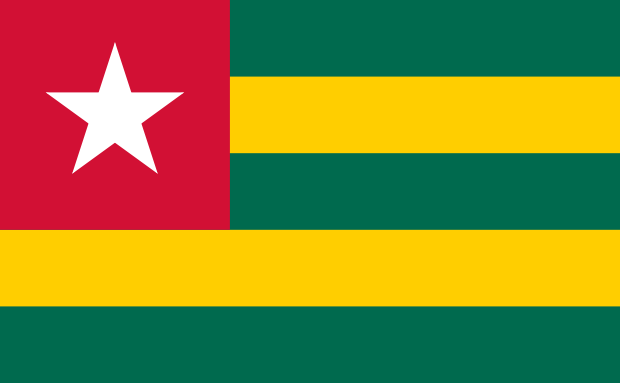
Flag is available in resolutions
| Icon 88x54 |  |
| Icon 32x20 |  |
Togo
Togo: A West African Gem of Diversity and Resilience
Nestled on the West African coast, Togo is a nation that often flies under the radar of mainstream tourism, yet it possesses a rich tapestry of history, culture, and natural beauty waiting to be discovered. This slender country, bordered by Ghana to the west, Benin to the east, Burkina Faso to the north, and the Atlantic Ocean to the south, is a microcosm of the diverse landscapes and vibrant societies that characterize this fascinating region of the world. From its sun-drenched beaches and rolling savannas to its dense forests and the majestic Togo Mountains, the country offers a compelling blend of experiences for the intrepid traveler. Understanding Togo requires delving into its complex past, appreciating its diverse population, and recognizing its evolving economic landscape.
The history of Togo is a narrative shaped by trade, colonialism, and a persistent struggle for self-determination. For centuries, the region was a significant hub in the transatlantic slave trade, a dark chapter that left an indelible mark on the continent. Later, in the late 19th century, Togo was colonized by Germany, becoming German Togoland. This period saw the imposition of colonial administration and infrastructure, with a focus on agricultural production and resource extraction. Following World War I, German Togoland was divided into British Togoland and French Togoland, administered under League of Nations mandates. This division created a lasting impact on the country’s administrative and cultural development, with French becoming the official language in the larger, eastern portion, which eventually gained independence as the Republic of Togo in 1960. The post-independence era has been marked by periods of political instability, military coups, and a gradual transition towards democratic governance. Despite these challenges, the Togolese people have demonstrated remarkable resilience, preserving their cultural heritage and striving for economic progress. The legacy of these historical periods is still visible in the country’s architecture, its administrative structures, and the diverse influences that shape its contemporary identity.
Togo’s geography is as varied as its history, contributing to its unique character. The country can be broadly divided into several distinct geographical zones. Along the Atlantic coast lies a narrow strip of sandy beaches, fringed by palm trees and dotted with fishing villages. This coastal region is also home to the capital city, Lomé, a bustling port and economic center. Moving inland, the landscape transitions into a fertile plain, characterized by savannas and agricultural land, where crops like yams, cassava, and maize are cultivated. Further north, the land rises into the rugged Togo Mountains, a chain of hills and plateaus that form a natural border with Ghana and offer stunning vistas. These mountains are home to dense forests, cascading waterfalls, and a cooler climate, providing a welcome contrast to the heat of the lowlands. The northernmost part of Togo is dominated by the Sahelian savanna, a drier region with sparse vegetation, reflecting the country’s gradual transition towards the Sahara Desert. This geographical diversity supports a rich array of flora and fauna, though many species face threats from habitat loss and human activity. The Volta River and its tributaries play a crucial role in the country’s water resources, supporting agriculture and providing transportation routes in some areas.
The population of Togo is a vibrant mosaic of ethnic groups, each with its own distinct language, customs, and traditions. The largest ethnic group is the Ewe, who are concentrated in the southern and central regions and are known for their sophisticated art forms and intricate social structures. Other significant groups include the Kabré in the north, the Mina along the coast, and the Kotokoli, who are influential in trade and commerce. This ethnic diversity is reflected in the country’s linguistic landscape, with French serving as the official language, but numerous indigenous languages, such as Ewe, Kabré, and Fon, spoken by communities across the nation. This linguistic richness is a testament to Togo’s long history of migration and interaction between different peoples. The majority of Togolese people practice a blend of traditional animist beliefs and Islam or Christianity, with religious tolerance being a notable characteristic of the society. Family ties are strong, and community plays a central role in social life. Traditional ceremonies and festivals, often tied to agricultural cycles or historical events, remain important cultural expressions. The people of Togo are generally known for their warmth, hospitality, and a strong sense of community, making interactions with locals a rewarding aspect of any visit.
Togo’s economy is primarily driven by agriculture, which employs a significant portion of the population and contributes substantially to its GDP. Key export crops include cocoa, coffee, cotton, and phosphates, the latter being a vital natural resource. The agricultural sector, however, remains vulnerable to climatic fluctuations and fluctuating global commodity prices. Beyond agriculture, the industrial sector is relatively underdeveloped but is gradually growing, with a focus on processing agricultural products, textiles, and light manufacturing. The port of Lomé is a crucial economic hub, facilitating international trade and serving as a gateway for goods entering and leaving the landlocked northern regions of neighboring countries. The informal sector also plays a significant role in the Togolese economy, with a large number of people engaged in small-scale trading and other informal activities. Efforts are underway to diversify the economy, attract foreign investment, and improve the business environment, with a particular focus on developing sectors like tourism, telecommunications, and renewable energy. Despite the challenges, Togo is working towards sustainable economic development and poverty reduction, with international aid and development partners playing a role in supporting these initiatives.
Despite its relatively small size, Togo offers a surprising array of tourist attractions that cater to various interests. The capital city, Lomé, is a vibrant hub with a colorful central market, the Grand Marché, where one can find everything from textiles and spices to traditional crafts. The Lomé Cathedral, a striking example of colonial architecture, and the Presidential Palace are also notable landmarks. For those seeking a connection with nature, the Togo Mountains provide opportunities for hiking and exploring picturesque villages nestled in the hills. The region is also home to the Tamberma Valley, a UNESCO World Heritage site, famous for its unique fortified mud-brick houses, known as tatas, which are a testament to the ingenuity of the local Tamberma people. The countrys coastline offers pristine beaches, ideal for relaxation and water sports, with towns like Aného offering a glimpse into traditional fishing life. Further inland, the Fazao-Malfakassa National Park offers a chance to encounter wildlife, including elephants, antelopes, and a variety of bird species. The Kpalimé region, known for its lush vegetation and waterfalls, is a haven for nature lovers and artists, with numerous craft workshops and art galleries showcasing local talent. The rich cultural heritage of Togo is also evident in its traditional dance performances, music, and vibrant festivals, offering visitors an immersive experience into the countrys soul.
In conclusion, Togo is a country that defies simple categorization. It is a land of contrasts, where ancient traditions meet modern aspirations, and where natural beauty is interwoven with a rich and often challenging history. From the bustling markets of Lomé to the serene landscapes of the Togo Mountains, and from the diverse ethnic groups to the resilient spirit of its people, Togo offers a unique and rewarding travel experience. It is a destination that invites exploration, understanding, and a deeper appreciation for the complexities and enduring charm of West Africa.
Information about Togo
The information comes from the publication CIA The World Factbook.
Automated text translation, excuse errors, please!
Country Togo is situated in a location / continent Africa. Togo has an area of 56 785 km2 and 6 961 049 residents. The highest point has a height 986 above sea level. and it is called Mont Agou. The lowest point is located at the level of 0 above sea level and it is named Atlantic Ocean. System of government is republic and the date of independence 27th April 1960. The capital city is Lome. Togo has the international abbreviation TO.
Togo - economy
Total gross domestic product (GDP) is 6 497 000 000 $. Total gross domestic product per capita in purchasing power parity is 900 $. GDP grows by 4.10 % a year. Inflation (consumer price index) is equal to 3.60 % a year. Togo have 2 595 000 working-age population (from a total population 6 961 049 people). Togo issued 5.90 % GDP to healt care and 1,60 % GDP to army.
Togo - demography
As suggested above, Togo has 6 961 049 people. Population growth is in the amount 2.75 % per year. Number of children born per 1000 population per year is 35.26.Every mother has average 4.64 children. The infant mortality rate is 49.87 and maternal mortality 300.00 deaths per 100,000 births. Average estimated life expectancy makes 63.17 years. Mortality is 7.78 people per 1000 population per year.
Togo - transport and telecommunications
Togo has 7 520 km of roads, 568 km of railway lines and 8 airports. The total length of waterways (navigable rivers, canals, etc.) is 50 km. There is registered 61 ships.
Number of active mobile phones (sim card) in the country Togo is 3 105 000. Number of active fixed telephone lines is 240 000. Togo has 356 300 internet users, who have the available 1 165 Internet connections. Togo has been assigned a domain first Choose range .tg.
Togo - energetics
Togo consumes a year 651 000 000 kWh of electricity. Annual electricity production is 123 000 000 kWh in power plants with a total installed electrical capacity 85 000 kW. Togo exports 0 kWh and imports 683 000 000 kWh of electricity per year Energy mix of power generation is as follows: fossil fuels: 21.2 %, nuclear energy: 0 %, renewable: 0.0 %, hydropower: 78.8 %.
Keywords: flags of countries in the world, demography, information, national flags, world countries, list of countries, energetics, Togo, economy, telecommunications, list of flags, transport, Flags of countries, flag states, flag, all flags, Flag of Togo, politic.