Burundi
Flag of Burundi
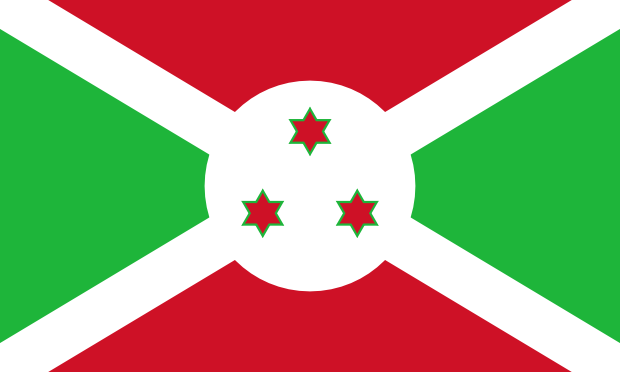
Flag is available in resolutions
| Icon 88x53 |  |
| Icon 32x19 |  |
Burundi
Burundi: A Land of Lakes, Hills, and Enduring Spirit
Nestled in the heart of East Africa, bordering Rwanda, Tanzania, and the Democratic Republic of Congo, Burundi is a land of striking contrasts and deep historical resonance. Often overlooked in global discourse, this small, landlocked nation is a tapestry woven from vibrant cultures, a complex past, and breathtaking natural beauty. Its identity is intrinsically linked to its dramatic topography, characterized by rolling hills, fertile valleys, and the magnificent shores of Lake Tanganyika, one of the world’s deepest and longest freshwater lakes. The country’s story is one of ancient kingdoms, colonial rule, and a persistent struggle for stability and development, all while its people, predominantly of Hutu, Tutsi, and Twa ethnicities, have maintained a rich cultural heritage.
The demographic landscape of Burundi is a fascinating reflection of its history and social dynamics. The population, numbering around 13 million people, is predominantly rural, with agriculture forming the backbone of the economy and daily life for the vast majority. The ethnic composition is historically divided between the Hutu majority and the Tutsi minority, with the smaller Twa group also present. For much of Burundi’s post-independence era, these ethnic divisions, exacerbated by colonial policies and subsequent political struggles, have been a source of significant conflict and instability. However, it is crucial to understand that these ethnic categories are not monolithic, and over centuries, intermarriage and shared cultural practices have blurred the lines, creating a complex social fabric. The younger generation, in particular, is increasingly looking beyond these historical divisions, seeking unity and a shared national identity. The official languages are Kirundi, a Bantu language spoken by virtually all Burundians, and French, a legacy of the colonial period. Swahili is also spoken in some trading centers and along the lake. The dominant religions are Christianity, with a strong Catholic presence, and traditional animist beliefs, often blended with Christian practices. This rich cultural blend is evident in the country’s music, dance, and storytelling traditions, which are vibrant and deeply ingrained in everyday life.
Burundi’s history is a long and intricate narrative that stretches back centuries. Archaeological evidence suggests human settlement in the region dating back to the 15th century BC. The pre-colonial era was marked by the formation of the Kingdom of Burundi, a centralized monarchy that flourished for several centuries. The kingdom was characterized by a complex social hierarchy and a sophisticated system of governance. The Tutsi monarchy, with its warrior class, played a significant role in consolidating power and expanding influence. However, the arrival of European colonial powers in the late 19th century dramatically altered the course of Burundi’s history. Under German and later Belgian administration, the kingdom was dismantled, and the country was incorporated into the larger territory of Ruanda-Urundi. The colonial powers often exacerbated existing ethnic tensions, favoring the Tutsi minority and reinforcing a rigid social order that would have long-lasting consequences. Following World War II, the United Nations entrusted Ruanda-Urundi to Belgium as a trust territory. Burundi gained its independence on July 1, 1962, initially as a constitutional monarchy. However, the post-independence period was plagued by political instability, coups, and periods of intense ethnic violence, particularly in 1972 and the mid-1990s. The civil war that erupted in 1993, following the assassination of the first democratically elected Hutu president, Melchior Ndadaye, had devastating consequences, leading to widespread displacement, loss of life, and a severe blow to the nation’s development. Despite these challenges, Burundi has made significant strides in recent years towards peace and reconciliation, though the path remains ongoing and requires continued international support and internal commitment.
Geographically, Burundi is a land of remarkable diversity and stunning natural beauty. It is often referred to as the “Land of a Thousand Hills” due to its undulating topography, which forms part of the Great Rift Valley. The landscape is dominated by a central plateau that gradually slopes down towards the Congo Basin in the west and the Kagera River valley in the east. The highest point in the country is Mount Heha, reaching an elevation of 2,684 meters (8,806 feet). The western part of the country is dominated by the majestic Lake Tanganyika, which forms a significant portion of Burundi’s western border. This vast freshwater lake is a vital resource, providing water, food, and transportation for many communities. The lake’s shores are dotted with fishing villages and offer opportunities for exploration and recreation. Beyond the plateau and the lake, Burundi also boasts lush rainforests, savannas, and fertile agricultural lands. The climate is tropical, with a distinct rainy season and a dry season. The highlands experience cooler temperatures, while the lower-lying areas are warmer. The country’s natural resources are primarily agricultural, with coffee and tea being the main export crops. However, there are also deposits of minerals such as nickel, tin, and gold, though their extraction remains largely underdeveloped.
The Burundian economy is heavily reliant on agriculture, which employs over 80% of the population and accounts for a significant portion of the country’s export earnings. Coffee and tea are the primary cash crops, with coffee production playing a particularly crucial role in the livelihoods of many smallholder farmers. However, the agricultural sector is vulnerable to climate change, price fluctuations in global markets, and a lack of modern farming techniques and infrastructure. Beyond agriculture, the industrial sector in Burundi is relatively underdeveloped. Small-scale manufacturing, primarily focused on processing agricultural products, textiles, and consumer goods, exists but contributes a modest share to the GDP. The service sector is growing, particularly in urban areas, with tourism and telecommunications showing potential for expansion. However, the country faces significant challenges in attracting foreign investment due to political instability, corruption, and a lack of skilled labor. The government has been making efforts to diversify the economy, promote small and medium-sized enterprises, and improve the business environment. The informal sector plays a crucial role in the Burundian economy, providing livelihoods for a substantial portion of the population engaged in petty trade, artisanal crafts, and small-scale services. Infrastructure development, including roads, energy, and communication networks, remains a priority for the government to unlock the country’s economic potential and improve the quality of life for its citizens.
Despite its challenges, Burundi offers a wealth of tourist attractions, appealing to those seeking authentic cultural experiences and breathtaking natural landscapes. The star attraction is undoubtedly Lake Tanganyika. Its pristine beaches, crystal-clear waters, and abundant marine life make it ideal for swimming, snorkeling, and fishing. Boat trips along the lake offer stunning views of the surrounding hills and opportunities to visit charming lakeside villages. For nature enthusiasts, Kibira National Park is a must-visit. This vast rainforest is home to a diverse array of wildlife, including chimpanzees, baboons, and numerous bird species. Hiking trails wind through the dense vegetation, offering a chance to immerse oneself in the natural splendor of the region. Another significant natural reserve is Ruvubu National Park, known for its savanna landscapes and a variety of game animals such as buffalo, antelopes, and hippos. The park also provides opportunities for birdwatching. Rusizi National Park, situated near the city of Bujumbura, offers a chance to see hippos and various bird species along the Rusizi River. For those interested in history and culture, the Royal Drummers of Burundi are a world-renowned cultural phenomenon. Their powerful and mesmerizing performances, characterized by intricate drumming patterns and energetic dances, are a unique and unforgettable experience. The city of Bujumbura, the former capital, offers a glimpse into Burundian urban life with its bustling markets, colonial-era architecture, and the impressive Independence Monument. Visiting the local markets, such as the Central Market, provides an opportunity to interact with locals, sample regional produce, and purchase traditional crafts. The Living Museum of Gitwe offers an insight into traditional Burundian life, showcasing agricultural practices, housing, and cultural traditions. While tourism infrastructure is still developing, Burundi’s raw beauty and the warmth of its people offer a deeply rewarding travel experience for the adventurous traveler.
In conclusion, Burundi is a country with a rich, complex, and often poignant history, a diverse and resilient population, and a landscape of unparalleled natural beauty. Its journey from ancient kingdoms through colonial rule to independence has been marked by significant challenges, particularly in the realm of ethnic relations and political stability. However, the enduring spirit of the Burundian people, their vibrant cultural heritage, and the nation’s stunning natural resources offer immense potential for a brighter future. As the country continues to navigate its path towards lasting peace and sustainable development, it deserves global attention and support, not just for its inherent beauty, but for the strength and resilience of its people who are striving to build a united and prosperous nation. The “Land of a Thousand Hills” is a testament to the enduring human spirit and the potential for renewal, even in the face of adversity.
Information about Burundi
The information comes from the publication CIA The World Factbook.
Automated text translation, excuse errors, please!
Country Burundi is situated in a location / continent Africa. Burundi has an area of 27 830 km2 and 10 557 259 residents. The highest point has a height 2 670 above sea level. and it is called Heha. The lowest point is located at the level of 772 above sea level and it is named Lake Tanganyika. System of government is republic and the date of independence July 1, 1962. The capital city is Bujumbura. Burundi has the international abbreviation BY.
Burundi - economy
Total gross domestic product (GDP) is 5 250 000 000 $. Total gross domestic product per capita in purchasing power parity is 600 $. GDP grows by 4.20 % a year. Inflation (consumer price index) is equal to 9.70 % a year. Burundi have 4 245 000 working-age population (from a total population 10 557 259 people). Burundi issued 13.10 % GDP to healt care and 5,90 % GDP to army. The public debt of the country is 78.40 % GDP. The total amount of foreign debt is 573 400 000 USD.
Burundi - demography
As suggested above, Burundi has 10 557 259 people. Population growth is in the amount 3.10 % per year. Number of children born per 1000 population per year is 40.58.Every mother has average 6.08 children. The infant mortality rate is 60.32 and maternal mortality 800.00 deaths per 100,000 births. Average estimated life expectancy makes 59.24 years. Mortality is 9.36 people per 1000 population per year.
Burundi - transport and telecommunications
Burundi has 12 322 km of roads and 7 airports.
Number of active mobile phones (sim card) in the country Burundi is 1 980 000. Number of active fixed telephone lines is 32 600. Burundi has 157 800 internet users, who have the available 236 Internet connections. Burundi has been assigned a domain first Choose range .bi.
Burundi - energetics
Burundi consumes a year 198 100 000 kWh of electricity. Annual electricity production is 127 000 000 kWh in power plants with a total installed electrical capacity 52 000 kW. Burundi exports 0 kWh and imports 80 000 000 kWh of electricity per year Energy mix of power generation is as follows: fossil fuels: 1.9 %, nuclear energy: 0 %, renewable: 0.0 %, hydropower: 98.1 %.
Keywords: flags of countries in the world, Burundi, world countries, energetics, Flags of countries, list of countries, flag states, list of flags, all flags, flag, national flags, economy, telecommunications, information, transport, demography, Flag of Burundi, politic.