Ghana
Flag of Ghana
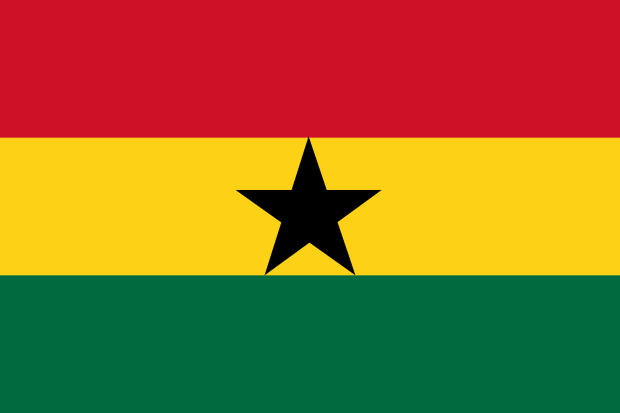
Flag is available in resolutions
| Icon 88x59 |  |
| Icon 32x21 |  |
Ghana
Heres an article about Ghana, approximately 5000 characters long, written in English, using Czech quotation marks „“, apostrophes ’, and bold text with `` tags, without ` ` or `` tags.
Ghana: A Jewel of West Africa
Ghana, a vibrant nation nestled on the coast of West Africa, is a land of captivating contrasts and rich cultural heritage. Its name, derived from an ancient empire, echoes a history steeped in trade, resilience, and a profound connection to the land. From the bustling metropolises to the serene rainforests and the historic slave castles, Ghana offers a compelling tapestry of experiences for those who venture to its shores. This nation, known for its warm hospitality and democratic stability, stands as a testament to the enduring spirit of its people and its significant contributions to the African continent.
The population of Ghana is a dynamic mosaic of ethnic groups, each contributing its unique traditions, languages, and customs to the national identity. The Akan people, comprising groups like the Ashanti, Fante, and Akuapem, form the largest ethnic group, their influence palpable in much of Ghanas cultural landscape, particularly in the Ashanti Region with its opulent palaces and intricate Kente cloth weaving. Other significant ethnic groups include the Ewe, Ga-Dangme, Mole-Dagbani, and Guan, each with their own distinct languages and social structures, fostering a rich linguistic and cultural diversity across the country. The official language is English, a legacy of British colonial rule, but it serves as a lingua franca, bridging the gaps between the numerous indigenous languages spoken by the populace. This linguistic diversity is a source of pride and a reflection of Ghana’s complex historical interactions and migrations. The religious landscape is equally varied, with Christianity being the dominant faith, followed by Islam and a significant presence of traditional African religions, often practiced in conjunction with the major faiths. This religious plurality contributes to a tolerant and harmonious society, where different beliefs coexist peacefully. The demographics showcase a young and growing population, with a substantial portion of Ghanaians under the age of 25, a factor that fuels the nation’s dynamism and future potential. Urbanization is a growing trend, with cities like Accra, the capital, and Kumasi experiencing rapid expansion, transforming the socio-economic fabric of the nation.
Ghana’s history is a saga of ancient kingdoms, colonial encounters, and the struggle for independence. The region was once home to powerful empires, most notably the Ashanti Empire, which rose to prominence in the 17th century, controlling vast territories and a thriving gold trade. The abundance of gold in this region is what led European traders to establish trading posts along the coast, initially for gold and later, tragically, for enslaved people. The arrival of Europeans, particularly the British, Portuguese, Dutch, and Danish, marked a pivotal and often brutal chapter in Ghana’s history. The coastline became dotted with formidable castles and forts, serving as centres for the transatlantic slave trade. These historic sites, such as Elmina Castle and Cape Coast Castle, stand today as poignant reminders of this dark period, drawing visitors who seek to understand the profound impact of this trade on both Africa and the Americas. The Gold Coast, as it was known under British rule, eventually gained its independence on March 6, 1957, becoming the first sub-Saharan African nation to do so. This momentous occasion, led by the visionary Kwame Nkrumah, ushered in a new era of self-determination and inspired other African nations to pursue their own liberation. Post-independence, Ghana has navigated periods of political instability and economic challenges, but it has largely maintained a reputation for democratic governance and peaceful transitions of power, a remarkable achievement in a region often marked by turmoil.
Geographically, Ghana is a land of diverse landscapes, offering a rich environmental tapestry. Situated on the Gulf of Guinea, its southern coastline is characterized by sandy beaches, lagoons, and mangrove swamps, providing a picturesque and ecologically significant fringe. Moving inland, the terrain transitions into a vast expanse of tropical rainforests and savannas, particularly in the western and northern regions respectively. The country is bisected by the Volta River, which forms the largest artificial lake in the world by surface area, Lake Volta. This colossal reservoir, created by the Akosombo Dam, plays a crucial role in Ghana’s economy, providing hydroelectric power and supporting inland fishing and transportation. The climate is tropical, with distinct wet and dry seasons. The southern coastal areas experience rainfall throughout the year, while the north has a more pronounced dry season. The vegetation varies accordingly, from the dense evergreen forests of the southwest, home to diverse wildlife, to the drier Guinea savanna grasslands of the north. The country’s natural resources are substantial, with significant deposits of gold, bauxite, manganese, and timber contributing to its economic output. The fertile lands also support a thriving agricultural sector, a cornerstone of the Ghanaian economy.
The Ghanaian economy is a dynamic blend of traditional and modern sectors, with agriculture remaining a significant contributor, employing a large portion of the population. Cocoa is Ghana’s most important agricultural export, and the country is one of the world’s leading producers, with vast plantations dotting the landscape. Other key agricultural products include shea nuts, kola nuts, yams, cassava, and plantains. Beyond agriculture, the mining sector is also crucial, with gold extraction being a major source of foreign exchange. The country is also rich in bauxite, manganese, and diamonds. In recent years, the oil and gas sector has emerged as a significant contributor to the economy, with offshore discoveries boosting production and investment. The manufacturing sector is growing, focusing on processing agricultural products, textiles, and light consumer goods. The service sector, including telecommunications, banking, and tourism, is also expanding rapidly, particularly in urban centres. Ghana has made significant strides in improving its infrastructure, with ongoing investments in roads, ports, and power generation. The government has implemented various policies aimed at attracting foreign investment and fostering economic growth, leading to a relatively stable and growing economy.
Ghana is blessed with a wealth of tourist attractions that cater to a wide range of interests. The historical legacy of the slave castles, particularly Cape Coast Castle and Elmina Castle, are poignant and essential sites for understanding the human cost of the transatlantic slave trade. These UNESCO World Heritage sites offer a profound and moving experience, with their dungeons, slave holding areas, and evocative narratives. For those seeking natural beauty, Kakum National Park offers an unforgettable adventure with its canopy walkway, suspended high above the rainforest floor, providing breathtaking views of the diverse flora and fauna. The park is a sanctuary for various species of monkeys, birds, and other wildlife. The northern regions of Ghana boast unique cultural experiences, with traditional villages, vibrant festivals, and the fascinating architecture of the Ashanti people. The capital city, Accra, is a bustling metropolis where ancient traditions meet modern life. Visitors can explore Makola Market, a vibrant hub of commerce, visit the National Museum to delve into Ghana’s history and culture, and experience the lively nightlife. The beaches along the coast, such as Labadi Beach and Kokrobite Beach, offer a relaxing escape with their golden sands and swaying palm trees, perfect for enjoying the warm Ghanaian sun and sampling fresh seafood. The countrys commitment to preserving its cultural heritage is evident in its numerous festivals, such as the Homowo festival of the Ga people and the Aboakyer festival of the Fante, which showcase traditional music, dance, and elaborate ceremonies. Ghana’s welcoming people, its rich history, and its diverse landscapes make it a truly remarkable destination.
Information about Ghana
The information comes from the publication CIA The World Factbook.
Automated text translation, excuse errors, please!
Country Ghana is situated in a location / continent Africa. Ghana has an area of 238 533 km2 and 24 652 402 residents. The highest point has a height 880 above sea level. and it is called Mount Afadjato. The lowest point is located at the level of 0 above sea level and it is named Atlantic Ocean. System of government is republic and the date of independence 6th March 1957. The capital city is Accra. Ghana has the international abbreviation GH.
Ghana - economy
Total gross domestic product (GDP) is 75 900 000 000 $. Total gross domestic product per capita in purchasing power parity is 3 100 $. GDP grows by 13.60 % a year. Inflation (consumer price index) is equal to 8.70 % a year. Ghana have 11 440 000 working-age population (from a total population 24 652 402 people). Unemployment is at 11.00 %. Ghana issued 10.60 % GDP to healt care and 1,70 % GDP to army. The public debt of the country is 36.20 % GDP. The total amount of foreign debt is 7 511 000 000 USD.
Ghana - demography
As suggested above, Ghana has 24 652 402 people. Population growth is in the amount 1.79 % per year. Number of children born per 1000 population per year is 26.99.Every mother has average 4.15 children. The infant mortality rate is 47.26 and maternal mortality 350.00 deaths per 100,000 births. Average estimated life expectancy makes 61.45 years. Mortality is 8.57 people per 1000 population per year.
Ghana - transport and telecommunications
Ghana has 62 221 km of roads, 947 km of railway lines and 10 airports. The total length of waterways (navigable rivers, canals, etc.) is 1 293 km. There is registered 4 ships.
Number of active mobile phones (sim card) in the country Ghana is 21 166 000. Number of active fixed telephone lines is 284 700. Ghana has 1 297 000 internet users, who have the available 60 282 Internet connections. Ghana has been assigned a domain first Choose range .gh.
Ghana - energetics
Ghana consumes a year 6 122 000 000 kWh of electricity. Annual electricity production is 8 764 000 000 kWh in power plants with a total installed electrical capacity 1 985 000 kW. Ghana exports 752 000 000 kWh and imports 198 000 000 kWh of electricity per year Energy mix of power generation is as follows: fossil fuels: 40.6 %, nuclear energy: 0 %, renewable: 0.0 %, hydropower: 59.4 %. The country Ghana is harvested annually 72 580 barrels of oil.
Keywords: demography, telecommunications, list of flags, economy, flag, flag states, national flags, Ghana, Flags of countries, Flag of Ghana, flags of countries in the world, list of countries, world countries, all flags, transport, information, energetics, politic.