Kenya
Flag of Kenya
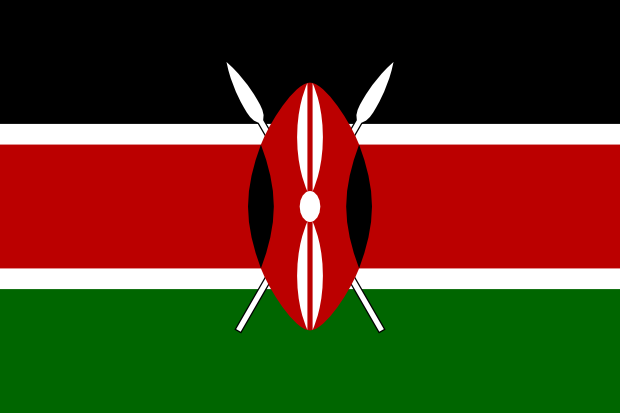
Flag is available in resolutions
| Icon 88x59 |  |
| Icon 32x21 |  |
Kenya
Kenya: A Tapestry of Cultures, Landscapes, and Aspirations
Kenya, a nation nestled in the heart of East Africa, is a land of breathtaking contrasts and vibrant diversity. Its name, derived from the majestic Mount Kenya, Africas second-highest peak, evokes images of sweeping savannas teeming with wildlife, ancient traditions interwoven with modern aspirations, and a people known for their resilience and warmth. This comprehensive exploration will delve into the multifaceted identity of Kenya, examining its rich history, diverse geography, burgeoning economy, and the captivating allure that draws millions to its shores.
The demographic mosaic of Kenya is as colorful and varied as its landscapes. The country is home to over 45 distinct ethnic groups, each with its own unique language, customs, and traditions. Among the most prominent are the Kikuyu, the largest ethnic group, whose historical significance is deeply intertwined with Kenyas struggle for independence; the Luo, renowned for their artistic and musical heritage; the Kalenjin, celebrated for their prowess in long-distance running; and the Maasai, iconic pastoralists whose traditional way of life continues to captivate the world. Swahili, a Bantu language with Arabic influences, serves as the national language, fostering a sense of unity amidst this rich tapestry of tongues. English, a legacy of British colonial rule, remains the official language of government, business, and higher education, facilitating international engagement. The population is predominantly young, with a significant proportion under the age of 25, a demographic dividend that holds immense potential for the nations future, alongside the challenges of providing education and employment opportunities. The urban centers, particularly the bustling capital city of Nairobi, are melting pots of cultures, where traditional practices often coexist with the rapid pace of globalization.
Kenyas history is a compelling narrative of ancient civilizations, colonial encounters, and the triumphant struggle for self-determination. Archaeological evidence suggests that the region has been inhabited for millennia, with early human ancestors leaving their mark in the Great Rift Valley. The arrival of Arab traders along the coast in the first millennium AD introduced Islam and spurred the development of vibrant Swahili city-states, such as Mombasa and Lamu, which became centers of trade and culture. The European colonial era began in earnest in the late 19th century with the arrival of the British, who established Kenya as a protectorate and later a colony. The colonial administration fundamentally reshaped the social, economic, and political landscape, introducing cash crop agriculture, infrastructure development, and a system of governance that often favored European settlers. The mid-20th century witnessed the rise of a powerful nationalist movement, fueled by a desire for self-rule and an end to discriminatory colonial policies. The Mau Mau Uprising, a violent rebellion against British rule in the 1950s, remains a pivotal and often painful chapter in Kenyas history, ultimately paving the way for independence. On December 12, 1963, Kenya achieved self-governance, becoming a republic in 1964. The post-independence era has been marked by periods of political stability and economic growth, interspersed with challenges such as ethnic tensions, corruption, and regional conflicts. Despite these hurdles, Kenya has emerged as a significant player on the African continent, a beacon of democratic aspirations and economic progress.
Geographically, Kenya is a land of extraordinary diversity, a microcosm of Africas varied terrains. The country stretches from the Indian Ocean coastline, characterized by pristine white-sand beaches, coral reefs, and mangrove forests, inland to the vast savannas of the Maasai Mara and Tsavo National Parks, renowned for their abundant wildlife. The Great Rift Valley, a dramatic geological feature, bisects the country, creating a landscape of escarpments, volcanoes, and lakes, including the alkaline Lake Nakuru, famous for its flamingo populations. Further inland, the fertile highlands, particularly around Mount Kenya and the Aberdare Range, are characterized by tea and coffee plantations, cool temperatures, and lush forests, providing a stark contrast to the arid northern regions, which are home to vast stretches of desert and semi-desert. The equator passes through Kenya, resulting in a tropical climate that varies with altitude. The coastal regions experience hot and humid weather, while the highlands enjoy a more temperate climate. The country is also susceptible to the impacts of climate change, including droughts and floods, which pose significant challenges to its agricultural sector and natural resources.
Kenyas economy is one of the most dynamic and diversified in East Africa, undergoing a significant transformation from its colonial roots. Agriculture remains a cornerstone, with tea, coffee, and horticultural products forming major export commodities. The countrys favorable climate and fertile soils are ideal for these cash crops, which contribute significantly to foreign exchange earnings and provide employment for a substantial portion of the population. Tourism is another vital sector, drawing visitors from around the globe to witness the countrys unparalleled wildlife, stunning landscapes, and rich cultural heritage. The iconic national parks and reserves, such as the Maasai Mara, Tsavo, and Amboseli, offer unforgettable safari experiences, contributing millions of dollars to the economy annually. In recent years, Kenya has emerged as a hub for technology and innovation, particularly in the telecommunications sector. Nairobi, often dubbed Silicon Savannah, is a thriving center for startups, mobile money services like M-Pesa, and a growing IT workforce. The service sector, encompassing finance, retail, and transport, is also a significant contributor to the GDP. The government has been actively pursuing policies to diversify the economy further, focusing on manufacturing, renewable energy, and infrastructure development to foster sustainable growth and create more employment opportunities for its youthful population.
Kenyas tourist attractions are legendary, drawing millions of visitors seeking adventure, natural beauty, and cultural immersion. The Maasai Mara National Reserve is arguably the most famous, offering unparalleled opportunities to witness the Great Migration, where millions of wildebeest and zebras traverse the plains in search of greener pastures, often in dramatic encounters with predators. Tsavo National Parks, the largest in Kenya, are known for their vastness, diverse wildlife, including the red elephants of Tsavo East, and the dramatic landscapes of the Yatta Plateau. Amboseli National Park, with its iconic backdrop of Mount Kilimanjaro, provides breathtaking views and abundant elephant herds. Beyond the savannas, the coastal regions beckon with their pristine beaches, vibrant coral reefs for snorkeling and diving, and the historic Swahili architecture of towns like Lamu and Malindi. Mount Kenya, a UNESCO World Heritage Site, offers challenging climbs and stunning alpine scenery. The Great Rift Valley itself is a geological marvel, with its lakes, hot springs, and the opportunity to witness geological processes in action. Cultural tourism is also a growing segment, with opportunities to visit Maasai villages, learn about traditional crafts, and experience the diverse music and dance of Kenyas many ethnic groups. The vibrant markets of Nairobi, filled with colorful fabrics, intricate carvings, and aromatic spices, offer a sensory feast and a chance to interact with local artisans.
In conclusion, Kenya is a nation that embodies the spirit of Africa – a land of immense natural beauty, a rich tapestry of cultures, and a people driven by ambition and resilience. From the majestic wildlife of its savannas to the bustling innovation of its cities, Kenya offers a compelling blend of tradition and modernity. Its history, marked by both struggle and triumph, has shaped a nation that is increasingly assertive on the global stage. As Kenya continues to navigate the complexities of development, its commitment to preserving its natural heritage, fostering economic growth, and celebrating its diverse cultural identity positions it as a truly remarkable and enduring destination.
Information about Kenya
The information comes from the publication CIA The World Factbook.
Automated text translation, excuse errors, please!
Country Kenya is situated in a location / continent Africa. Kenya has an area of 580 367 km2 and 43 013 341 residents. The highest point has a height 5 199 above sea level. and it is called Mount Kenya. The lowest point is located at the level of 0 above sea level and it is named Indian Ocean. System of government is republic and the date of independence 12th December 1963. The capital city is Nairobi. Kenya has the international abbreviation KE.
Kenya - economy
Total gross domestic product (GDP) is 72 340 000 000 $. Total gross domestic product per capita in purchasing power parity is 1 800 $. GDP grows by 5.00 % a year. Inflation (consumer price index) is equal to 14.00 % a year. Kenya have 18 390 000 working-age population (from a total population 43 013 341 people). Unemployment is at 40.00 %. Kenya issued 12.20 % GDP to healt care and 2,80 % GDP to army. The public debt of the country is 49.90 % GDP. The total amount of foreign debt is 8 947 000 000 USD.
Kenya - demography
As suggested above, Kenya has 43 013 341 people. Population growth is in the amount 2.44 % per year. Number of children born per 1000 population per year is 31.93.Every mother has average 3.98 children. The infant mortality rate is 43.61 and maternal mortality 360.00 deaths per 100,000 births. Average estimated life expectancy makes 63.07 years. Mortality is 7.26 people per 1000 population per year.
Kenya - transport and telecommunications
Kenya has 160 886 km of roads, 2 066 km of railway lines and 194 airports. There is registered 5 ships.
Number of active mobile phones (sim card) in the country Kenya is 29 981 000. Number of active fixed telephone lines is 283 500. Kenya has 3 996 000 internet users, who have the available 69 914 Internet connections. Kenya has been assigned a domain first Choose range .ke.
Kenya - energetics
Kenya consumes a year 5 516 000 000 kWh of electricity. Annual electricity production is 6 573 000 000 kWh in power plants with a total installed electrical capacity 1 706 000 kW. Kenya exports 27 000 000 kWh and imports 38 000 000 kWh of electricity per year Energy mix of power generation is as follows: fossil fuels: 43.3 %, nuclear energy: 0 %, renewable: 12.9 %, hydropower: 43.8 %.
Keywords: Flags of countries, energetics, information, telecommunications, list of flags, list of countries, world countries, flags of countries in the world, flag states, national flags, all flags, demography, transport, flag, economy, Flag of Kenya, Kenya, politic.