Nigeria
Flag of Nigeria
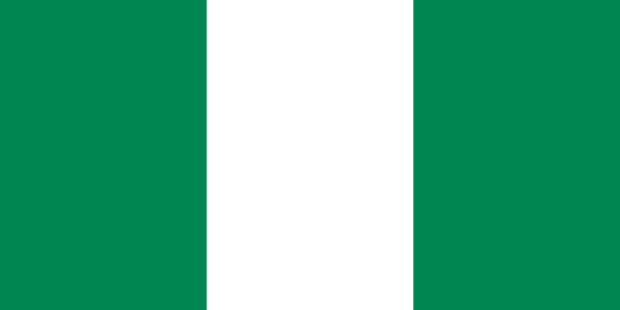
Flag is available in resolutions
| Icon 88x44 |  |
| Icon 32x16 |  |
Nigeria
Nigeria: A Land of Diversity and Dynamism
Nigeria, officially the Federal Republic of Nigeria, is a West African nation renowned for its immense diversity in terms of population, culture, and geography. Situated on the Gulf of Guinea, it is the most populous country in Africa and the seventh most populous country in the world, a demographic reality that significantly shapes its social, economic, and political landscape. With an estimated population exceeding 200 million people, Nigeria is a vibrant tapestry woven from hundreds of ethnic groups, each with its own distinct languages, traditions, and customs. Among the most prominent are the Hausa-Fulani in the north, the Yoruba in the southwest, and the Igbo in the southeast. This rich ethnic mosaic is further complicated by religious diversity, with Islam being the dominant religion in the north and Christianity prevalent in the south, alongside indigenous spiritual beliefs that continue to hold sway in many communities. The interplay of these diverse elements creates a dynamic and often complex social fabric, where inter-ethnic and inter-religious relations are a constant factor in national life. The sheer scale of its population also presents significant challenges, including the need to provide adequate services, infrastructure, and economic opportunities for all citizens. However, it also signifies a vast pool of human capital and a powerful engine for cultural and economic innovation. The country’s linguistic landscape is equally varied, with over 500 languages spoken, though English serves as the official language, facilitating communication across the diverse populace. This linguistic and ethnic plurality is not merely a statistical fact; it is the very essence of Nigeria’s identity, a source of both immense strength and occasional tension.
The history of Nigeria is a long and multifaceted narrative, stretching back millennia to ancient civilizations like the Nok culture, known for its sophisticated terracotta sculptures, and later the Kanem-Bornu Empire, which played a significant role in trans-Saharan trade. The arrival of European traders in the 15th century marked a turning point, leading to the establishment of the transatlantic slave trade, which had a devastating impact on many West African societies. By the late 19th century, the British had consolidated their control over the region, eventually amalgamating the Northern and Southern Protectorates in 1914 to form Nigeria. Colonial rule brought about significant administrative and economic changes, including the introduction of Western education and the development of infrastructure, but it also imposed artificial boundaries and exacerbated existing ethnic and religious divisions. Nigeria gained its independence on October 1, 1960, ushering in a period of hope and optimism. However, the post-independence era has been marked by political instability, including military coups, civil war (the Biafran War from 1967 to 1970), and periods of democratic rule interspersed with authoritarian regimes. Despite these challenges, Nigeria has strived to build a stable and prosperous nation, grappling with issues of corruption, ethnic conflict, and economic development. The legacy of colonialism continues to shape Nigeria’s trajectory, influencing its political structures, economic dependencies, and its place in the global arena. The struggle for self-determination and national unity remains a central theme in its historical consciousness.
Geographically, Nigeria is a land of striking contrasts, offering a diverse range of landscapes and climates. Located in the tropics, its southern regions are characterized by dense rainforests and a humid climate, giving way to savanna grasslands as one moves northwards. The country is traversed by major rivers, most notably the Niger and the Benue, which form a significant confluence and are crucial for transportation and agriculture. The Niger River, Africa’s third-longest river, flows in a crescent shape through Nigeria, emptying into the Atlantic Ocean via the extensive Niger Delta. This delta region is a vast, ecologically sensitive area rich in oil and gas reserves, but also prone to environmental challenges such as pollution and erosion. To the north, the landscape becomes drier, transitioning into the Sahel region, characterized by semi-arid plains and a more challenging climate for agriculture. Nigeria’s coastline along the Gulf of Guinea is dotted with lagoons and mangrove swamps. The country’s topography also includes highlands, such as the Jos Plateau in the north-central part of the country, which offers a cooler climate and is a popular tourist destination. The vastness and diversity of Nigeria’s geography contribute to its rich biodiversity and provide a wide array of natural resources, from fertile agricultural land to significant mineral wealth. This geographical endowment, however, also presents challenges in terms of infrastructure development and regional disparities.
The Nigerian economy is the largest in Africa and is heavily reliant on its vast oil and gas reserves, which account for a significant portion of its export earnings and government revenue. The discovery and exploitation of crude oil in the Niger Delta in the mid-20th century transformed the nation’s economic fortunes, but also led to a phenomenon known as the “Dutch disease,” where the focus on oil has often overshadowed the development of other sectors. Beyond oil, Nigeria has a substantial agricultural sector, which employs a large percentage of the population, producing crops such as yams, cassava, maize, rice, and cocoa. However, agricultural productivity often faces challenges due to issues like land tenure, inadequate infrastructure, and climate change. The manufacturing sector is growing, though it still faces hurdles related to power supply, access to finance, and competition from imported goods. Nigeria is also a hub for the telecommunications industry, with a rapidly expanding mobile network and a burgeoning tech scene, particularly in cities like Lagos and Abuja. The informal sector plays a crucial role in the Nigerian economy, providing livelihoods for a significant portion of the population. Efforts are underway to diversify the economy away from its over-reliance on oil, promoting sectors like agriculture, manufacturing, and services, with a particular focus on harnessing the potential of its youthful and growing population. The country’s economic potential is immense, but realizing it requires sustained investment in infrastructure, education, and good governance.
Nigeria boasts a wealth of tourist attractions, drawing visitors with its vibrant culture, historical sites, and natural beauty. The commercial capital, Lagos, is a bustling metropolis that offers a taste of modern Nigerian life, with its vibrant nightlife, art galleries, and the iconic Lekki Conservation Centre. Further inland, Abuja, the federal capital, presents a more planned and modern cityscape, home to impressive architectural landmarks and the National Mosque. For those seeking cultural immersion, the ancient city of Kano in the north offers a glimpse into traditional Hausa culture, with its historic city walls and the Emir’s Palace. The southwest is rich in Yoruba heritage, with cities like Ibadan and Osogbo showcasing traditional arts and crafts, and the Osun-Osogbo Sacred Grove, a UNESCO World Heritage site, dedicated to the Yoruba goddess of fertility. The Niger Delta region, despite its environmental challenges, is home to unique indigenous cultures and a distinct way of life centered around the rivers and the sea. The Yankari National Park in the northeast is a prime destination for wildlife enthusiasts, offering opportunities to see elephants, baboons, and a variety of bird species in their natural habitat. The historical sites, such as the slave forts along the coast, bear witness to Nigeria’s complex past. While tourism infrastructure is still developing in many areas, Nigeria’s diverse attractions, coupled with the renowned hospitality of its people, make it an increasingly compelling destination for adventurous travelers. The country’s cultural festivals, such as the Argungu Fishing Festival and the Durbar festivals, are spectacular displays of tradition and community spirit.
In conclusion, Nigeria stands as a testament to the power of diversity and the resilience of the human spirit. Its vast population, rich history, varied geography, and dynamic economy present a nation of immense potential and complexity. Navigating the challenges of ethnic and religious diversity, political stability, and economic development, Nigeria continues to forge its path on the global stage. The country’s cultural vibrancy, from its music and film industry (Nollywood) to its diverse artistic expressions, resonates far beyond its borders. As Nigeria strives for progress and unity, it remains a captivating and significant nation, a true giant of Africa, whose story is still very much unfolding. Its journey is one of continuous adaptation, innovation, and the enduring pursuit of a brighter future for its millions of citizens.
Information about Nigeria
The information comes from the publication CIA The World Factbook.
Automated text translation, excuse errors, please!
Country Nigeria is situated in a location / continent Africa. Nigeria has an area of 923 768 km2 and 170 123 740 residents. The highest point has a height 2 419 above sea level. and it is called Chappal Waddi. The lowest point is located at the level of 0 above sea level and it is named Atlantic Ocean. System of government is Federal Republic and the date of independence First October 1960. The capital city is Abuja. Nigeria has the international abbreviation NI.
Nigeria - economy
Total gross domestic product (GDP) is 418 700 000 000 $. Total gross domestic product per capita in purchasing power parity is 2 600 $. GDP grows by 7.20 % a year. Inflation (consumer price index) is equal to 10.80 % a year. Nigeria have 52 160 000 working-age population (from a total population 170 123 740 people). Unemployment is at 21.00 %. Nigeria issued 5.80 % GDP to healt care and 1,30 % GDP to army. The public debt of the country is 17.90 % GDP. The total amount of foreign debt is 10 430 000 000 USD.
Nigeria - demography
As suggested above, Nigeria has 170 123 740 people. Population growth is in the amount 2.55 % per year. Number of children born per 1000 population per year is 39.23.Every mother has average 5.38 children. The infant mortality rate is 74.36 and maternal mortality 630.00 deaths per 100,000 births. Average estimated life expectancy makes 52.05 years. Mortality is 13.48 people per 1000 population per year.
Nigeria - transport and telecommunications
Nigeria has 193 200 km of roads, 3 505 km of railway lines and 53 airports. The total length of waterways (navigable rivers, canals, etc.) is 8 600 km. There is registered 89 ships.
Number of active mobile phones (sim card) in the country Nigeria is 95 167 000. Number of active fixed telephone lines is 719 400. Nigeria has 43 989 000 internet users, who have the available 936 Internet connections. Nigeria has been assigned a domain first Choose range .ng.
Nigeria - energetics
Nigeria consumes a year 17 660 000 000 kWh of electricity. Annual electricity production is 18 820 000 000 kWh in power plants with a total installed electrical capacity 5 898 000 kW. Nigeria exports 0 kWh and imports 0 kWh of electricity per year Energy mix of power generation is as follows: fossil fuels: 67.1 %, nuclear energy: 0 %, renewable: 0.0 %, hydropower: 32.9 %. The country Nigeria is harvested annually 2 525 000 barrels of oil.
Keywords: list of flags, demography, information, world countries, Flag of Nigeria, energetics, all flags, flag states, flags of countries in the world, flag, Flags of countries, telecommunications, Nigeria, national flags, economy, transport, list of countries, politic.