Cameroon
Flag of Cameroon
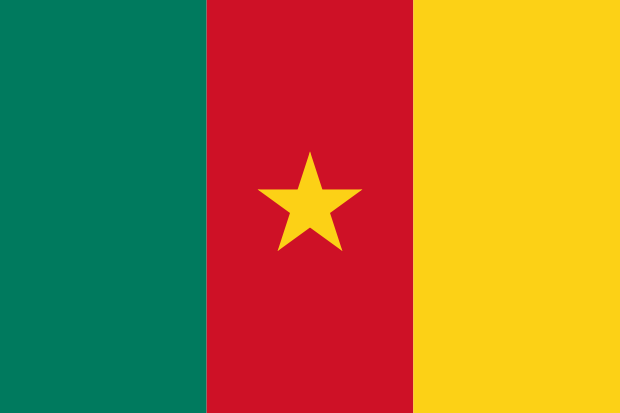
Flag is available in resolutions
| Icon 88x59 |  |
| Icon 32x21 |  |
Cameroon
Cameroon: A Tapestry of Diversity in the Heart of Africa
Cameroon, officially the Republic of Cameroon, is a nation that truly embodies the moniker Africa in Miniature. Nestled in the Gulf of Guinea, it boasts an astonishing array of landscapes, cultures, and ecosystems, from the dense rainforests of the south to the arid Sahelian plains of the north. This remarkable diversity is mirrored in its vibrant population, rich history, and burgeoning economy. With a strategic location bridging West and Central Africa, Cameroon has long been a crossroads of peoples and influences, shaping a unique national identity. Its official languages, French and English, are a direct legacy of its colonial past, a duality that adds another layer to its complex cultural mosaic.
The geography of Cameroon is nothing short of spectacular. The country is broadly divided into five distinct regions, each with its own character. The Littoral region along the Atlantic coast is characterized by its humid, tropical climate, mangrove swamps, and major port cities like Douala. Inland, the Southwest region rises to the volcanic Mount Cameroon, the highest peak in West Africa, and boasts lush rainforests and fertile volcanic soils ideal for agriculture. The South region is dominated by dense equatorial rainforests, home to a rich biodiversity of flora and fauna, and is traversed by mighty rivers like the Sanaga. Moving north, the Central region encompasses the Adamawa Plateau, a vast, elevated savanna that transitions into the drier landscapes of the Sahel. Finally, the Far North region is the most arid, bordering Chad and Nigeria, and features semi-desert plains, savannah, and the striking Mandara Mountains. This varied topography has profoundly influenced the settlement patterns, economic activities, and cultural development of its people.
Cameroon’s history is a long and intricate narrative, marked by waves of migration, external influences, and ultimately, the struggle for independence. Archaeological evidence suggests human habitation in the region dating back millennia. Early inhabitants were primarily hunter-gatherers and later agricultural communities. By the 14th century, powerful kingdoms began to emerge, including the Tikar and Bamileke confederations in the west, and the Fulani emirates in the north. The arrival of Europeans in the 15th century, initially the Portuguese, marked a significant turning point. The region became a hub for the transatlantic slave trade, with various European powers establishing trading posts along the coast. In the late 19th century, Germany colonized the territory, creating Kamerun. Following World War I, German Kamerun was divided between France and Great Britain as League of Nations mandates. French Cameroun gained independence in 1960, and British Southern Cameroons joined it in 1961 to form the Federal Republic of Cameroon. The country was later unified into the United Republic of Cameroon in 1972, and then renamed the Republic of Cameroon in 1984. This history of colonial division and subsequent unification has contributed to the ongoing linguistic and cultural duality that defines modern Cameroon.
The population of Cameroon is as diverse as its landscapes, comprising an estimated 25 million people. It is a nation of immense ethnic and linguistic variety, with over 250 distinct ethnic groups and languages. The major ethnic groups include the Bamiléké, Beti-Pahuin, Fulani, and Duala, each with their own unique traditions, social structures, and customs. This rich tapestry of ethnicities and languages is a source of both national pride and, at times, social and political complexity. While French and English are the official languages, numerous indigenous languages are spoken daily, reflecting the deep-rooted cultural heritage of the various communities. The population is predominantly young, with a significant proportion under the age of 25, presenting both opportunities and challenges for development. Traditional beliefs and practices often coexist with Christianity and Islam, the two dominant religions, creating a syncretic spiritual landscape.
Cameroon’s economy is a mixed one, with significant reliance on agriculture, but also a growing industrial sector and potential in natural resources. Agriculture remains the backbone of the economy, employing a large percentage of the population. Key export crops include cocoa, coffee, cotton, rubber, and bananas, which are crucial for foreign exchange earnings. The country also has substantial timber resources, and the forestry sector plays a significant role. In terms of natural resources, Cameroon is blessed with oil and gas reserves, which have been a major contributor to its GDP, although fluctuating global prices can impact economic stability. The industrial sector is developing, with a focus on food processing, textiles, and light manufacturing. Efforts are underway to diversify the economy and reduce its dependence on primary commodities, with a focus on developing the mining sector and promoting tourism. Despite its resource wealth, Cameroon faces challenges such as poverty, unemployment, and infrastructure deficits, which are ongoing priorities for the government.
Cameroon offers a wealth of tourist attractions, catering to a variety of interests. For nature enthusiasts, the Korup National Park in the Southwest region is a must-visit. It is one of Africa’s oldest and most biodiverse rainforests, teeming with primates, birds, and a remarkable array of plant life. The Waza National Park in the Far North is renowned for its wildlife, including elephants, lions, giraffes, and antelopes, offering incredible safari opportunities. The iconic Mount Cameroon, a dormant volcano, provides challenging trekking opportunities and rewards climbers with breathtaking panoramic views. The coastal regions offer beautiful beaches, such as those around Kribi, famous for its picturesque Lobé waterfalls that cascade directly into the ocean. The capital city, Yaoundé, and the economic hub, Douala, offer a glimpse into urban Cameroonian life, with bustling markets, diverse architecture, and vibrant cultural scenes. The historical sites, such as the ancient kingdoms and colonial remnants, also add to the countrys appeal. Cultural tourism is also a significant draw, with opportunities to experience traditional festivals, music, and dance, showcasing the rich heritage of Cameroons diverse ethnic groups.
In conclusion, Cameroon stands as a compelling destination, a microcosm of Africas grandeur and complexity. Its diverse geography, from towering mountains to dense rainforests, provides a stunning natural backdrop. Its history, shaped by migration, trade, and colonial legacies, has forged a resilient and multifaceted society. The vibrant population, a mosaic of ethnic groups and languages, contributes to a rich cultural tapestry. The economy, while facing challenges, is characterized by its agricultural strength and growing industrial potential. And its tourist attractions, from pristine wildlife parks to dramatic volcanic landscapes, offer unforgettable experiences. Cameroon is a land of contrasts and continuities, a nation that continues to evolve and surprise, a true jewel in the heart of the African continent.
Information about Cameroon
The information comes from the publication CIA The World Factbook.
Automated text translation, excuse errors, please!
Country Cameroon is situated in a location / continent Africa. Cameroon has an area of 475 440 km2 and 20 129 878 residents. The highest point has a height 4 095 above sea level. and it is called Fako. The lowest point is located at the level of 0 above sea level and it is named Atlantic Ocean. System of government is republic and the date of independence First January 1960. The capital city is Yaounde. Cameroon has the international abbreviation CM.
Cameroon - economy
Total gross domestic product (GDP) is 47 860 000 000 $. Total gross domestic product per capita in purchasing power parity is 2 300 $. GDP grows by 4.10 % a year. Inflation (consumer price index) is equal to 2.90 % a year. Cameroon have 8 083 000 working-age population (from a total population 20 129 878 people). Unemployment is at 30.00 %. Cameroon issued 5.60 % GDP to healt care and 1,30 % GDP to army. The public debt of the country is 13.90 % GDP. The total amount of foreign debt is 3 147 000 000 USD.
Cameroon - demography
As suggested above, Cameroon has 20 129 878 people. Population growth is in the amount 2.08 % per year. Number of children born per 1000 population per year is 32.49.Every mother has average 4.09 children. The infant mortality rate is 59.70 and maternal mortality 690.00 deaths per 100,000 births. Average estimated life expectancy makes 54.71 years. Mortality is 11.66 people per 1000 population per year.
Cameroon - transport and telecommunications
Cameroon has 51 000 km of roads, 987 km of railway lines and 34 airports.
Number of active mobile phones (sim card) in the country Cameroon is 10 475 000. Number of active fixed telephone lines is 669 000. Cameroon has 749 600 internet users, who have the available 9 553 Internet connections. Cameroon has been assigned a domain first Choose range .cm.
Cameroon - energetics
Cameroon consumes a year 5 049 000 000 kWh of electricity. Annual electricity production is 5 589 000 000 kWh in power plants with a total installed electrical capacity 1 115 000 kW. Cameroon exports 0 kWh and imports 0 kWh of electricity per year Energy mix of power generation is as follows: fossil fuels: 27.8 %, nuclear energy: 0 %, renewable: 0.0 %, hydropower: 72.2 %. The country Cameroon is harvested annually 61 580 barrels of oil.
Keywords: flag states, national flags, energetics, flags of countries in the world, flag, economy, list of flags, Flag of Cameroon, Cameroon, list of countries, Flags of countries, world countries, demography, all flags, transport, information, telecommunications, politic.