Mauritius
Flag of Mauritius
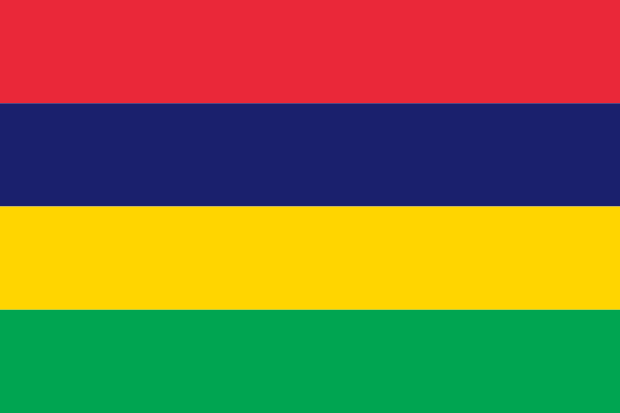
Flag is available in resolutions
| Icon 88x59 |  |
| Icon 32x21 |  |
Mauritius
Mauritius: An Island Paradise of Diverse Charms
Nestled in the vast expanse of the Indian Ocean, approximately 2,000 kilometers east of Madagascar, lies the breathtaking island nation of Mauritius. This volcanic island, part of the Mascarene Islands archipelago, is a jewel of unparalleled beauty, renowned for its pristine beaches, crystal-clear turquoise waters, and lush, verdant interior. Beyond its postcard-perfect scenery, Mauritius boasts a rich tapestry of history, a vibrant multicultural society, and a dynamic economy that has transformed it into a sought-after destination for both tourists and investors. Understanding Mauritius requires delving into its fascinating origins, its diverse population, its strategic geographical position, and the engines that drive its prosperity.
The history of Mauritius is a captivating narrative of exploration, colonization, and the forging of a unique national identity. While uninhabited by humans for most of its existence, the island was likely visited by Arab and Malay sailors in the 10th century, who are believed to have named it Dina Arobi. However, it was the Portuguese who first officially charted the island in the early 16th century, naming it Ilha do Cirne, or Island of the Swan, due to the presence of the now-extinct dodo bird. Despite their discovery, the Portuguese made no permanent settlement. It was the Dutch who established the first colony in 1638, naming the island Mauritius in honor of Prince Maurice of Nassau. Their efforts to cultivate sugarcane and establish trade proved challenging, and they eventually abandoned the island in 1710. The French then took possession in 1715, renaming it Île de France and initiating significant agricultural development, particularly in sugarcane cultivation, which would become the islands economic backbone for centuries. Under French rule, the island became a vital naval base and a flourishing plantation economy, driven by the forced labor of enslaved Africans brought from Madagascar and East Africa. The Napoleonic Wars saw Mauritius fall under British control in 1810, and it was officially ceded to Great Britain in 1814 by the Treaty of Paris. The British continued the sugar production, and following the abolition of slavery in 1835, they introduced indentured laborers from India, primarily to work on the plantations. This influx of Indian laborers, along with subsequent waves of migration from China and Africa, laid the foundation for the islands remarkable ethnic and cultural diversity. Mauritius gained its independence from the United Kingdom on March 12, 1968, and became a republic in 1992. This historical journey, marked by successive colonial powers and the voluntary and forced migration of peoples, has profoundly shaped the islands social fabric, its languages, its religions, and its cuisine, creating a unique Creole culture that is the hallmark of Mauritian identity.
Geographically, Mauritius is a testament to volcanic activity, with its interior characterized by a central plateau that rises to about 600 meters above sea level, surrounded by coastal plains. The island is fringed by coral reefs, which create calm, shallow lagoons and protect its stunning white-sand beaches from the open ocean. These reefs are teeming with marine life, making the surrounding waters an ideal playground for snorkeling and diving. The volcanic origins are evident in the dramatic landscapes, including the Piton de la Petite Rivire Noire, the islands highest peak, and the striking geological formations such as the Seven Coloured Earths in Chamarel, a natural wonder where sand dunes display a spectrum of distinct colors. The islands relatively small size, measuring approximately 65 kilometers in length and 45 kilometers in width, belies its diverse topography. Rivers, though short, flow from the central plateau, carving out picturesque valleys and feeding waterfalls like the Chamarel Falls. The climate is tropical, with two distinct seasons: a hot and humid summer from November to April, and a cooler, drier winter from May to October. Cyclones can occur during the summer months, a natural phenomenon that has shaped the islands vegetation and infrastructure. The surrounding waters are home to a rich biodiversity, including numerous species of fish, coral, and marine mammals, contributing to the islands appeal as a natural paradise.
The economy of Mauritius has undergone a remarkable transformation over the decades, evolving from a sugar-dependent monoculture to a diversified and robust economy. For a long time, sugar was the undisputed king, driving agricultural production and exports. However, recognizing the vulnerabilities of relying on a single commodity, the Mauritian government embarked on a strategic path of diversification. The tourism sector emerged as a major pillar, capitalizing on the islands natural beauty and developing world-class resorts and hospitality infrastructure. Today, tourism is a significant contributor to the Gross Domestic Product (GDP) and a vital source of employment, attracting visitors from around the globe with its idyllic beaches, luxurious accommodations, and a wide array of recreational activities. Beyond tourism, Mauritius has successfully cultivated a thriving offshore financial services sector. Its favorable tax regime, political stability, and robust legal framework have attracted numerous international businesses and financial institutions, positioning the island as a reputable financial hub in the region. The textile and apparel industry also plays a crucial role, benefiting from preferential trade agreements with major markets like the European Union and the United States. Furthermore, Mauritius has been actively promoting information and communication technology (ICT) and business process outsourcing (BPO), recognizing the potential of these sectors in the globalized economy. The governments commitment to ease of doing business, investment in infrastructure, and a skilled workforce has been instrumental in fostering this economic diversification. While sugar production still holds historical significance and contributes to exports, it no longer dominates the economic landscape, a testament to Mauritiuss foresight and adaptability.
The people of Mauritius are its greatest asset, a vibrant mosaic of cultures, ethnicities, and religions that coexist in remarkable harmony. This multiculturalism is a direct legacy of its colonial past and the subsequent waves of migration. The majority of the population is of Indian descent, primarily descendants of indentured laborers brought from Bihar and Uttar Pradesh in India. They predominantly practice Hinduism, which is the islands largest religion. Another significant community is of Creole origin, descended from enslaved Africans and European settlers, and they largely adhere to Christianity. There are also smaller but influential communities of Chinese and European (primarily French) descent, each contributing their unique traditions and languages. The official language is English, but French is widely spoken and understood, particularly in business and formal settings. However, the everyday language of most Mauritians is Mauritian Creole, a vibrant and expressive language that blends elements of French, English, and various African and Indian languages. This linguistic diversity reflects the islands rich cultural heritage. Religious tolerance is a cornerstone of Mauritian society, with Hindu temples, Christian churches, Muslim mosques, and Buddhist pagodas standing in close proximity, a visible symbol of the islands peaceful coexistence. This blend of traditions is evident in the islands festivals, which are celebrated with enthusiasm by all communities, and in its distinctive cuisine, which is a delicious fusion of Indian, Chinese, French, and Creole flavors. The Mauritian people are known for their warmth, hospitality, and a strong sense of community, making visitors feel welcome and at home.
Mauritius offers an abundance of tourist attractions that cater to every interest, from adventure seekers to those seeking relaxation and cultural immersion. The iconic beaches, such as those at Grand Baie, Flic en Flac, and Belle Mare, are pristine stretches of white sand meeting the azure waters of the Indian Ocean. These locations are perfect for sunbathing, swimming, and a variety of water sports, including sailing, windsurfing, and jet skiing. The coral reefs surrounding the island provide exceptional diving and snorkeling opportunities, allowing visitors to explore vibrant underwater ecosystems teeming with colorful fish and marine life. For those interested in natural wonders, the Black River Gorges National Park offers a sanctuary of lush rainforests, cascading waterfalls, and hiking trails that lead to breathtaking panoramic views. The park is home to endemic flora and fauna, including the Mauritian kestrel and the pink pigeon. The Seven Coloured Earths in Chamarel is a geological marvel, where the sand dunes exhibit distinct bands of color due to the cooling of volcanic lava at different temperatures. Nearby, the Chamarel Falls, one of the islands highest waterfalls, adds to the picturesque landscape. Port Louis, the capital city, is a bustling hub of activity, offering a glimpse into the islands urban life. The Central Market is a sensory delight, filled with local produce, spices, handicrafts, and street food. The Caudan Waterfront, a modern shopping and entertainment complex, provides a more contemporary experience with its boutiques, restaurants, and cinemas. Historical sites, such as the Aapravasi Ghat, a UNESCO World Heritage site that served as a crucial immigration depot for indentured laborers, offer poignant insights into the islands past. The colonial architecture in towns like Mahébourg adds to the islands historical charm. For a taste of local life and culture, visiting tea plantations like Bois Cheri or spice gardens provides an educational and sensory experience. The islands vibrant festivals, such as the Hindu festival of Thaipusam or the Chinese New Year celebrations, offer opportunities to witness the rich cultural tapestry of Mauritius firsthand.
In conclusion, Mauritius is far more than just a tropical paradise; it is a nation that has successfully blended its rich historical legacy with a forward-looking economic vision. Its diverse population, forged through centuries of migration and cultural exchange, creates a unique and harmonious society. The islands breathtaking natural beauty, from its pristine beaches to its verdant interior, provides an unparalleled backdrop for both leisure and adventure. With a dynamic and diversified economy, a commitment to sustainability, and a warm and welcoming populace, Mauritius continues to shine as a beacon of prosperity and cultural richness in the Indian Ocean. It is a destination that truly offers something for everyone, leaving an indelible mark on the hearts and minds of all who have the privilege to experience its magic.
Information about Mauritius
The information comes from the publication CIA The World Factbook.
Automated text translation, excuse errors, please!
Country Mauritius is situated in a location / continent Africa. Mauritius has an area of 2 040 km2 and 1 313 095 residents. The highest point has a height 828 above sea level. and it is called Mont Piton. The lowest point is located at the level of 0 above sea level and it is named Indian Ocean. System of government is republic and the date of independence 12th March 1968. The capital city is Port Louis. Mauritius has the international abbreviation MP.
Mauritius - economy
Total gross domestic product (GDP) is 19 520 000 000 $. Total gross domestic product per capita in purchasing power parity is 15 100 $. GDP grows by 4.10 % a year. Inflation (consumer price index) is equal to 6.50 % a year. Mauritius have 607 400 working-age population (from a total population 1 313 095 people). Unemployment is at 7.80 %. Mauritius issued 6.50 % GDP to healt care and 0,30 % GDP to army. The public debt of the country is 57.30 % GDP. The total amount of foreign debt is 5 205 000 000 USD.
Mauritius - demography
As suggested above, Mauritius has 1 313 095 people. Population growth is in the amount 0.71 % per year. Number of children born per 1000 population per year is 13.78.Every mother has average 1.78 children. The infant mortality rate is 11.20 and maternal mortality 60.00 deaths per 100,000 births. Average estimated life expectancy makes 74.71 years. Mortality is 6.73 people per 1000 population per year.
Mauritius - transport and telecommunications
Mauritius has 2 066 km of roads and 5 airports. There is registered 4 ships.
Number of active mobile phones (sim card) in the country Mauritius is 1 294 000. Number of active fixed telephone lines is 374 600. Mauritius has 290 000 internet users, who have the available 51 123 Internet connections. Mauritius has been assigned a domain first Choose range .mu.
Mauritius - energetics
Mauritius consumes a year 2 687 000 000 kWh of electricity. Annual electricity production is 2 889 000 000 kWh in power plants with a total installed electrical capacity 885 200 kW. Mauritius exports 0 kWh and imports 0 kWh of electricity per year Energy mix of power generation is as follows: fossil fuels: 75.2 %, nuclear energy: 0 %, renewable: 18.1 %, hydropower: 6.7 %.
Keywords: demography, world countries, national flags, telecommunications, Mauritius, economy, all flags, list of countries, information, flags of countries in the world, Flags of countries, list of flags, flag states, transport, flag, Flag of Mauritius, energetics, politic.