Tunisia
Flag of Tunisia
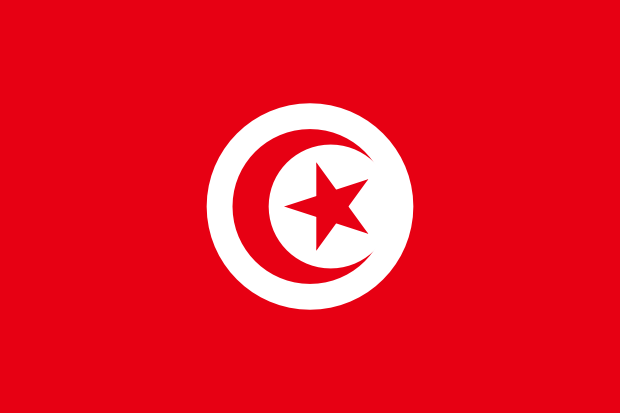
Flag is available in resolutions
| Icon 88x59 |  |
| Icon 32x21 |  |
Tunisia
Tunisia: A Crossroads of Civilizations and a Tapestry of Wonders
Tunisia, nestled in the Maghreb region of North Africa, is a land of captivating contrasts, where ancient history whispers from sun-drenched ruins and vibrant modern life pulses through bustling souks. Its strategic location, bridging the Mediterranean Sea and the vast Sahara Desert, has shaped its rich and multifaceted identity, drawing influences from Phoenicians, Romans, Arabs, Ottomans, and Europeans. This small yet remarkably diverse country offers a compelling blend of cultural heritage, breathtaking landscapes, and burgeoning economic potential, making it a destination of increasing interest for travelers and investors alike.
The population of Tunisia is a testament to its historical migrations and interactions. Predominantly Arab-Berber, with a significant portion identifying as Arab, the Tunisian people are known for their warmth, hospitality, and deep-rooted cultural traditions. The official language is Arabic, but French, a legacy of the colonial era, remains widely spoken and understood, particularly in business and administrative circles. A growing number of Tunisians also possess proficiency in English, catering to the ever-increasing international tourism sector. The religious landscape is overwhelmingly Muslim, with Islam playing a significant role in the daily lives and cultural fabric of the nation. However, Tunisia has a history of religious tolerance, and small communities of Christians and Jews also reside within its borders, adding to the countrys rich tapestry of faiths. The demographic profile shows a relatively young population, with a substantial proportion under the age of 30, indicating a dynamic and forward-looking society. Urban centers like Tunis, Sfax, and Sousse are hubs of activity, characterized by a blend of traditional architecture and modern development, while rural areas offer a glimpse into a more pastoral way of life, often centered around agriculture and artisanal crafts.
Tunisia’s history is a long and illustrious saga, stretching back millennia. The earliest inhabitants were indigenous Berber tribes, who laid the foundations for the nation’s enduring cultural identity. The arrival of the Phoenicians in the 9th century BCE marked a pivotal moment, with the establishment of Carthage, which would grow into a formidable maritime empire, rivaling Rome for dominance of the Mediterranean. The Punic Wars, a series of epic conflicts, ultimately led to Carthages destruction by the Romans in 146 BCE. Under Roman rule, Tunisia, then known as Africa Proconsularis, flourished as a vital breadbasket and a center of Roman civilization, leaving behind an impressive legacy of architectural marvels, including the remarkably preserved amphitheater of El Jem and the Roman ruins of Dougga. Following the decline of the Roman Empire, the region experienced various invasions and dominations, including those by the Vandals, Byzantines, and crucially, the Arab conquests in the 7th century CE. The arrival of Islam brought profound cultural and religious transformation, ushering in an era of Arab-Islamic civilization that continues to shape Tunisia today. During this period, cities like Kairouan emerged as important centers of Islamic learning and architecture. The Ottoman Empire exerted its influence from the 16th century onwards, further solidifying Tunisia’s place within the broader Islamic world. The 19th century saw the rise of French colonial power, with Tunisia becoming a protectorate in 1881. This period brought significant infrastructural development and economic changes, but also fueled a growing sense of national identity and a desire for independence. The Tunisian independence movement, led by Habib Bourguiba, culminated in the establishment of the modern Republic of Tunisia in 1956. Bourguiba, the nation’s first president, embarked on a path of secularization and modernization, enacting progressive social reforms that have left an indelible mark on Tunisian society. The Jasmine Revolution of 2010-2011, a popular uprising against authoritarian rule, ushered in a new era of democratic transition, though the path has been complex and challenging.
Geographically, Tunisia is a land of striking diversity. Its northern coastline boasts fertile plains and rolling hills, ideal for agriculture, while its eastern and southern regions transition into arid steppe and eventually the vast, awe-inspiring expanse of the Sahara Desert. The country is bordered by Algeria to the west and Libya to the southeast, with the shimmering Mediterranean Sea forming its extensive northern and eastern coastlines. This coastline, stretching for over 1,300 kilometers, is dotted with beautiful beaches, picturesque fishing villages, and bustling port cities. The climate varies significantly across the country, from a Mediterranean climate in the north, characterized by hot, dry summers and mild, wet winters, to a more arid desert climate in the south, with extreme temperature fluctuations. The fertile northern plains are the agricultural heartland, producing olives, dates, grains, and citrus fruits, while the southern desert regions are rich in mineral resources, particularly phosphates and oil. The strategic chokepoint of the Strait of Sicily, separating Tunisia from Italy, has historically made it a crucial maritime gateway. The diverse topography offers a wealth of natural beauty, from the verdant forests of the north to the dramatic canyons and oases of the south, providing a stunning backdrop for exploration and adventure.
Tunisia’s economy is a dynamic mix of traditional sectors and modern industries, with tourism playing a particularly vital role. The country has successfully diversified its economic base over the years, moving beyond its traditional reliance on agriculture. The services sector, driven by tourism, is a major contributor to GDP and employment, attracting millions of visitors annually with its rich history, beautiful beaches, and vibrant culture. The manufacturing sector is also significant, with key industries including textiles, automotive components, and electronics. Tunisia has actively sought foreign investment in these areas, benefiting from its competitive labor costs and strategic location. The agricultural sector remains important, with olives and olive oil being major exports, alongside dates, fruits, and vegetables. The phosphate industry, centered on the extraction and processing of phosphates, is another cornerstone of the Tunisian economy, supplying fertilizers to global markets. More recently, the country has been investing in renewable energy, particularly solar power, leveraging its abundant sunshine. However, like many developing nations, Tunisia faces economic challenges, including unemployment, particularly among youth, and the need for ongoing structural reforms to foster greater competitiveness and inclusive growth. The government is committed to attracting further investment and promoting innovation to ensure sustainable economic development.
Tunisia is a treasure trove of tourist attractions, catering to a wide range of interests. The ancient Roman ruins are a perennial draw, with Carthage, the former Phoenician capital, offering a glimpse into a glorious past, and the well-preserved amphitheater of El Jem, a UNESCO World Heritage site, standing as a testament to Roman engineering prowess. The picturesque blue and white town of Sidi Bou Said, perched on a cliff overlooking the Mediterranean, is a postcard-perfect destination, famous for its charming streets, artisan shops, and stunning sea views. The historic medinas of Tunis, Sousse, and Kairouan, also UNESCO World Heritage sites, offer a labyrinthine journey through centuries of Islamic architecture, bustling souks filled with vibrant textiles, spices, and traditional crafts, and the fragrant aroma of mint tea wafting from hidden courtyards. For beach lovers, Tunisia boasts miles of pristine sandy beaches along its Mediterranean coast, from the popular resort towns of Hammamet and Skanes to the more tranquil shores of Djerba island, known for its unique Berber architecture and traditional villages. Adventure seekers can venture south into the Sahara Desert, embarking on camel treks, exploring vast sand dunes, and experiencing the magic of a desert night under a canopy of stars. The oases of Tozeur and Kebili offer a refreshing contrast, with their lush palm groves and traditional irrigation systems. Cultural enthusiasts will find much to admire in the country’s rich artistic heritage, from traditional music and dance performances to intricate pottery and leatherwork. The culinary scene is equally enticing, with flavorful tagines, couscous dishes, and fresh seafood offering a delightful gastronomic experience. Tunisias commitment to preserving its heritage, coupled with its natural beauty and warm hospitality, makes it an unforgettable destination.
In conclusion, Tunisia is a nation that seamlessly blends its ancient past with a vibrant present and a hopeful future. Its rich history, shaped by a multitude of civilizations, is etched into its landscape and its people. Its diverse geography offers a breathtaking array of natural wonders, from the azure Mediterranean to the golden sands of the Sahara. Its economy, while facing challenges, is on a path of diversification and growth, with tourism serving as a vital engine. For travelers, Tunisia is a destination that promises an immersive cultural experience, stunning natural beauty, and the genuine warmth of its people. It is a country that continues to captivate and inspire, a true gem of North Africa.
Information about Tunisia
The information comes from the publication CIA The World Factbook.
Automated text translation, excuse errors, please!
Country Tunisia is situated in a location / continent Africa. Tunisia has an area of 163 610 km2 and 10 732 900 residents. The highest point has a height 1 544 above sea level. and it is called Jebel ech Chambi. The lowest point is located at the level of -17 above sea level and it is named Shatt al Gharsah. System of government is republic and the date of independence 20th March 1956. The capital city is Tunis. Tunisia has the international abbreviation TS.
Tunisia - economy
Total gross domestic product (GDP) is 102 300 000 000 $. Total gross domestic product per capita in purchasing power parity is 9 600 $. GDP grows by -0.80 % a year. Inflation (consumer price index) is equal to 3.50 % a year. Tunisia have 3 904 000 working-age population (from a total population 10 732 900 people). Unemployment is at 18.00 %. Tunisia issued 6.20 % GDP to healt care and 1,40 % GDP to army. The public debt of the country is 49.00 % GDP. The total amount of foreign debt is 23 210 000 000 USD.
Tunisia - demography
As suggested above, Tunisia has 10 732 900 people. Population growth is in the amount 0.96 % per year. Number of children born per 1000 population per year is 17.28.Every mother has average 2.02 children. The infant mortality rate is 24.98 and maternal mortality 56.00 deaths per 100,000 births. Average estimated life expectancy makes 75.24 years. Mortality is 5.87 people per 1000 population per year.
Tunisia - transport and telecommunications
Tunisia has 19 232 km of roads, 2 165 km of railway lines and 29 airports. There is registered 9 ships.
Number of active mobile phones (sim card) in the country Tunisia is 12 388 000. Number of active fixed telephone lines is 1 218 000. Tunisia has 3 500 000 internet users, who have the available 575 Internet connections. Tunisia has been assigned a domain first Choose range .tn.
Tunisia - energetics
Tunisia consumes a year 12 750 000 000 kWh of electricity. Annual electricity production is 14 760 000 000 kWh in power plants with a total installed electrical capacity 3 648 000 kW. Tunisia exports 81 000 000 kWh and imports 122 000 000 kWh of electricity per year Energy mix of power generation is as follows: fossil fuels: 96.9 %, nuclear energy: 0 %, renewable: 1.4 %, hydropower: 1.7 %. The country Tunisia is harvested annually 70 480 barrels of oil.
Keywords: flags of countries in the world, world countries, Flags of countries, economy, Tunisia, demography, list of flags, list of countries, telecommunications, flag, transport, information, all flags, national flags, flag states, energetics, Flag of Tunisia, politic.