Zimbabwe
Flag of Zimbabwe
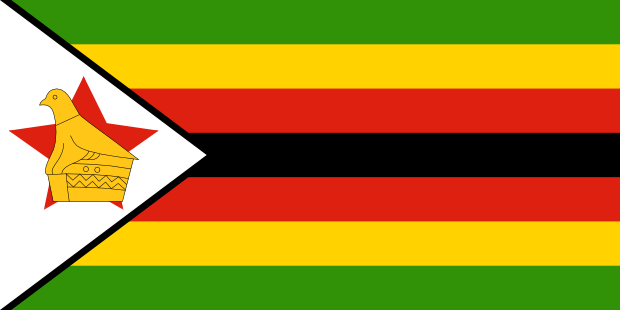
Flag is available in resolutions
| Icon 88x44 |  |
| Icon 32x16 |  |
Zimbabwe
Heres an article about Zimbabwe, approximately 5000 characters long, written in English with the specified formatting:
Zimbabwe: A Land of Contrasts and Resilience
Zimbabwe, a landlocked nation in Southern Africa, is a country of breathtaking natural beauty, rich history, and a people known for their enduring spirit. Nestled between the Zambezi and Limpopo rivers, it shares borders with South Africa to the south, Botswana to the west and southwest, Zambia to the north, and Mozambique to the east. This strategic location has historically positioned Zimbabwe as a crossroads of cultures and trade. The country’s name, derived from the Shona word “dzimba-dzemabwe” meaning “houses of stone,” alludes to the magnificent Great Zimbabwe Ruins, a UNESCO World Heritage site that stands as a testament to a powerful ancient civilization. Today, Zimbabwe is a nation grappling with its past and striving for a brighter future, a journey marked by both profound challenges and immense potential.
The population of Zimbabwe is predominantly of Bantu origin, with the Shona people forming the largest ethnic group, accounting for approximately 82% of the population. The Ndebele people constitute the second-largest group, making up around 14%. Smaller ethnic minorities, including the Tonga, Venda, and Shangaan, also contribute to the nation’s diverse cultural tapestry. English is the official language, a legacy of its colonial past, but Shona and Ndebele are widely spoken and hold significant cultural importance. The country’s population is relatively young, with a substantial proportion under the age of 30. This youthful demographic presents both opportunities and challenges, demanding investment in education and job creation. Christianity is the dominant religion, with a significant portion of the population adhering to various denominations, while traditional African beliefs and Islam are also practiced. The social fabric of Zimbabwe is characterized by strong family ties and community solidarity, qualities that have been instrumental in navigating periods of hardship.
Zimbabwe’s history is a long and complex narrative, stretching back millennia. The region was inhabited by early humans for thousands of years, with evidence of Stone Age settlements found throughout the country. The rise of the Great Zimbabwe civilization, flourishing between the 11th and 15th centuries, marked a significant period of political and economic power. This sophisticated society developed impressive stone structures, showcasing advanced architectural and engineering skills, and controlled extensive trade networks that reached as far as the Indian Ocean coast. Following the decline of Great Zimbabwe, various smaller kingdoms and chieftaincies emerged. The arrival of European explorers in the 15th century marked the beginning of a new era. In the late 19th century, the British South Africa Company, led by Cecil Rhodes, colonized the territory, which became known as Southern Rhodesia. This period was characterized by the dispossession of land from indigenous populations and the establishment of a white minority rule. The struggle for independence intensified throughout the 20th century, culminating in a protracted liberation war. In 1980, Zimbabwe finally gained its independence, with Robert Mugabe becoming the first Prime Minister, later transitioning to President. The initial years of independence were marked by optimism and progress, but political and economic challenges, including land reform policies and hyperinflation, have profoundly shaped the nation’s trajectory in the decades since.
Geographically, Zimbabwe is a land of diverse landscapes. The country is largely situated on a high plateau, with elevations averaging around 1,200 meters above sea level. The eastern highlands, bordering Mozambique, are characterized by dramatic mountain ranges, mist-shrouded peaks, and lush rainforests, offering a stark contrast to the drier savannas of the west. The Zambezi River forms a significant portion of the northern border, and it is here that the majestic Victoria Falls, one of the Seven Natural Wonders of the World, cascades down in a spectacular display of nature’s power. These falls, known locally as “Mosi-oa-Tunya” or “The Smoke That Thunders,” attract tourists from across the globe. The country also boasts numerous other rivers, including the Save, the Runde, and the Mazowe, which are vital for agriculture and wildlife. Lake Kariba, a vast man-made reservoir on the Zambezi, is another prominent feature, serving as a source of hydroelectric power and a popular destination for water sports and fishing. The national parks, such as Hwange National Park and Mana Pools National Park, are home to an incredible array of wildlife, including elephants, lions, rhinos, and a rich diversity of bird species, making Zimbabwe a prime destination for safari tourism.
The Zimbabwean economy has historically been driven by its natural resources and agricultural output. Mining has always been a crucial sector, with the country rich in minerals such as platinum, gold, diamonds, chromium, and coal. These resources have the potential to significantly contribute to economic growth and development. Agriculture remains a cornerstone of the economy, with tobacco, maize, cotton, and sugar cane being major cash crops. However, the agricultural sector has faced considerable challenges, including climate change impacts, land tenure issues, and access to inputs. The manufacturing sector, though smaller, produces a range of goods including textiles, processed foods, and beverages. Tourism, particularly ecotourism centered around national parks and Victoria Falls, is another vital source of foreign exchange. In recent years, Zimbabwe has been actively seeking to diversify its economy and attract foreign investment, focusing on sectors like renewable energy and technology. The informal sector also plays a significant role in the livelihoods of many Zimbabweans, providing essential goods and services.
Zimbabwe offers a wealth of tourist attractions that captivate visitors with their natural beauty and historical significance. The Victoria Falls are undoubtedly the crown jewel, offering unparalleled views and thrilling adventure activities like bungee jumping and white-water rafting. The Great Zimbabwe Ruins transport visitors back in time, allowing them to explore the remnants of a once-great civilization and ponder its mysteries. For wildlife enthusiasts, Hwange National Park provides an unforgettable safari experience, with opportunities to witness large herds of elephants, lions, and other iconic African animals in their natural habitat. Mana Pools National Park, another UNESCO World Heritage site, is renowned for its walking safaris and the chance to see wildlife up close. The scenic Eastern Highlands offer a different kind of beauty, with rolling hills, tea plantations, and hiking trails. Visitors can explore towns like Mutare and Nyanga, enjoying the cooler climate and picturesque landscapes. Lake Kariba offers a tranquil escape with opportunities for houseboating, fishing, and birdwatching. Beyond these major attractions, numerous smaller game reserves, cultural villages, and historical sites dot the country, each offering a unique glimpse into Zimbabwe’s diverse heritage and natural splendor. The warmth and hospitality of the Zimbabwean people further enhance the visitor experience, making it a truly memorable destination.
Information about Zimbabwe
The information comes from the publication CIA The World Factbook.
Automated text translation, excuse errors, please!
Country Zimbabwe is situated in a location / continent Africa. Zimbabwe has an area of 390 757 km2 and 12 619 600 residents. The highest point has a height 2 592 above sea level. and it is called Inyangani. The lowest point is located at the level of 162 above sea level and it is named junction of the Runde. System of government is republic and the date of independence 18th April 1980. The capital city is Harare. Zimbabwe has the international abbreviation ZI.
Zimbabwe - economy
Total gross domestic product (GDP) is 6 206 000 000 $. Total gross domestic product per capita in purchasing power parity is 500 $. GDP grows by 9.30 % a year. Inflation (consumer price index) is equal to 5.40 % a year. Zimbabwe have 3 856 000 working-age population (from a total population 12 619 600 people). Unemployment is at 95.00 %. and 3,80 % GDP to army. The public debt of the country is 220.10 % GDP. The total amount of foreign debt is 6 440 000 000 USD.
Zimbabwe - demography
As suggested above, Zimbabwe has 12 619 600 people. Population growth is in the amount 4.36 % per year. Number of children born per 1000 population per year is 32.19.Every mother has average 3.61 children. The infant mortality rate is 28.23 and maternal mortality 570.00 deaths per 100,000 births. Average estimated life expectancy makes 51.82 years. Mortality is 12.38 people per 1000 population per year.
Zimbabwe - transport and telecommunications
Zimbabwe has 97 267 km of roads, 3 427 km of railway lines and 202 airports.
Number of active mobile phones (sim card) in the country Zimbabwe is 7 500 000. Number of active fixed telephone lines is 379 000. Zimbabwe has 1 423 000 internet users, who have the available 30 650 Internet connections. Zimbabwe has been assigned a domain first Choose range .zw.
Zimbabwe - energetics
Zimbabwe consumes a year 12 540 000 000 kWh of electricity. Annual electricity production is 7 615 000 000 kWh in power plants with a total installed electrical capacity 2 005 000 kW. Zimbabwe exports 53 000 000 kWh and imports 5 497 000 000 kWh of electricity per year Energy mix of power generation is as follows: fossil fuels: 66.1 %, nuclear energy: 0 %, renewable: 0.0 %, hydropower: 33.9 %.
Keywords: telecommunications, flag, transport, Flags of countries, world countries, Zimbabwe, list of countries, information, flag states, national flags, demography, energetics, all flags, list of flags, flags of countries in the world, Flag of Zimbabwe, economy, politic.