Swaziland
Flag of Swaziland
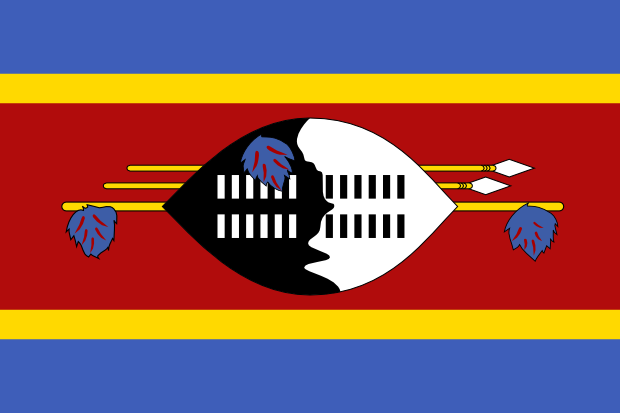
Flag is available in resolutions
| Icon 88x59 |  |
| Icon 32x21 |  |
Swaziland
The Kingdom of Eswatini: A Land of Royals, Nature, and Resilience
Nestled in Southern Africa, bordered by South Africa to the north, west, and south, and Mozambique to the east, lies the Kingdom of Eswatini, formerly known as Swaziland. This small, landlocked nation, often overlooked in global discourse, offers a captivating tapestry of rich history, vibrant culture, breathtaking natural beauty, and a unique socio-political landscape. Despite its diminutive size, Eswatini possesses a profound identity, shaped by its ancient monarchy, its people’s deep connection to the land, and their enduring spirit in the face of modern challenges. Understanding Eswatini requires delving into its geographical contours, its historical evolution, the characteristics of its populace, the nuances of its economy, and the allure of its tourist attractions, all of which contribute to its distinctive charm.
The geography of Eswatini is characterized by its diverse topography, which significantly influences its climate and ecosystems. The country is broadly divided into three distinct geographical regions, running parallel from north to south. The westernmost region, known as the Highveld, is characterized by rugged mountains and deep valleys, with elevations reaching over 1,800 meters. This region experiences a temperate climate, with cooler temperatures and ample rainfall, making it ideal for agriculture, particularly for crops like maize and sugarcane. Descending eastward, one encounters the Middleveld, a region of rolling hills and plateaus at moderate elevations. The climate here is sub-tropical, with warmer temperatures and moderate rainfall, also conducive to farming. Finally, the easternmost part of the country is the Lowveld, a vast, hot, and relatively flat plain that gradually slopes towards the border with Mozambique. This region experiences a semi-arid climate, with higher temperatures and lower rainfall, making it suitable for cattle ranching and more drought-resistant crops. The Lubombo Mountains form a prominent escarpment along the eastern border, offering dramatic vistas and contributing to the country’s scenic diversity. Several rivers crisscross the nation, the most significant being the Great Usutu River, which flows from the Highveld through the Middleveld and into the Lowveld, providing vital water resources for irrigation and domestic use. The country’s natural resources include fertile soil, timber, and some mineral deposits, though these are not extensively exploited. The biodiversity of Eswatini is also noteworthy, with diverse habitats supporting a range of flora and fauna, including several national parks and game reserves.
The history of Eswatini is deeply intertwined with the Swazi people and their traditional leadership. The Swazi nation traces its origins back to the 16th century, when Ngwane III is recognized as the first king of the Swazi people. The Swazi monarchy has been a continuous lineage, with power passing down through generations, a rarity in the modern world. The kingdom’s early history was marked by migrations and territorial consolidation. The arrival of European missionaries and traders in the 19th century began to significantly impact Swazi society. The discovery of gold and diamonds in neighboring South Africa also brought increasing European interest and influence to the region. In the late 19th century, under King Mbandzeni, Swaziland became a British protectorate, largely to protect it from annexation by the Boer republics. The country was administered by British High Commissioners, and its sovereignty was significantly curtailed. During this period, land concessions were granted to European settlers, a legacy that continues to have socio-economic implications today. In 1968, Eswatini regained its full independence from the United Kingdom, with King Sobhuza II leading the nation. Upon independence, the country adopted a Westminster-style parliamentary democracy. However, in 1973, King Sobhuza II abrogated the constitution, banned political parties, and assumed supreme executive, legislative, and judicial powers, ushering in a period of absolute monarchy. This system, with some modifications, continues to this day under his grandson, King Mswati III. The monarchy plays a central role in all aspects of Eswatini life, from governance to cultural practices, embodying the nation’s historical continuity and identity.
The population of Eswatini, estimated to be around 1.2 million people, is predominantly of Swazi ethnicity, speaking siSwati as their primary language. While there are small communities of other African ethnicities, as well as European and Asian minorities, the Swazi people form the overwhelming majority. The society is deeply rooted in traditional customs and values, with a strong emphasis on respect for elders and the monarchy. The social structure is hierarchical, with the royal family at the apex. Family and community ties are very important, and traditional social events, such as the Umhlanga (Reed Dance) and Incwala (First Fruits Ceremony), remain significant cultural highlights, attracting thousands of participants and spectators. These ceremonies are not merely cultural spectacles but are vital expressions of Swazi identity, reinforcing traditions, and celebrating the monarchy. The literacy rate in Eswatini is relatively high compared to some other sub-Saharan African nations, a testament to efforts in education. However, challenges remain in ensuring access to quality education for all, particularly in rural areas. The country’s healthcare system faces significant challenges, most notably the high prevalence of HIV/AIDS, which has had a profound impact on the population. Despite these health challenges, the resilience and community spirit of the Eswatini people are evident in their ongoing efforts to combat the epidemic and support those affected. The urban population is concentrated in cities like Mbabane, the administrative capital, and Manzini, the commercial hub, while the majority of the population resides in rural areas, engaged in agriculture and traditional livelihoods.
The economy of Eswatini is characterized by its reliance on a few key sectors, with agriculture, particularly sugar production, playing a dominant role. Sugarcane cultivation and processing are the backbone of the Eswatini economy, accounting for a significant portion of its export earnings. Other important agricultural products include maize, cotton, and citrus fruits. The manufacturing sector has grown in recent years, with a focus on textiles, apparel, and wood products, often driven by foreign investment. The country also benefits from trade agreements with neighboring countries and preferential access to markets like the European Union for its sugar exports. Tourism is another sector with significant potential, driven by the country’s natural beauty and unique cultural heritage. However, the economy faces several challenges, including a high rate of unemployment and underemployment, particularly among youth. The reliance on a few export commodities makes the economy vulnerable to fluctuations in global commodity prices. Furthermore, the country’s landlocked status and limited infrastructure can pose logistical challenges for trade and investment. Eswatini is also a member of the Southern African Customs Union (SACU), which facilitates trade within the region. Despite these economic hurdles, the government is actively seeking to diversify the economy and attract further investment to create more employment opportunities and foster sustainable growth. The country’s mineral resources, though not extensively exploited, also offer potential for future development.
Eswatini offers a wealth of tourist attractions that appeal to a diverse range of travelers seeking authentic experiences and natural wonders. The country’s national parks and game reserves provide excellent opportunities for wildlife viewing. Hlane Royal National Park is home to a variety of wildlife, including lions, elephants, rhinos, and a rich birdlife, offering a quintessential African safari experience. Mkhaya Game Reserve is renowned for its conservation efforts, particularly for endangered species like black rhinos. The dramatic landscapes of the Malolotja Nature Reserve, with its rolling hills, waterfalls, and hiking trails, are a haven for nature lovers and adventurers. For those interested in culture, the Lobamba area, the spiritual and royal heartland, is a must-visit. Here, visitors can witness traditional ceremonies, visit the National Museum, and gain insight into the Swazi monarchy and its history. The King’s Palace and the Queen Mother’s Residence are also significant landmarks. The Mantenga Cultural Village offers a glimpse into traditional Swazi life, with demonstrations of crafts, dance, and music. The Ngwenya Glass factory, where artisans craft beautiful glassware from recycled materials, is another popular destination, showcasing local craftsmanship. The capital city, Mbabane, offers a bustling market and administrative center, while Manzini, the country’s largest urban area, is a commercial hub. The scenic drives through the country, particularly along the Lubombo Mountains, offer breathtaking vistas and opportunities to encounter rural life. The warmth and hospitality of the Swazi people further enhance the visitor experience, making Eswatini a destination that leaves a lasting impression. The unique blend of natural beauty, rich cultural heritage, and the enduring presence of its monarchy makes the Kingdom of Eswatini a truly captivating and unforgettable destination.
Information about Swaziland
The information comes from the publication CIA The World Factbook.
Automated text translation, excuse errors, please!
Country Swaziland is situated in a location / continent Africa. Swaziland has an area of 17 364 km2 and 1 386 914 residents. The highest point has a height 1 862 above sea level. and it is called Emlembe. The lowest point is located at the level of 21 above sea level and it is named Great Usutu River. System of government is monarchy and the date of independence 6th September 1968. The capital city is Mbabane. Swaziland has the international abbreviation WZ.
Swaziland - economy
Total gross domestic product (GDP) is 6 313 000 000 $. Total gross domestic product per capita in purchasing power parity is 5 400 $. GDP grows by 0.30 % a year. Inflation (consumer price index) is equal to 6.10 % a year. Swaziland have 457 900 working-age population (from a total population 1 386 914 people). Unemployment is at 40.00 %. Swaziland issued 6.30 % GDP to healt care and 4,70 % GDP to army. The total amount of foreign debt is 703 100 000 USD.
Swaziland - demography
As suggested above, Swaziland has 1 386 914 people. Population growth is in the amount 1.20 % per year. Number of children born per 1000 population per year is 26.16.Every mother has average 3.03 children. The infant mortality rate is 59.57 and maternal mortality 320.00 deaths per 100,000 births. Average estimated life expectancy makes 49.42 years. Mortality is 14.21 people per 1000 population per year.
Swaziland - transport and telecommunications
Swaziland has 3 594 km of roads, 301 km of railway lines and 15 airports.
Number of active mobile phones (sim card) in the country Swaziland is 766 500. Number of active fixed telephone lines is 52 900. Swaziland has 90 100 internet users, who have the available 2 706 Internet connections. Swaziland has been assigned a domain first Choose range .sz.
Swaziland - energetics
Swaziland consumes a year 1 175 000 000 kWh of electricity. Annual electricity production is 450 000 000 kWh in power plants with a total installed electrical capacity 130 000 kW. Swaziland exports 0 kWh and imports 597 000 000 kWh of electricity per year Energy mix of power generation is as follows: fossil fuels: 67.7 %, nuclear energy: 0 %, renewable: 0.0 %, hydropower: 32.3 %.
Keywords: Flag of Swaziland, flag, flags of countries in the world, telecommunications, demography, list of countries, Swaziland, energetics, information, flag states, national flags, list of flags, all flags, transport, Flags of countries, world countries, economy, politic.