Mali
Flag of Mali
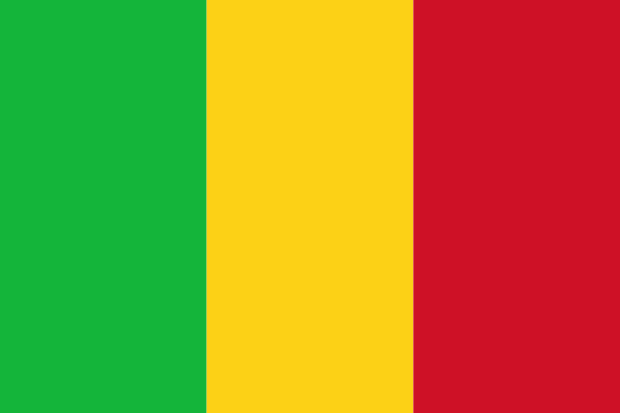
Flag is available in resolutions
| Icon 88x59 |  |
| Icon 32x21 |  |
Mali
Mali: A Land of Ancient Empires and Enduring Spirit
Mali, a vast landlocked nation nestled in the heart of West Africa, is a country steeped in history, blessed with diverse landscapes, and inhabited by a resilient people. Its name evokes images of powerful ancient empires, vibrant cultures, and the life-giving flow of the Niger River. From the scorching sands of the Sahara Desert to the fertile deltas that sustain agriculture, Mali’s geography has profoundly shaped its destiny, influencing its settlement patterns, economic activities, and cultural expressions. The country’s rich tapestry of ethnic groups, each with its unique traditions and languages, contributes to a vibrant cultural mosaic, a testament to centuries of interaction and adaptation. Understanding Mali requires delving into its storied past, appreciating its present challenges, and recognizing the enduring spirit of its people.
A Cradle of Civilizations: Historical Echoes of Greatness
Mali’s history is inextricably linked to the rise and fall of three of West Africa’s most influential empires: the Ghana, Mali, and Songhai empires. These formidable states, flourishing between the 8th and 16th centuries, controlled crucial trans-Saharan trade routes, amassing immense wealth through the exchange of gold, salt, and other commodities. The Ghana Empire, the earliest of the three, laid the groundwork for subsequent Sudanese states, establishing a reputation for sophisticated governance and military prowess. Its decline paved the way for the ascendant Mali Empire, a period often considered the zenith of West African imperial power.
The Mali Empire, at its height in the 14th century, was a vast territory encompassing much of present-day Mali, Senegal, Gambia, Guinea, and parts of Burkina Faso and Niger. It was under the legendary ruler Mansa Musa that the Mali Empire achieved unparalleled fame and prosperity. His extravagant pilgrimage to Mecca in 1324, laden with an astonishing amount of gold, is still spoken of in hushed tones, a testament to the empire’s immense wealth. Mansa Musa was also a great patron of learning and culture, fostering the growth of cities like Timbuktu, which became renowned centers of Islamic scholarship, attracting scholars and students from across the Muslim world. The Sankore Madrasah in Timbuktu, for instance, housed a vast collection of manuscripts and served as a hub for intellectual discourse.
Following the decline of the Mali Empire, the Songhai Empire rose to prominence, extending its dominion even further. Under rulers like Askia the Great, the Songhai Empire consolidated its power and continued the tradition of scholarly pursuits. However, the empire’s eventual collapse, brought about by internal strife and the invasion of Moroccan forces armed with firearms in the late 16th century, marked the end of the great Sudanese empires. The subsequent centuries saw a period of fragmentation and the rise of smaller kingdoms and chiefdoms, often engaged in warfare and trade.
The arrival of French colonial rule in the late 19th century brought about significant changes. The French administration, established to exploit the region’s resources and integrate it into their colonial empire, imposed new administrative structures, economic policies, and social hierarchies. While colonial rule brought some infrastructure development, it also disrupted traditional social and economic systems, and the struggle for independence became a defining feature of the 20th century. Mali, then known as French Sudan, gained its independence in 1960, initially forming a brief union with Senegal before becoming a sovereign republic. The post-independence era has been marked by political instability, coups, and challenges in nation-building, further complicated by the country’s vastness and diverse geography.
A Land of Contrasts: Geography and Natural Resources
Mali’s geography is characterized by its dramatic contrasts, a defining feature that has shaped its history and economy. The country is predominantly flat, with vast expanses of arid and semi-arid land. The northern reaches of Mali are dominated by the Sahara Desert, a seemingly endless sea of sand dunes, rocky plateaus, and sparse vegetation. This harsh environment has historically limited human settlement and economic activity, with nomadic pastoralism being the primary way of life for the Tuareg and other Saharan peoples.
In stark contrast, the southern and central parts of Mali are blessed by the presence of the Niger River, the third-longest river in Africa. The Niger, often referred to as the “lifeblood of Mali,” creates a fertile river valley and delta, particularly around the city of Mopti and the Inland Niger Delta. This region is the agricultural heartland of the country, where rice, millet, sorghum, and cotton are cultivated, supporting a significant portion of the population. The Inland Niger Delta, a vast inland floodplain, is a unique ecosystem that teems with life during the wet season, becoming a vital area for fishing and agriculture.
Other important geographical features include the Dogon Plateau in the south, known for its dramatic cliffs and traditional villages, and the Fouta Djallon highlands in the southwest, which form the source of several major rivers. Mali is also rich in mineral resources, most notably gold, which has been mined for centuries and remains a significant export. Uranium, iron ore, and bauxite are also present, though their exploitation has been hampered by infrastructure limitations and global market fluctuations. The country’s landlocked status, however, presents a significant challenge for trade and economic development, requiring reliance on neighboring countries for access to ports.
The People of Mali: A Mosaic of Cultures and Traditions
Mali is home to a diverse array of ethnic groups, each contributing to the nation’s rich cultural heritage. The Bambara are the largest ethnic group, inhabiting the fertile agricultural regions of the south and center. They are known for their agricultural prowess, their rich oral traditions, and their historical role in the Mali Empire. The Fulani, or Fulbe, are a widespread pastoralist people found throughout Mali, renowned for their cattle herding skills and their distinctive cultural practices.
The Tuareg, the “blue people” of the Sahara, are a nomadic Berber people who have traditionally roamed the vast desert regions of northern Mali. Their unique culture, characterized by their distinctive indigo-dyed clothing, their intricate metalwork, and their deep connection to the desert, is a vital part of Mali’s identity. The Dogon people, who reside on the dramatic cliffs of the Dogon Plateau, are famed for their unique architecture, their intricate mask dances, and their complex cosmology, which has fascinated anthropologists and cultural observers for decades.
Other significant ethnic groups include the Soninke, who were instrumental in the founding of the Ghana Empire, the Malinke, who played a crucial role in the Mali Empire, and the Songhai, who established the Songhai Empire. This incredible diversity is reflected in Mali’s languages, with over 40 indigenous languages spoken, although French remains the official language. Traditional music and dance are integral to Malian life, with instruments like the kora (a 21-stringed lute-bridge-harp) and the ngoni (a lute) being central to its vibrant musical heritage. Storytelling, proverbs, and elaborate ceremonies are also important means of transmitting cultural knowledge and maintaining social cohesion. Despite the challenges faced by the country, the Malian people are known for their warmth, hospitality, and enduring spirit.
A Glimpse into Industry and the Economy
Mali’s economy is largely agrarian, with agriculture employing the vast majority of the population and contributing significantly to the GDP. Cotton is a major cash crop, alongside millet, sorghum, rice, and maize, which are grown for subsistence and local markets. Livestock raising, particularly cattle, sheep, and goats, is also an important economic activity, especially in the drier northern regions. The Niger River and its delta provide vital resources for fishing, which is a crucial source of protein and income for many communities.
The mining sector plays a vital role in Mali’s economy, with gold being the country’s most important export commodity. Mali is one of the largest gold producers in Africa, and revenues from gold mining are a significant source of foreign exchange. Other mineral resources, such as iron ore, bauxite, and uranium, hold potential for further development, though challenges related to infrastructure and investment remain.
The industrial sector in Mali is relatively underdeveloped, with a focus on the processing of agricultural products, such as cotton ginning and food processing. The manufacturing sector is small-scale and often serves the domestic market. Handicrafts, including textiles, leather goods, and metalwork, are also an important part of the economy, providing income for many artisans and contributing to the country’s cultural export.
Despite its resource wealth, Mali faces significant economic challenges. Its landlocked status makes trade costly and dependent on the infrastructure of its neighbors. Poverty, food insecurity, and unemployment remain persistent issues. The country has also been affected by external economic shocks and internal political instability, which have hindered investment and development. International aid and foreign investment are crucial for Mali’s economic progress, alongside efforts to diversify the economy, improve infrastructure, and promote good governance.
Timeless Treasures: Tourist Attractions
Mali, despite its challenges, offers a wealth of unique and captivating tourist attractions that draw visitors seeking an authentic cultural and historical experience. The city of Timbuktu, a UNESCO World Heritage site, is perhaps the most iconic destination. Once a legendary center of Islamic scholarship and a hub of trans-Saharan trade, Timbuktu’s ancient mosques, such as the Djinguereber Mosque, and its historic libraries, housing invaluable manuscripts, stand as silent testaments to its glorious past. Exploring its sandy streets and learning about its rich intellectual heritage is an unforgettable journey back in time.
Another remarkable attraction is the Dogon Country, a dramatic landscape of cliffs, villages, and traditional architecture. The Dogon people’s unique way of life, their intricate mask dances, and their animist beliefs offer a fascinating glimpse into a culture that has remained remarkably preserved. Visiting the cliffside villages like Bandiagara and Tireli provides an unparalleled opportunity to interact with the local communities and witness their ancestral traditions.
The city of Djenné, with its magnificent Great Mosque, is another UNESCO World Heritage site and a marvel of Sudano-Sahelian architecture. Built entirely of mud brick, it is the largest mud-brick building in the world and a vibrant center of community life. The weekly market in Djenné is a lively spectacle, showcasing local produce, crafts, and the diverse peoples of the region.
The Niger River itself offers opportunities for exploration. Boat trips along the river, particularly in the region of Mopti, known as the “Venice of Mali,” provide stunning views of riverine landscapes, traditional fishing villages, and the bustling river traffic. The confluence of the Niger and Bani rivers near Mopti is a particularly picturesque spot.
For those interested in history and archaeology, the ruins of Ancient Koumbi Saleh, the former capital of the Ghana Empire, offer a glimpse into one of West Africa’s earliest great civilizations. While much of the site is now sand-covered, its historical significance is undeniable.
However, it is important to note that tourism in Mali has been significantly impacted by security concerns in recent years, particularly in the northern regions. Visitors are advised to stay informed about the current security situation and travel advisories. Despite these challenges, for the intrepid traveler, Mali offers an unparalleled opportunity to connect with ancient history, vibrant cultures, and the enduring spirit of a land that has witnessed the rise and fall of empires.
Information about Mali
The information comes from the publication CIA The World Factbook.
Automated text translation, excuse errors, please!
Country Mali is situated in a location / continent Africa. Mali has an area of 1 240 192 km2 and 15 494 466 residents. The highest point has a height 1 155 above sea level. and it is called Hombori Tondo. The lowest point is located at the level of 23 above sea level and it is named Senegal River. System of government is republic and the date of independence 22nd September 1960. The capital city is Bamako. Mali has the international abbreviation ML.
Mali - economy
Total gross domestic product (GDP) is 18 100 000 000 $. Total gross domestic product per capita in purchasing power parity is 1 100 $. GDP grows by 2.70 % a year. Inflation (consumer price index) is equal to 2.90 % a year. Mali have 3 241 000 working-age population (from a total population 15 494 466 people). Unemployment is at 30.00 %. Mali issued 7.50 % GDP to healt care and 1,90 % GDP to army. The total amount of foreign debt is 3 192 000 000 USD.
Mali - demography
As suggested above, Mali has 15 494 466 people. Population growth is in the amount 2.61 % per year. Number of children born per 1000 population per year is 45.15.Every mother has average 6.35 children. The infant mortality rate is 109.08 and maternal mortality 540.00 deaths per 100,000 births. Average estimated life expectancy makes 53.06 years. Mortality is 13.94 people per 1000 population per year.
Mali - transport and telecommunications
Mali has 18 912 km of roads, 593 km of railway lines and 21 airports. The total length of waterways (navigable rivers, canals, etc.) is 1 800 km.
Number of active mobile phones (sim card) in the country Mali is 10 822 000. Number of active fixed telephone lines is 104 700. Mali has 249 800 internet users, who have the available 438 Internet connections. Mali has been assigned a domain first Choose range .ml.
Mali - energetics
Mali consumes a year 483 600 000 kWh of electricity. Annual electricity production is 520 000 000 kWh in power plants with a total installed electrical capacity 304 000 kW. Mali exports 0 kWh and imports 0 kWh of electricity per year Energy mix of power generation is as follows: fossil fuels: 48.4 %, nuclear energy: 0 %, renewable: 0.0 %, hydropower: 51.6 %.
Keywords: telecommunications, Flags of countries, energetics, economy, transport, Flag of Mali, all flags, national flags, list of flags, flag states, flags of countries in the world, flag, list of countries, information, Mali, world countries, demography, politic.