Mauritania
Flag of Mauritania
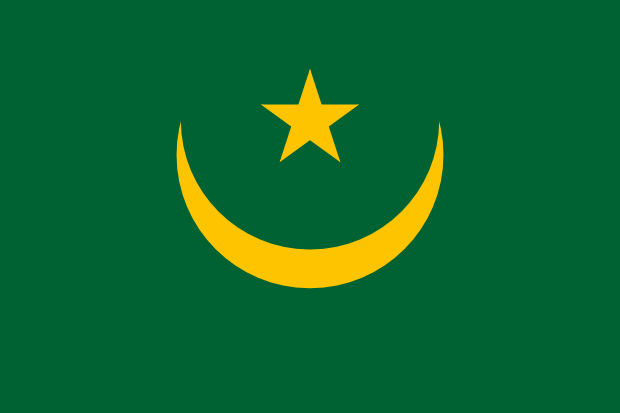
Flag is available in resolutions
| Icon 88x59 |  |
| Icon 32x21 |  |
Mauritania
Mauritania: A Land of Sands, Stories, and Resilience
Mauritania, officially the Islamic Republic of Mauritania, is a vast and enigmatic nation situated in the northwestern corner of Africa. Its name evokes images of endless deserts, ancient caravan routes, and a rich, often tumultuous, history shaped by nomadic traditions and external influences. Sprawling across a land where the Sahara Desert meets the Atlantic Ocean, Mauritania presents a unique tapestry of geographical extremes, diverse cultural heritages, and a developing economy striving to balance its traditional roots with modern aspirations. Understanding Mauritania requires delving into its starkly beautiful landscapes, the resilient spirit of its people, and the layers of its past that continue to inform its present and future.
The geography of Mauritania is dominated by its arid climate and the pervasive presence of the Sahara Desert, which covers approximately 80% of its territory. The country can be broadly divided into three distinct geographical zones. In the west, along the Atlantic coast, lies a narrow, fertile strip known as the Senegal River Valley. This is the most agriculturally productive region, supporting a significant portion of the population and its modest agricultural output. Moving inland, the landscape transitions into the Sahel, a semi-arid transitional zone characterized by sparse vegetation, acacia trees, and scrubland. This region historically served as a crucial grazing area for nomadic pastoralists. The vast majority of the country, however, is comprised of the Sahara Desert itself, an immense expanse of sand dunes, rocky plateaus, and gravel plains. Iconic features of this desert landscape include the mesmerizing erg formations, vast seas of shifting sand dunes, and the rugged Adrar Plateau, dotted with ancient rock carvings and remnants of pre-Islamic civilizations. The climate is characterized by extreme heat and very low rainfall, with temperatures often soaring well above 40 degrees Celsius, particularly during the summer months. The coastal regions experience a slightly more moderate climate due to the moderating influence of the Atlantic Ocean, and a cool, dry wind known as the Harmattan can sweep across the interior. This harsh environment has profoundly shaped the lives and traditions of the Mauritanian people, fostering a spirit of endurance and adaptability.
The population of Mauritania, estimated to be around 4.7 million people, is a complex mosaic of ethnic groups, primarily reflecting the historical migratory patterns and interactions between Arab-Berber peoples of the north and sub-Saharan African groups from the south. The dominant ethnic group is the Bidhan, often referred to as Moors, who are of Arab-Berber descent and traditionally nomadic. They speak Hassaniya Arabic, a distinct dialect. Alongside the Bidhan, there are several sub-Saharan African ethnic groups, including the Halpulaar (also known as Fulani), Soninke, and Wolof, who primarily inhabit the Senegal River Valley and maintain their distinct languages and cultural traditions. Historically, Mauritanias social structure was deeply influenced by a hierarchical system, including forms of hereditary servitude, though significant progress has been made in recent decades to dismantle these practices. The official language is Arabic, but French is widely used in government and business due to the countrys colonial past. Islam is the predominant religion, practiced by virtually all Mauritanians, and it plays a central role in daily life, culture, and law. Despite the challenges posed by its environment and history, Mauritanian society is characterized by a strong sense of community and hospitality, particularly among the nomadic populations who have long relied on mutual support for survival.
Mauritanias history is a long and intricate narrative, marked by periods of powerful empires, nomadic dominance, and colonial rule. The region has been inhabited for millennia, with evidence of early human settlements found in rock art and archaeological sites, particularly on the Adrar Plateau. From the 8th century onwards, the region became a vital nexus for trans-Saharan trade routes, connecting West Africa with the Mediterranean world. Powerful Berber empires, such as the Almoravids in the 11th century, emerged from this area, expanding their influence across North Africa and even into parts of Spain. These empires facilitated the spread of Islam and Arabic culture into the region. For centuries, the territory was largely dominated by various nomadic Arab-Berber tribes, who controlled the lucrative caravan trade of salt, gold, and slaves. The arrival of European colonial powers in the late 19th and early 20th centuries brought significant change. France gradually consolidated its control over the region, establishing French West Africa. Mauritania gained its independence on November 28, 1960. The post-independence period has been marked by political instability, including several military coups and periods of authoritarian rule. The country has also grappled with border disputes, particularly with its neighbors, and internal ethnic tensions. Despite these challenges, Mauritania has made strides in establishing democratic institutions, though the path has been uneven. The legacy of its nomadic past continues to influence its social fabric and national identity, while its strategic location and natural resources have also made it a subject of regional and international interest.
The economy of Mauritania is heavily reliant on its natural resources, particularly mining. For decades, iron ore has been the backbone of the Mauritanian economy, with vast reserves located in the north of the country. The mining sector is a major source of export revenue and employment, although it is susceptible to fluctuations in global commodity prices. In recent years, the discovery and exploitation of offshore natural gas reserves have become increasingly significant, promising to diversify the economy and provide a new stream of revenue. Fishing is another vital sector, with Mauritanias extensive coastline boasting rich fishing grounds. The abundant marine resources support a significant portion of the population, both through direct employment in fishing and related industries, and through exports of fish products. Agriculture, as mentioned, is concentrated in the Senegal River Valley and is primarily focused on subsistence farming, producing crops such as millet, sorghum, and rice, as well as livestock herding. However, this sector is vulnerable to drought and unpredictable rainfall. The informal sector remains a substantial part of the economy, with many Mauritanians engaged in small-scale trade and services. The development of infrastructure, particularly in the vast desert regions, remains a significant challenge, impacting transportation, communication, and access to services. The government is actively seeking foreign investment to develop these sectors and improve the overall economic landscape, aiming to reduce poverty and create more opportunities for its citizens.
Despite its challenging environment and limited infrastructure, Mauritania offers a unique and compelling set of tourist attractions for the adventurous traveler. The most iconic and perhaps the most captivating is the Chinguetti, a UNESCO World Heritage site and one of the last surviving ancient cities of the Sahara. Once a thriving center of Islamic scholarship and a vital stop on trans-Saharan trade routes, Chinguetti is renowned for its ancient libraries, which house invaluable manuscripts dating back centuries, and its distinctive sand-filled mosques. Walking through its sandy streets, surrounded by ancient stone architecture, is like stepping back in time. Another significant historical and archaeological site is Ouadane, another ancient fortified city and former caravan stop in the Adrar region, offering a glimpse into the regions rich past. For those seeking natural wonders, the Banc dArguin National Park, a UNESCO World Heritage site, is a must-see. This vast coastal area is a crucial wintering ground for millions of migratory birds from Europe and Asia, making it a paradise for birdwatchers. The park also supports a unique ecosystem of marine life and is home to traditional fishing communities. The dramatic sand dunes of the Sahara, particularly the Erg Chebbi and Erg Iguidi, offer breathtaking vistas and opportunities for camel trekking and experiencing the profound silence of the desert. The capital city, Nouakchott, while lacking the historical grandeur of Chinguetti, is a bustling modern city that provides a gateway to the country and offers insights into contemporary Mauritanian life. Visitors can explore its markets, including the vibrant fish market, and experience the local culture. The rugged beauty of the Adrar Plateau itself, with its canyons and ancient rock carvings, also beckons explorers. While tourism is still developing, Mauritanias untouched landscapes, rich history, and warm hospitality offer an unforgettable experience for those willing to venture off the beaten path.
Information about Mauritania
The information comes from the publication CIA The World Factbook.
Automated text translation, excuse errors, please!
Country Mauritania is situated in a location / continent Africa. Mauritania has an area of 1 030 700 km2 and 3 359 185 residents. The highest point has a height 915 above sea level. and it is called Kediet Ijill. The lowest point is located at the level of -5 above sea level and it is named Sebkhet Te-n-Dghamcha. System of government is The military junta and the date of independence 28th November 1960. The capital city is Nouakchott. Mauritania has the international abbreviation MR.
Mauritania - economy
Total gross domestic product (GDP) is 7 184 000 000 $. Total gross domestic product per capita in purchasing power parity is 2 200 $. GDP grows by 3.60 % a year. Inflation (consumer price index) is equal to 7.50 % a year. Mauritania have 1 318 000 working-age population (from a total population 3 359 185 people). Unemployment is at 30.00 %. Mauritania issued 5.70 % GDP to healt care and 5,50 % GDP to army. The total amount of foreign debt is 2 816 000 000 USD.
Mauritania - demography
As suggested above, Mauritania has 3 359 185 people. Population growth is in the amount 2.32 % per year. Number of children born per 1000 population per year is 32.78.Every mother has average 4.22 children. The infant mortality rate is 58.93 and maternal mortality 510.00 deaths per 100,000 births. Average estimated life expectancy makes 61.53 years. Mortality is 8.66 people per 1000 population per year.
Mauritania - transport and telecommunications
Mauritania has 11 066 km of roads and 28 airports.
Number of active mobile phones (sim card) in the country Mauritania is 3 283 000. Number of active fixed telephone lines is 72 300. Mauritania has 75 000 internet users, who have the available 28 Internet connections. Mauritania has been assigned a domain first Choose range .mr.
Mauritania - energetics
Mauritania consumes a year 440 800 000 kWh of electricity. Annual electricity production is 474 000 000 kWh in power plants with a total installed electrical capacity 253 000 kW. Mauritania exports 0 kWh and imports 0 kWh of electricity per year Energy mix of power generation is as follows: fossil fuels: 61.7 %, nuclear energy: 0 %, renewable: 0.0 %, hydropower: 38.3 %. The country Mauritania is harvested annually 7 738 barrels of oil.
Keywords: economy, flag, flags of countries in the world, flag states, information, list of flags, transport, all flags, national flags, Flags of countries, world countries, list of countries, Mauritania, energetics, Flag of Mauritania, telecommunications, demography, politic.