Cape Verde
Flag of Cape Verde
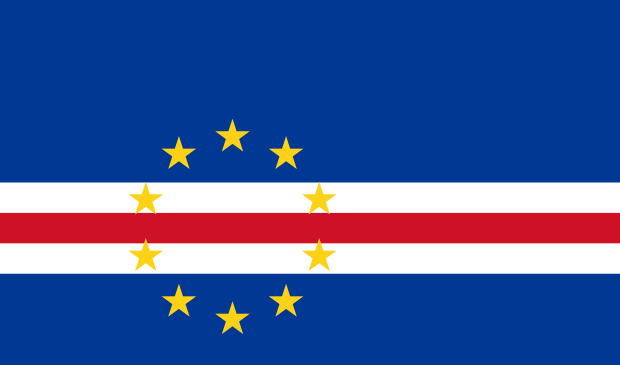
Flag is available in resolutions
| Icon 88x52 |  |
| Icon 32x19 |  |
Cape Verde
The Archipelago of Dreams: An Exploration of Cape Verde
Nestled in the vast expanse of the Atlantic Ocean, approximately 570 kilometers off the coast of Senegal, lies the captivating archipelago of Cape Verde. A nation of eleven volcanic islands, each possessing its own unique charm and character, Cape Verde presents a compelling tapestry of vibrant culture, rich history, and breathtaking natural beauty. From the rugged, mountainous terrains of Santo Anto to the sun-drenched beaches of Sal and Boa Vista, this island nation offers an unparalleled experience for those seeking an escape from the ordinary. The name itself, Cape Verde, evokes images of verdant landscapes, yet the reality is a more nuanced blend of arid beauty and lush oases, a testament to the islands’ volcanic origins and their resilience in the face of challenging climates. This nation, a former Portuguese colony, has forged a distinct identity, a fusion of African and European influences that resonates in its music, its cuisine, and the warm hospitality of its people.
The human story of Cape Verde is one of remarkable adaptability and endurance. Uninhabited until the arrival of Portuguese explorers in the 15th century, the islands quickly became a crucial hub in the transatlantic slave trade. This dark chapter in history, however, also laid the foundation for the unique Creole culture that defines Cape Verde today. The intermingling of Portuguese settlers and enslaved Africans from various West African regions created a new linguistic and cultural identity, a vibrant blend that is evident in everything from the melodic strains of *morna* music to the flavorful *cachupa* stew. The islands gained independence from Portugal on July 5, 1975, embarking on a journey of self-determination and nation-building. The legacy of colonialism is still felt, but it has been transformed into a source of pride and a foundation upon which a distinct national consciousness has been built. The Cape Verdean diaspora, spread across the globe, further enriches the cultural landscape, maintaining strong ties to their homeland and contributing to its global recognition.
Geographically, Cape Verde is a study in contrasts. The archipelago is divided into two main groups: the Barlavento (windward) Islands to the north and the Sotavento (leeward) Islands to the south. The Barlavento Islands include So Vicente, Santo Anto, Santa Luzia (uninhabited), So Nicolau, Sal, and Boa Vista. The Sotavento Islands comprise Santiago, Maio, Fogo, and Brava. Each island boasts a distinct topography. Santo Anto, often referred to as the green island, is a hikers paradise, with dramatic volcanic peaks, deep ravines, and lush agricultural terraces clinging to steep hillsides. So Vicente, in contrast, is more arid but is the cultural heart of the nation, home to the vibrant city of Mindelo. Sal and Boa Vista are renowned for their expansive, golden beaches and crystal-clear waters, making them prime destinations for sun-seekers and water sports enthusiasts. Fogo, the youngest and most volcanically active island, is dominated by the imposing Pico do Fogo, an active volcano that stands as a dramatic centerpiece. Brava, the smallest inhabited island, is known for its picturesque villages and abundant flora, earning it the nickname the flower island. The climate is tropical, characterized by a long dry season and a short, rainy season, with trade winds playing a significant role in shaping the islands weather patterns.
The economy of Cape Verde has undergone a significant transformation over the decades, moving away from its historical reliance on agriculture and fishing towards a more diversified model. Tourism has emerged as the dominant sector, attracting visitors with its natural beauty and unique cultural offerings. The islands of Sal and Boa Vista, with their well-developed tourist infrastructure, are the primary magnets for international visitors. Beyond tourism, the services sector, including transportation and telecommunications, plays a crucial role. Fishing remains an important activity, providing a source of sustenance and employment for coastal communities. Efforts are also underway to develop other sectors, such as renewable energy, leveraging the archipelagos abundant sunshine and wind resources. Despite these advancements, Cape Verde faces challenges, including a high dependence on imports and a need to further diversify its economy to ensure long-term sustainability. The government is actively pursuing policies aimed at attracting foreign investment and fostering entrepreneurship to create new economic opportunities.
Cape Verde’s allure lies not only in its natural landscapes but also in its vibrant cultural tapestry and the warmth of its people. The islands are a melting pot of traditions, where African rhythms blend seamlessly with Portuguese melodies. Music is an integral part of Cape Verdean life, with genres like *morna*, *coladeira*, and *funaná* resonating with a deep emotional resonance. Cesária Évora, the Barefoot Diva, remains an iconic figure, her soulful voice captivating audiences worldwide and bringing global attention to Cape Verdean music. The islands are also a haven for festivals and celebrations, where music, dance, and traditional customs come alive. The Carnival, particularly in Mindelo, is a spectacular display of color, energy, and creativity, drawing crowds from across the archipelago and beyond. Cape Verdean cuisine is a delicious reflection of its diverse heritage, with fresh seafood, tropical fruits, and hearty stews like *cachupa* taking center stage. The aroma of grilled fish, seasoned with local herbs and spices, fills the air in coastal villages, offering a tantalizing glimpse into the islands culinary traditions.
For the discerning traveler, Cape Verde offers a wealth of unforgettable experiences. The island of Sal is a gateway to the archipelago, with its modern international airport and the bustling town of Santa Maria. Here, visitors can bask on the pristine beaches, try their hand at kitesurfing or windsurfing in the consistent trade winds, or explore the lunar-like landscapes of the volcanic crater of Pedra de Lume. Boa Vista, just a short flight or ferry ride away, offers a more laid-back atmosphere, with miles of unspoiled beaches and the chance to spot loggerhead sea turtles nesting during the breeding season. Santo Anto beckons adventurers with its dramatic hiking trails, offering panoramic views of verdant valleys and towering cliffs. The Paul Valley, in particular, is a verdant paradise, where traditional farming practices are still very much alive. So Vicente, with its charming capital Mindelo, is a cultural hub, renowned for its lively music scene, its colonial architecture, and its vibrant markets. A visit to the city’s historical center, with its colorful buildings and bustling squares, is a must. For those seeking a more authentic and less developed experience, the islands of Santiago, Fogo, and Maio offer unique insights into Cape Verdean life. Santiago, the largest island, is home to the historic capital city of Praia, with its UNESCO World Heritage site of Cidade Velha, the first European colonial settlement in the tropics. Fogo offers the dramatic spectacle of Pico do Fogo, where brave souls can hike to the crater rim for breathtaking views. Maio, the quietest of the inhabited islands, offers a tranquil escape with its undeveloped beaches and charming villages.
In conclusion, Cape Verde is far more than just a collection of islands; it is a testament to the enduring spirit of its people and the captivating power of nature. Its unique blend of African and European influences, its rich history, and its diverse landscapes combine to create a destination that is both exotic and welcoming. Whether you are drawn by the promise of sun-drenched beaches, the allure of adventurous hikes, or the enchantment of its vibrant culture, Cape Verde offers an unforgettable journey that will linger in your memory long after you depart. It is an archipelago of dreams, a place where the rhythm of the ocean meets the beat of the human heart, inviting you to discover its magic and embrace its unparalleled charm.
Information about Cape Verde
The information comes from the publication CIA The World Factbook.
Automated text translation, excuse errors, please!
Country Cape Verde is situated in a location / continent Africa. Cape Verde has an area of 4 033 km2 and 523 568 residents. The highest point has a height 2 829 above sea level. and it is called Mt. Fogo. The lowest point is located at the level of 0 above sea level and it is named Atlantic Ocean. System of government is republic and the date of independence July 5, 1975. The capital city is Praia. Cape Verde has the international abbreviation CV.
Cape Verde - economy
Total gross domestic product (GDP) is 2 078 000 000 $. Total gross domestic product per capita in purchasing power parity is 4 000 $. GDP grows by 5.00 % a year. Inflation (consumer price index) is equal to 4.50 % a year. Cape Verde have 196 100 working-age population (from a total population 523 568 people). Unemployment is at 21.00 %. Cape Verde issued 3.90 % GDP to healt care .The public debt of the country is 74.20 % GDP. The total amount of foreign debt is 657 700 000 USD.
Cape Verde - demography
As suggested above, Cape Verde has 523 568 people. Population growth is in the amount 1.43 % per year. Number of children born per 1000 population per year is 21.21.Every mother has average 2.44 children. The infant mortality rate is 26.02 and maternal mortality 79.00 deaths per 100,000 births. Average estimated life expectancy makes 71.00 years. Mortality is 6.28 people per 1000 population per year.
Cape Verde - transport and telecommunications
Cape Verde has 1 350 km of roads and 9 airports. There is registered 13 ships.
Number of active mobile phones (sim card) in the country Cape Verde is 396 400. Number of active fixed telephone lines is 74 500. Cape Verde has 150 000 internet users, who have the available 31 Internet connections. Cape Verde has been assigned a domain first Choose range .cv.
Cape Verde - energetics
Cape Verde consumes a year 257 600 000 kWh of electricity. Annual electricity production is 277 000 000 kWh in power plants with a total installed electrical capacity 89 800 kW. Cape Verde exports 0 kWh and imports 0 kWh of electricity per year Energy mix of power generation is as follows: fossil fuels: 96.9 %, nuclear energy: 0 %, renewable: 3.1 %, hydropower: 0.0 %.
Keywords: demography, flag, Flags of countries, transport, flags of countries in the world, all flags, national flags, Flag of Cape Verde, energetics, list of countries, telecommunications, list of flags, Cape Verde, world countries, flag states, economy, information, politic.