Belarus
Flag of Belarus
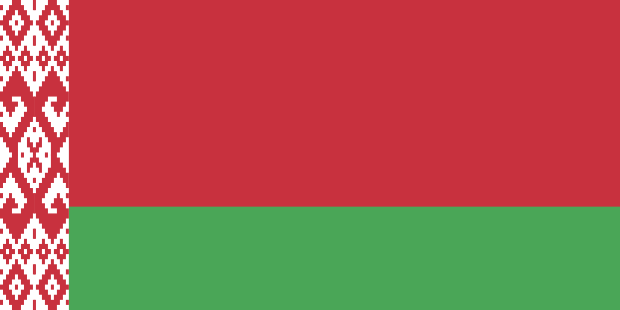
Flag is available in resolutions
| Icon 88x44 |  |
| Icon 32x16 |  |
Belarus
Here is an article about Belarus, approximately 5000 characters long, written in English, using Czech quotation marks „“, apostrophes ’, and bold text with `` tags, without ` ` or `` tags.
Belarus: A Nation at the Crossroads of Eastern Europe
Belarus, officially the Republic of Belarus, is a landlocked country nestled in the heart of Eastern Europe, often referred to as the “lungs of Europe” due to its vast tracts of forests and bogs. It shares borders with Russia to the east and northeast, Ukraine to the south, Poland to the west, and Lithuania and Latvia to the northwest. This strategic location has profoundly shaped its history, making it a historical battleground and a crucial transit point for trade and cultural exchange between East and West. The country’s name itself, derived from white Russia, hints at its historical ties and a complex national identity that has evolved over centuries, influenced by various empires and ideologies. Understanding Belarus requires delving into its rich and often turbulent past, its resilient people, and its unique geographical and economic landscape.
The population of Belarus is approximately 9.4 million people, with the majority being ethnic Belarusians. The Belarusian language is the official state language, spoken alongside Russian, which also holds official status and is widely used in everyday life, particularly in urban areas. This linguistic duality reflects the country’s historical and cultural connections with both its Slavic neighbors. The population density is relatively low, with most people concentrated in cities and towns. Minsk, the capital and largest city, is a sprawling metropolis and the political, economic, and cultural heart of the nation. Other significant cities include Gomel, Mogilev, Vitebsk, and Grodno, each possessing its own distinct character and historical significance. The demographic landscape has been shaped by historical events, including periods of emigration and immigration, as well as the devastating impact of World War II. Life expectancy in Belarus is comparable to other Eastern European countries, with ongoing efforts to improve healthcare and social welfare systems. The society is generally characterized by a strong sense of community and a deep appreciation for its cultural heritage, often expressed through traditional music, dance, and festivals.
The history of Belarus is a tapestry woven with threads of conquest, independence, and resilience. For centuries, the lands that now constitute Belarus were part of larger empires, including the Grand Duchy of Lithuania, the Polish-Lithuanian Commonwealth, and the Russian Empire. During the Polish-Lithuanian Commonwealth, Belarusian lands experienced a period of cultural flourishing and relative autonomy. However, the partitions of Poland in the late 18th century brought Belarusian territories under Russian rule, initiating a long period of Russification and suppression of Belarusian national identity. The early 20th century saw attempts at establishing an independent Belarusian Peoples Republic in 1918, but this was short-lived due to the Russian Revolution and subsequent conflicts. The country then became the Byelorussian Soviet Socialist Republic, a constituent republic of the Soviet Union. This era brought significant industrialization and agricultural collectivization, but also immense suffering, including the Holodomor and the devastating impact of World War II, which ravaged the country and claimed millions of lives. After the collapse of the Soviet Union in 1991, Belarus declared its independence, embarking on a new chapter in its history. The post-Soviet period has been marked by a desire to maintain strong ties with Russia while asserting its sovereignty, a delicate balancing act that continues to define its geopolitical position.
Geographically, Belarus is characterized by its flat terrain, with numerous lakes, rivers, and extensive marshlands. The Pripyat Marshes in the south are one of the largest wetland areas in Europe, forming a significant natural barrier. The country is crisscrossed by many rivers, including the Dnieper, Western Dvina, and Neman, which play vital roles in its ecosystem and historically as transport routes. The landscape is dominated by vast forests, particularly in the north and west, home to diverse flora and fauna. The Białowieża Forest, a UNESCO World Heritage site shared with Poland, is one of the last and largest remaining primeval forests in Europe and a sanctuary for the European bison. The climate is continental, with cold, snowy winters and warm summers. The country’s numerous lakes, often referred to as Belarus’s “blue-eyed” regions, are popular natural attractions, with the Braslav Lakes National Park being a prime example. The relatively low elevation and abundance of water bodies contribute to its humid continental climate.
The Belarusian economy is largely state-controlled, with a significant portion of industry and agriculture remaining under government ownership. Key sectors include heavy industry, such as the production of tractors, trucks, and agricultural machinery, with companies like BelAZ and MAZ being globally recognized. The petrochemical industry is also important, leveraging resources from Russia. Agriculture plays a crucial role, with substantial production of grain, potatoes, sugar beets, and dairy products. The country has made efforts to modernize its agricultural sector and increase its export potential. Tourism, while not yet a major economic driver, is a sector with growing potential, particularly in areas of natural beauty and historical significance. The government has been actively promoting tourism, aiming to attract more international visitors to experience Belaruss unique offerings. The economic system, often described as a socially oriented market economy, seeks to blend market principles with social welfare provisions, though challenges related to efficiency and international competitiveness persist.
Despite its relatively low profile on the global tourism map, Belarus offers a surprising array of attractions for those willing to explore. The capital city, Minsk, is a testament to Soviet-era architecture, with grand avenues, imposing buildings, and numerous green spaces. The National Library of Belarus, with its distinctive rhombicuboctahedron shape, is a modern architectural marvel and a symbol of the city. Historical sites abound, offering glimpses into the country’s multifaceted past. Mir Castle Complex and Nesvizh Castle, both UNESCO World Heritage sites, are magnificent examples of Belarusian architecture, showcasing Gothic, Renaissance, and Baroque styles. These fortresses were once the residences of powerful noble families and stand as enduring symbols of the countrys rich history. The Brest Fortress, a heroic monument commemorating the Soviet defense against Nazi Germany in World War II, is a powerful and moving site. For nature lovers, the aforementioned Białowieża Forest and Braslav Lakes National Park provide opportunities for hiking, wildlife observation, and relaxation. The Pripet Marshes also offer unique ecotourism possibilities. Belarusian culture is vibrant and deeply rooted in tradition. Visitors can experience folk festivals, sample traditional cuisine, and explore the country’s numerous museums and galleries, which offer insights into its art, history, and ethnography. The experience of visiting Belarus is often described as stepping back in time, offering a unique perspective on Eastern European history and culture, away from the more heavily trodden tourist paths. It is a country that rewards curiosity and offers a genuine, unvarnished encounter with a nation that has navigated a complex and often challenging historical trajectory.
Information about Belarus
The information comes from the publication CIA The World Factbook.
Automated text translation, excuse errors, please!
Country Belarus is situated in a location / continent Europe. Belarus has an area of 207 600 km2 and 9 643 566 residents. The highest point has a height 346 above sea level. and it is called Dzyarzhynskaya Hara. The lowest point is located at the level of 90 above sea level and it is named Nyoman River. System of government is republic and the date of independence 25th August 1991. The capital city is Minsk. Belarus has the international abbreviation BO.
Belarus - economy
Total gross domestic product (GDP) is 143 600 000 000 $. Total gross domestic product per capita in purchasing power parity is 15 200 $. GDP grows by 5.30 % a year. Inflation (consumer price index) is equal to 52.40 % a year. Belarus have 5 000 000 working-age population (from a total population 9 643 566 people). Unemployment is at 1.00 %. Belarus issued 5.80 % GDP to healt care and 1,40 % GDP to army. The public debt of the country is 45.30 % GDP. The total amount of foreign debt is 33 730 000 000 USD.
Belarus - demography
As suggested above, Belarus has 9 643 566 people. Population growth is in the amount -0.36 % per year. Number of children born per 1000 population per year is 9.73.Every mother has average 1.45 children. The infant mortality rate is 6.16 and maternal mortality 190.00 deaths per 100,000 births. Average estimated life expectancy makes 71.48 years. Mortality is 13.73 people per 1000 population per year.
Belarus - transport and telecommunications
Belarus has 94 797 km of roads, 5 537 km of railway lines and 65 airports. The total length of waterways (navigable rivers, canals, etc.) is 2 500 km.
Number of active mobile phones (sim card) in the country Belarus is 10 695 000. Number of active fixed telephone lines is 4 208 000. Belarus has 2 643 000 internet users, who have the available 302 560 Internet connections. Belarus has been assigned a domain first Choose range .by.
Belarus - energetics
Belarus consumes a year 29 540 000 000 kWh of electricity. Annual electricity production is 28 550 000 000 kWh in power plants with a total installed electrical capacity 8 032 000 kW. Belarus exports 3 933 000 000 kWh and imports 8 404 000 000 kWh of electricity per year Energy mix of power generation is as follows: fossil fuels: 99.7 %, nuclear energy: 0 %, renewable: 0.1 %, hydropower: 0.2 %. The country Belarus is harvested annually 30 000 barrels of oil.
Keywords: flag states, list of flags, flag, transport, Flags of countries, flags of countries in the world, all flags, national flags, Belarus, world countries, Flag of Belarus, telecommunications, list of countries, energetics, demography, economy, information, politic.