United Kingdom
Flag of United Kingdom
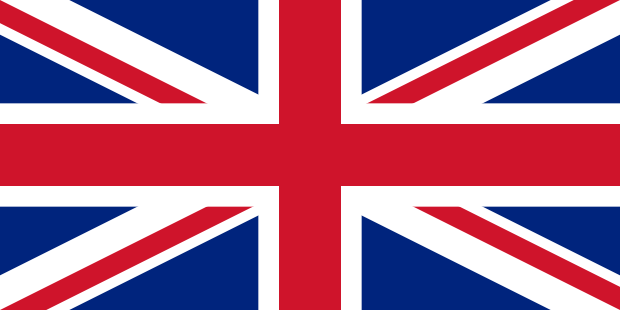
Flag is available in resolutions
| Icon 88x44 |  |
| Icon 32x16 |  |
United Kingdom
The United Kingdom: A Tapestry of History, Culture, and Innovation
The United Kingdom of Great Britain and Northern Ireland, commonly known as the UK, is a sovereign island country situated off the northwestern coast of the European mainland. It is an archipelago composed of the island of Great Britain, which contains England, Scotland, and Wales, and the northeastern part of the island of Ireland, which constitutes Northern Ireland. This fascinating nation, steeped in centuries of history and characterized by its diverse landscapes and vibrant culture, has profoundly influenced the world in areas ranging from language and law to scientific discovery and political thought. Its geographical position, at the crossroads of major trade routes and a historical gateway to the Americas, has played a pivotal role in shaping its destiny and its global impact.
The population of the United Kingdom is a rich mosaic, reflecting centuries of migration and settlement. As of recent estimates, the UK is home to over 67 million people, making it the 22nd most populous country in the world. The demographic makeup is incredibly diverse, with a significant proportion of the population originating from Commonwealth countries, particularly South Asia, the Caribbean, and Africa. This multiculturalism is a defining characteristic of modern Britain, evident in its cities, its cuisine, its music, and its societal fabric. London, the capital city, is a global metropolis, a melting pot of cultures and nationalities, and a testament to the UKs enduring appeal as a destination for people from all walks of life. Beyond the capital, other major urban centers like Manchester, Birmingham, Glasgow, and Liverpool also boast diverse populations and vibrant communities. The distribution of the population is uneven, with a higher concentration in the more industrialized and economically developed areas of England, particularly in the south. The rural areas, especially in Scotland and Wales, are more sparsely populated, offering vast expanses of natural beauty and a more tranquil way of life. The aging population is a growing concern, mirroring trends seen in many developed nations, with implications for healthcare, pensions, and the workforce.
The history of the United Kingdom is a long and complex narrative, marked by periods of conquest, unification, and imperial expansion. Its origins can be traced back to prehistoric settlements, followed by the arrival of Celtic tribes, the Roman invasion, and the Anglo-Saxon migrations. The Norman Conquest of 1066, led by William the Conqueror, was a pivotal moment, profoundly shaping the English language, legal system, and social structure. Over the centuries, the individual kingdoms of England, Scotland, and Wales gradually coalesced, though not without periods of conflict and resistance. The Act of Union in 1707 formally united the Kingdom of England and the Kingdom of Scotland to form the Kingdom of Great Britain. Later, the Acts of Union in 1800 united Great Britain with Ireland, creating the United Kingdom of Great Britain and Ireland. The early 20th century saw the independence of most of Ireland, leaving Northern Ireland as part of the UK. The British Empire, at its zenith in the 19th and early 20th centuries, was the largest empire in history, encompassing territories across the globe and leaving an indelible mark on the political, economic, and cultural landscape of countless nations. The legacy of this empire is a subject of ongoing debate and reflection, influencing contemporary discussions about identity, historical responsibility, and international relations. The UK has also been at the forefront of major global events, including both World Wars, and has played a significant role in international organizations like the United Nations and, until recently, the European Union.
Geographically, the United Kingdom presents a varied and captivating panorama. The island of Great Britain is characterized by a diverse topography. England, the largest and most populous country, features rolling hills, fertile plains, and a long coastline. The Pennines, a range of hills, form a backbone in the north, while the Cotswolds in the south offer picturesque landscapes. Scotland, to the north, is renowned for its dramatic Highlands, rugged mountains, deep glens, and numerous islands, including the Inner and Outer Hebrides. The Cairngorms, the UKs largest national park, showcases its wild and untamed beauty. Wales, to the west, is predominantly mountainous, with the Snowdonia National Park home to the highest peak in the UK outside of Scotland. Its coastline is indented with bays and peninsulas, offering stunning sea views. Northern Ireland, situated on the island of Ireland, is characterized by rolling hills, fertile farmland, and a beautiful coastline, including the iconic Giants Causeway. The UKs climate is temperate maritime, with mild summers, cool winters, and a generally high level of rainfall throughout the year. The proximity to the Atlantic Ocean influences weather patterns, leading to frequently changing conditions. The country is crisscrossed by numerous rivers, such as the Thames, Severn, and Clyde, and dotted with significant lakes, particularly in Scotland and the Lake District.
The industrial and economic landscape of the United Kingdom has undergone a profound transformation over the past few centuries. Historically, the UK was the birthplace of the Industrial Revolution, a period of unprecedented technological advancement and economic growth driven by innovations in manufacturing, mining, and transportation. Industries such as textiles, coal mining, iron and steel production, and shipbuilding were once the backbone of the British economy. While these traditional heavy industries have declined significantly, the UK has successfully transitioned to a service-based economy, with finance, insurance, and business services playing a dominant role. London remains a global financial hub, attracting investment and talent from around the world. The creative industries, including film, television, music, and design, are also significant contributors to the economy and global cultural influence. The automotive and aerospace sectors continue to be important manufacturing areas, employing a skilled workforce and contributing to exports. The pharmaceutical and biotechnology sectors are also areas of strength, with significant investment in research and development. The UK also has a substantial energy sector, with offshore oil and gas reserves in the North Sea playing a crucial role, alongside a growing commitment to renewable energy sources like wind and solar power. Despite its economic strengths, the UK, like many developed nations, faces challenges such as income inequality, regional disparities in economic prosperity, and the ongoing adjustments following its departure from the European Union.
The United Kingdom offers an astonishing array of tourist attractions, catering to a wide range of interests. London, the capital, is a global magnet, boasting iconic landmarks such as the Houses of Parliament and Big Ben, Buckingham Palace, the Tower of London, and the British Museum. Its world-class theaters, art galleries, and vibrant nightlife add to its appeal. Beyond London, the historic cities of Edinburgh, with its majestic castle and medieval Old Town, and Bath, famous for its Roman Baths and Georgian architecture, are perennial favorites. The rugged beauty of the Scottish Highlands and Islands, the dramatic landscapes of Snowdonia National Park in Wales, and the serene beauty of the Lake District in England offer unparalleled opportunities for outdoor pursuits like hiking, climbing, and wildlife spotting. For those interested in history, the ancient standing stones of Stonehenge, the Roman forts along Hadrians Wall, and the numerous castles scattered across the country provide a tangible link to the past. The UKs rich literary heritage is also a draw, with literary tours exploring the homes and haunts of famous writers. From the charming villages of the Cotswolds to the vibrant cultural scene of Manchester and the historic maritime heritage of Liverpool, the United Kingdom presents a diverse and captivating experience for every visitor. The nations commitment to preserving its heritage, coupled with its dynamic contemporary culture, ensures that it remains a top destination for travelers seeking a blend of history, culture, and natural beauty.
Information about United Kingdom
Spojené království Velké Británie a Severního Irska.
The information comes from the publication CIA The World Factbook.
Automated text translation, excuse errors, please!
Country United Kingdom is situated in a location / continent Europe. United Kingdom has an area of 243 610 km2 and 63 047 162 residents. The highest point has a height 1 343 above sea level. and it is called Ben Nevis. The lowest point is located at the level of -4 above sea level and it is named The Fens. System of government is constitutional monarchy, Commonwealth member country.The capital city is London. United Kingdom has the international abbreviation UK.
United Kingdom - economy
Total gross domestic product (GDP) is 2 290 000 000 000 $. Total gross domestic product per capita in purchasing power parity is 36 600 $. GDP grows by 0.70 % a year. Inflation (consumer price index) is equal to 4.50 % a year. United Kingdom have 31 730 000 working-age population (from a total population 63 047 162 people). Unemployment is at 8.10 %. United Kingdom issued 9.30 % GDP to healt care .The public debt of the country is 86.30 % GDP. The total amount of foreign debt is 9 836 000 000 000 USD.
United Kingdom - demography
As suggested above, United Kingdom has 63 047 162 people. Population growth is in the amount 0.55 % per year. Number of children born per 1000 population per year is 12.27.Every mother has average 1.91 children. The infant mortality rate is 4.56 and maternal mortality 12.00 deaths per 100,000 births. Average estimated life expectancy makes 80.17 years. Mortality is 9.33 people per 1000 population per year.
United Kingdom - transport and telecommunications
United Kingdom has 394 428 km of roads, 16 454 km of railway lines and 462 airports. The total length of waterways (navigable rivers, canals, etc.) is 3 200 km. There is registered 504 ships.
Number of active mobile phones (sim card) in the country United Kingdom is 80 799 000. Number of active fixed telephone lines is 33 320 000. United Kingdom has 51 444 000 internet users, who have the available 8 409 000 Internet connections. United Kingdom has been assigned a domain first Choose range .uk.
United Kingdom - energetics
United Kingdom consumes a year 325 800 000 000 kWh of electricity. Annual electricity production is 352 700 000 000 kWh in power plants with a total installed electrical capacity 88 020 000 kW. United Kingdom exports 4 481 000 000 kWh and imports 7 144 000 000 kWh of electricity per year Energy mix of power generation is as follows: fossil fuels: 75.4 %, nuclear energy: 12.3 %, renewable: 7.3 %, hydropower: 1.9 %. The country United Kingdom is harvested annually 1 099 000 barrels of oil.
Keywords: flag states, economy, United Kingdom, flags of countries in the world, energetics, transport, telecommunications, information, world countries, list of flags, flag, Flag of United Kingdom, Flags of countries, national flags, demography, all flags, list of countries, politic.