European Union
Flag of European Union
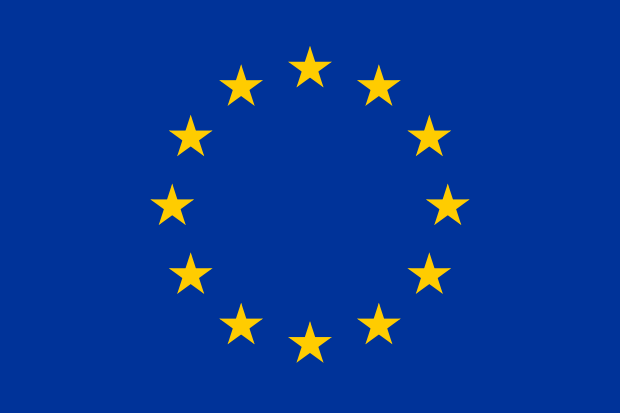
Flag is available in resolutions
| Icon 88x59 |  |
| Icon 32x21 |  |
European Union
The European Union: A Unique Union of Nations
The European Union (EU) stands as a singular entity on the global stage, a political and economic union of 27 member states located primarily in Europe. It is a project born from the ashes of World War II, driven by a profound desire for lasting peace and prosperity on a continent that had been ravaged by conflict. Unlike any other supranational organization, the EU has gradually evolved from a purely economic bloc into a multifaceted entity with significant political influence, encompassing a wide range of policy areas from trade and agriculture to environmental protection and foreign policy. Its unique structure, characterized by shared sovereignty and a complex institutional framework, allows its member states to act collectively on issues that transcend national borders, amplifying their voice and impact in the international arena. The very concept of the EU represents a bold experiment in international cooperation, a testament to the belief that collaboration and integration can foster greater stability, economic growth, and a higher quality of life for its citizens.
The demographic landscape of the European Union is as diverse as its member states, collectively representing a significant portion of the global population. With approximately 450 million inhabitants, the EU is a densely populated region, though population distribution varies considerably. Western and Central European countries generally have higher population densities than their Eastern counterparts, and urban areas are significantly more populated than rural regions. The age structure of the EU population is a subject of ongoing discussion and policy development, with a growing proportion of older citizens and a declining birth rate in many member states. This demographic shift presents both challenges and opportunities, influencing labor markets, healthcare systems, and pension schemes. The EU is also a region of significant cultural and linguistic diversity. While there are 24 official languages, reflecting the rich tapestry of its constituent nations, a common understanding and a shared European identity have emerged, fostered by free movement, educational exchanges, and a common set of values. This diversity is not merely a matter of statistics; it is a vibrant aspect of European life, contributing to a rich cultural heritage that attracts millions of visitors each year.
The history of the European Union is a compelling narrative of reconciliation, integration, and evolving ambition. Its origins can be traced back to the post-World War II era, a period marked by devastation and a desperate search for a way to prevent future conflicts. The foundational step was the establishment of the European Coal and Steel Community (ECSC) in 1951, which brought together six countries – Belgium, France, Germany, Italy, Luxembourg, and the Netherlands – to pool their coal and steel resources, key ingredients for warfare. The success of the ECSC paved the way for the Treaty of Rome in 1957, which created the European Economic Community (EEC), aiming to establish a common market and foster economic cooperation. Over the following decades, the EEC, later renamed the European Community (EC), expanded its membership and scope. The fall of the Berlin Wall and the end of the Cold War in the late 1980s and early 1990s provided a new impetus for integration, leading to the Maastricht Treaty in 1992, which officially established the European Union. This treaty introduced the concept of European citizenship, laid the groundwork for a common foreign and security policy, and set out the path towards economic and monetary union, culminating in the introduction of the euro as a single currency in 1999. The subsequent decades have seen further enlargements, incorporating former Eastern Bloc countries and, more recently, Croatia, transforming the EU into the expansive union it is today. Each stage of its history has been characterized by a delicate balance between national sovereignty and supranational cooperation, a continuous process of negotiation and compromise that defines its unique character.
Geographically, the European Union spans a vast and varied territory, encompassing a significant portion of the European continent. From the Atlantic coastlines of Portugal and Ireland to the Baltic shores of the Baltic states and the Mediterranean islands of Greece and Cyprus, the EUs geography is remarkably diverse. It includes major river systems like the Rhine and the Danube, which have historically served as vital arteries for trade and communication. The EU boasts a wide range of climates, from the oceanic climate of Western Europe to the continental climate of the East and the Mediterranean climate of the South. This geographical diversity influences everything from agricultural production to tourism and urban development. The EUs geographical position also places it at a crossroads of global trade routes, with access to major sea lanes and land connections. The member states share common borders, facilitating the free movement of people and goods, a cornerstone of the EUs single market. While the majority of the EUs territory lies on the mainland, several member states are archipelagos or islands, adding to the geographical complexity and distinctiveness of the Union. The shared commitment to environmental protection and sustainable development across this diverse landscape is a key priority for the EU, recognizing the interconnectedness of its natural resources and the need for collective action.
The industrial landscape of the European Union is a testament to its economic prowess and technological innovation, characterized by a blend of traditional manufacturing and cutting-edge industries. Historically, heavy industries like coal mining, steel production, and shipbuilding played a crucial role, particularly in countries like Germany, France, and the United Kingdom. While some of these sectors have undergone significant transformation due to globalization and environmental concerns, they remain important in certain regions. Today, the EU is a global leader in a wide array of sectors. The automotive industry, with iconic brands from Germany, France, and Italy, is a powerhouse, renowned for its engineering excellence and advanced technologies. The aerospace sector, particularly strong in France and Germany, is at the forefront of aircraft manufacturing and space exploration. The pharmaceutical and chemical industries are also major contributors, driving innovation in healthcare and materials science. Furthermore, the EU is a leader in renewable energy technologies, with significant investments in wind, solar, and other sustainable energy sources, reflecting its commitment to the green transition. The service sector, encompassing finance, tourism, and information technology, is also a substantial driver of the EUs economy, creating a diverse and dynamic industrial base. The EUs single market facilitates the seamless flow of goods, services, and capital, fostering competition and encouraging investment across member states.
The European Union offers an unparalleled wealth of tourist attractions, drawing millions of visitors annually to its diverse landscapes, rich history, and vibrant cultures. From the iconic Eiffel Tower in Paris and the Colosseum in Rome to the ancient Acropolis in Athens and the canals of Venice, Europes historical and architectural heritage is simply breathtaking. Beyond the well-trodden paths, countless hidden gems await discovery, from the picturesque villages of the French Riviera and the rolling vineyards of Tuscany to the dramatic fjords of Norway and the historic cities of Eastern Europe. Cultural tourism is a major draw, with world-class museums and galleries showcasing masterpieces of art and history, vibrant music festivals, and traditional celebrations that offer a glimpse into the soul of each nation. Nature lovers can explore the stunning natural beauty of the Alps, the rugged coastlines of Ireland, the vast forests of Scandinavia, and the unique biodiversity of the Mediterranean. The EUs commitment to sustainable tourism is also growing, with an emphasis on preserving natural and cultural heritage for future generations. The ease of travel within the Schengen Area, which allows for borderless movement among most EU member states, further enhances the appeal of the EU as a tourist destination, making it an accessible and unforgettable experience for travelers from around the globe.
Information about European Union
The information comes from the publication CIA The World Factbook.
Automated text translation, excuse errors, please!
Country European Union is situated in a location / continent Europe. The highest point has a height 4 807 above sea level. and it is called Mont Blanc. The lowest point is located at the level of -7 above sea level and it is named Lammefjord, Denmark. and the date of independence 7th February 1992. The capital city is Brussels (Belgium), Strasbourg (France), Luxembourg. European Union has the international abbreviation EE.
European Union - economy
Total gross domestic product (GDP) is 15 650 000 000 000 $. Total gross domestic product per capita in purchasing power parity is 34 500 $. GDP grows by 1.60 % a year. Inflation (consumer price index) is equal to 3.00 % a year. European Union have 228 400 000 working-age population (from a total population people). Unemployment is at 9.50 %. The total amount of foreign debt is 16 080 000 000 000 USD.
European Union - demography
The infant mortality rate is 4.49 .Average estimated life expectancy makes 79.76 years.
European Union - transport and telecommunications
.
European Union has been assigned a domain first Choose range .eu. .
European Union - energetics
European Union consumes a year 3 037 000 000 000 kWh of electricity. Annual electricity production is 3 345 000 000 000 kWh ..
Keywords: flag, national flags, Flag of European Union, flags of countries in the world, world countries, all flags, Flags of countries, flag states, telecommunications, information, energetics, demography, list of flags, economy, European Union, transport, list of countries, politic.