Slovakia
Flag of Slovakia
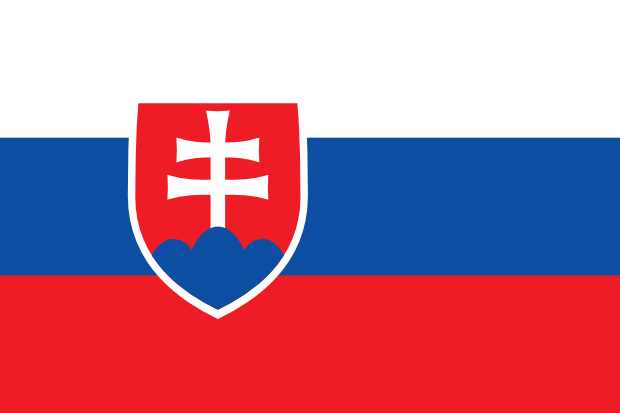
Flag is available in resolutions
| Icon 88x59 |  |
| Icon 32x21 |  |
Slovakia
Slovakia: A Land of Castles, Mountains, and Enduring Spirit
Nestled in the heart of Central Europe, Slovakia, officially the Slovak Republic, is a nation often overlooked but rich in history, breathtaking natural beauty, and a vibrant cultural tapestry. From its dramatic mountain ranges to its well-preserved medieval towns and burgeoning industrial sector, Slovakia offers a compelling blend of tradition and modernity. This landlocked country, bordered by the Czech Republic, Poland, Ukraine, Hungary, and Austria, has a storied past that has shaped its present identity and continues to influence its future trajectory. Understanding Slovakia requires delving into its diverse geography, its complex historical evolution, the character of its people, and the industries that drive its economy, all while acknowledging the allure of its many tourist attractions.
The Slovak landscape is dominated by two principal mountain ranges: the Carpathians in the north and east, and the Slovak Ore Mountains in the central part of the country. The High Tatras, a sub-range of the Carpathians, are a jewel in Slovakia’s crown, boasting the highest peaks in the country, including Gerlachovský štít, and offering unparalleled opportunities for hiking, skiing, and mountaineering. These majestic mountains are characterized by glacial valleys, pristine alpine lakes, and rugged peaks, providing a dramatic backdrop to the nation’s scenery. Beyond the high altitudes, Slovakia also features rolling hills, fertile plains in the south along the Danube River, and numerous rivers, the most significant being the Danube, Váh, and Hron. This varied topography has historically influenced settlement patterns, agricultural practices, and the development of transportation networks. The country’s strategic location has also meant it has been a crossroads of cultures and a battleground for various empires throughout history, leaving an indelible mark on its landscape and its people.
The history of Slovakia is a long and often turbulent narrative of shifting allegiances, struggles for autonomy, and periods of both prosperity and oppression. The territory that constitutes modern-day Slovakia was inhabited by various Slavic tribes in the early centuries AD. By the 9th century, it was a core part of Great Moravia, one of the earliest Slavic states. The arrival of Saints Cyril and Methodius in the 9th century brought Christianity and the Glagolitic alphabet, laying the foundation for Slovak literacy and culture. Following the decline of Great Moravia, the territory gradually fell under Hungarian rule, a period that lasted for nearly a millennium. During this time, Slovak identity was forged in the crucible of foreign domination, with periods of linguistic and cultural suppression interspersed with moments of national awakening, particularly in the 19th century with the rise of Slovak national consciousness. The early 20th century saw the dissolution of the Austro-Hungarian Empire, leading to the formation of Czechoslovakia in 1918, a union of Czechs and Slovaks. This period, while offering a degree of self-governance, was interrupted by World War II and the establishment of a Nazi-aligned Slovak State. After the war, Czechoslovakia was re-established, but under communist rule. The Velvet Revolution of 1989 peacefully ended communist control, and by 1993, a peaceful dissolution of Czechoslovakia led to the birth of the independent Slovak Republic, a moment of profound national significance.
The population of Slovakia is approximately 5.4 million people, predominantly ethnic Slovaks, who speak the Slovak language, a West Slavic tongue closely related to Czech. There are also significant minority populations, including Hungarians, Roma, Czechs, Rusyns, and Poles, contributing to the country’s diverse cultural mosaic. The capital city, Bratislava, situated on the Danube River, is the political, economic, and cultural heart of the nation, a dynamic metropolis that seamlessly blends historical architecture with modern development. Other important cities include Košice, the second-largest city, known for its rich history and vibrant arts scene, and Prešov, a regional center in eastern Slovakia. Slovak society is characterized by a strong sense of community, a deep appreciation for tradition, and a growing embrace of European integration. The country’s transition from communism to a market economy has brought about significant social and economic changes, fostering a new generation of entrepreneurs and professionals while also presenting challenges in areas such as rural development and social equality.
Slovakia’s economy has undergone a remarkable transformation since independence. Historically, the region was known for its mining and metallurgy, particularly in the Slovak Ore Mountains. In the post-communist era, the country has strategically focused on developing its industrial base, with a particular emphasis on automotive manufacturing. Slovakia has become a major European hub for car production, attracting significant foreign investment from global automotive giants. This sector has been a key driver of economic growth, creating jobs and boosting exports. Beyond automotive, other important industries include electronics, machinery, chemicals, and food processing. The country has also been investing in its service sector, including tourism, information technology, and financial services. Slovakia’s integration into the European Union in 2004 and its adoption of the Euro in 2009 have further solidified its position within the European economic landscape, facilitating trade and investment. However, challenges remain, including regional disparities in economic development, the need for continued innovation, and adapting to global economic shifts.
The allure of Slovakia for tourists is undeniable, offering a wealth of historical sites, natural wonders, and cultural experiences. The country boasts an impressive collection of castles and chateaux, earning it the nickname the land of castles. Bratislava Castle, perched majestically above the Danube, is a prominent landmark, offering panoramic views of the city and its surroundings. Spiš Castle, a UNESCO World Heritage site, is one of the largest castle complexes in Central Europe and a testament to medieval architectural prowess. Orava Castle, dramatically situated on a rocky outcrop, is another iconic fortress that has served as a backdrop for numerous films. Beyond its fortifications, Slovakia’s natural beauty is a major draw. The High Tatras are a paradise for outdoor enthusiasts, with hiking trails ranging from gentle walks to challenging climbs, and ski resorts attracting winter sports lovers. The Slovak Paradise National Park, with its deep gorges, waterfalls, and ladder-assisted trails, offers a unique and adventurous hiking experience. The country is also dotted with numerous thermal spas and mineral springs, offering opportunities for relaxation and rejuvenation. Culturally, Slovakia offers a rich heritage of folk traditions, music, and dance, which are celebrated in various festivals and events throughout the year. The charming medieval towns, such as Banská Štiavnica, a UNESCO World Heritage site known for its historic mining architecture, and Trnava, the Slovak Rome with its numerous churches, provide glimpses into the country’s past and offer a delightful experience for visitors seeking authentic cultural immersion. The blend of natural splendor and historical depth makes Slovakia a destination that promises discovery and enchantment for every traveler.
Information about Slovakia
The information comes from the publication CIA The World Factbook.
Automated text translation, excuse errors, please!
Country Slovakia is situated in a location / continent Europe. Slovakia has an area of 49 035 km2 and 5 483 088 residents. The highest point has a height 2 655 above sea level. and it is called Gerlachovsky Stit. The lowest point is located at the level of 94 above sea level and it is named Bodrok River. System of government is republic and the date of independence First January 1993. The capital city is Bratislava. Slovakia has the international abbreviation LO.
Slovakia - economy
Total gross domestic product (GDP) is 128 500 000 000 $. Total gross domestic product per capita in purchasing power parity is 23 600 $. GDP grows by 3.30 % a year. Inflation (consumer price index) is equal to 3.90 % a year. Slovakia have 2 713 000 working-age population (from a total population 5 483 088 people). Unemployment is at 13.50 %. Slovakia issued 8.50 % GDP to healt care and 1,08 % GDP to army. The public debt of the country is 43.30 % GDP. The total amount of foreign debt is 72 940 000 000 USD.
Slovakia - demography
As suggested above, Slovakia has 5 483 088 people. Population growth is in the amount 0.10 % per year. Number of children born per 1000 population per year is 10.38.Every mother has average 1.38 children. The infant mortality rate is 6.47 and maternal mortality 6.00 deaths per 100,000 births. Average estimated life expectancy makes 76.03 years. Mortality is 9.64 people per 1000 population per year.
Slovakia - transport and telecommunications
Slovakia has 43 761 km of roads, 3 622 km of railway lines and 37 airports. The total length of waterways (navigable rivers, canals, etc.) is 172 km. There is registered 11 ships.
Number of active mobile phones (sim card) in the country Slovakia is 5 983 000. Number of active fixed telephone lines is 1 056 000. Slovakia has 4 063 000 internet users, who have the available 1 387 000 Internet connections. Slovakia has been assigned a domain first Choose range .sk.
Slovakia - energetics
Slovakia consumes a year 28 760 000 000 kWh of electricity. Annual electricity production is 27 700 000 000 kWh in power plants with a total installed electrical capacity 7 155 000 kW. Slovakia exports 10 500 000 000 kWh and imports 10 900 000 000 kWh of electricity per year Energy mix of power generation is as follows: fossil fuels: 37.1 %, nuclear energy: 25.4 %, renewable: 2.7 %, hydropower: 22.0 %. The country Slovakia is harvested annually 5 781 barrels of oil.
Keywords: world countries, telecommunications, transport, information, national flags, list of countries, Flags of countries, Slovakia, flag, energetics, economy, Flag of Slovakia, flag states, flags of countries in the world, all flags, list of flags, demography, politic.