Poland
Flag of Poland
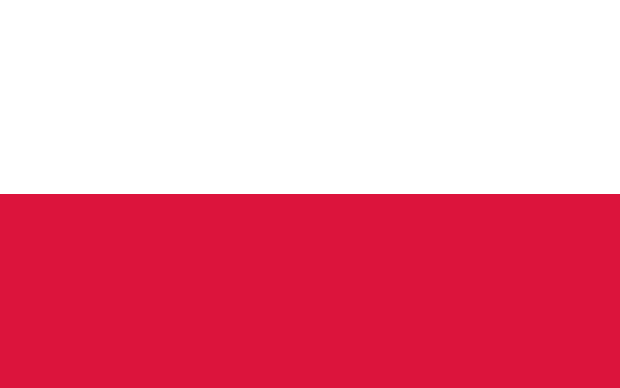
Flag is available in resolutions
| Icon 88x55 |  |
| Icon 32x20 |  |
Poland
Poland: A Tapestry of History, Resilience, and Vibrant Culture
Poland, officially the Republic of Poland, is a nation woven from threads of ancient history, dramatic transformations, and an enduring spirit. Situated in the heart of Central Europe, it is a country that has witnessed empires rise and fall, endured periods of immense hardship, and emerged as a dynamic and modern European state. Its geographical position has often placed it at a crossroads of civilizations, influencing its rich cultural heritage, its complex political landscape, and the very character of its people. From the Baltic coast in the north to the Carpathian Mountains in the south, Poland boasts a diverse topography that has shaped its development and continues to offer breathtaking natural beauty to its visitors. This article delves into the multifaceted identity of Poland, exploring its demographics, its storied past, its geographical features, its robust industrial sector, and the myriad of attractions that draw millions to its shores each year.
The Polish population, currently numbering around 38 million, is largely homogeneous, with ethnic Poles forming the vast majority. However, the country has a history of welcoming diverse communities, and while historical ethnic minorities such as Ukrainians, Belarusians, and Germans have seen their numbers fluctuate due to historical events, contemporary Poland is experiencing a renewed influx of foreign workers and immigrants, particularly from neighboring Eastern European countries. This demographic shift is contributing to a dynamic social fabric, albeit one that is still grappling with integration and evolving national identity. The Polish language, a West Slavic tongue, is spoken by virtually all citizens and is characterized by its complex grammar and phonetic nuances. The dominant religion is Roman Catholicism, deeply ingrained in Polish culture and history, influencing societal values and traditions. Despite periods of secularization, faith remains a significant aspect of life for many Poles, evident in the numerous churches, religious festivals, and the pervasive influence of religious symbolism in public life. The demographic landscape is also marked by an aging population and a declining birth rate, challenges common to many developed European nations, prompting ongoing discussions and policy initiatives aimed at addressing these trends.
Poland’s history is a compelling narrative of both glory and tribulation. Its origins can be traced back to the 10th century with the establishment of the first Polish state under the Piast dynasty. This period saw the adoption of Christianity in 966, a pivotal moment that aligned Poland with Western European civilization and laid the foundation for its future development. The Kingdom of Poland, and later the Polish-Lithuanian Commonwealth, became one of the largest and most influential states in Europe during the late Middle Ages and the Renaissance. This powerful union, established in the 14th century, was a beacon of religious tolerance and political innovation, boasting a unique system of noble democracy. However, this golden age was eventually eclipsed by internal strife and the rising power of neighboring empires. The partitions of Poland in the late 18th century, carried out by Russia, Prussia, and Austria, led to the complete disappearance of Poland from the map of Europe for 123 years. This period of foreign domination, though devastating, forged a strong sense of national identity and a fierce desire for independence, which was ultimately regained after World War I in 1918. The interwar period was a time of rebuilding and establishing a sovereign state, but it was tragically cut short by the outbreak of World War II. Poland bore the brunt of the Nazi German and Soviet invasions, suffering immense destruction and the horrific systematic extermination of its Jewish population in the Holocaust. The Warsaw Uprising of 1944, a heroic but ultimately doomed attempt to liberate the capital, stands as a testament to the indomitable spirit of the Polish people. Following the war, Poland fell under Soviet influence and became a communist state. The post-war era was characterized by reconstruction, but also by political repression and economic stagnation. The Solidarity movement, a trade union that emerged in the 1980s, played a crucial role in challenging communist rule and ultimately paved the way for the peaceful transition to democracy in 1989. This remarkable journey from oppression to freedom is a defining chapter in Polands modern history and a source of national pride.
Geographically, Poland is a land of striking contrasts and diverse landscapes. It is predominantly a lowland country, situated on the North European Plain, with the Baltic Sea defining its northern coastline. This coastal region features sandy beaches, picturesque cliffs, and numerous lakes, including the vast Masurian Lake District, often referred to as the “Land of a Thousand Lakes,” a paradise for sailing, fishing, and nature lovers. Moving south, the landscape transitions into rolling hills, vast agricultural plains, and a network of rivers, with the Vistula being the longest and most significant, flowing through major cities like Krakow and Warsaw. Further south, the terrain becomes more mountainous, culminating in the Sudetes in the west and the majestic Carpathian Mountains in the southeast, including the Tatra Mountains, Polands highest range, offering stunning alpine scenery, hiking opportunities, and winter sports. Polands climate is temperate, with distinct seasons. Summers are generally warm and pleasant, while winters can be cold and snowy, particularly in the mountainous regions, making it a popular destination for winter sports enthusiasts. The country is rich in natural resources, including coal, copper, silver, and natural gas, which have historically played a significant role in its industrial development. Its strategic location, bordering Germany, the Czech Republic, Slovakia, Ukraine, Belarus, and Lithuania, as well as the Baltic Sea, has made it a crucial transit point for trade and a bridge between Western and Eastern Europe.
The Polish economy has undergone a remarkable transformation since the fall of communism. Once heavily reliant on heavy industry, it has successfully transitioned to a market-based economy, integrating seamlessly into the European Union in 2004. The industrial sector remains a cornerstone of the Polish economy, with significant contributions from manufacturing, mining, and energy production. Key industries include automotive manufacturing, with major global brands having production facilities in Poland, as well as shipbuilding, chemicals, and food processing. Poland is a major producer of coal, which, while vital for its energy needs, also presents environmental challenges and is a focus of ongoing energy transition initiatives. The service sector has grown exponentially, encompassing IT, finance, logistics, and tourism, reflecting the countrys modernization and increasing integration into the global economy. Poland has become an attractive destination for foreign investment, benefiting from its skilled workforce, competitive labor costs, and its strategic location within the EU. The agricultural sector also remains important, with Poland being a significant exporter of agricultural products, including apples, berries, and poultry. The ongoing development of infrastructure, particularly transportation networks, further enhances its economic potential and connectivity.
Poland is a treasure trove of tourist attractions, appealing to a wide range of interests. Its historical cities are particularly captivating. Warsaw, the capital, is a testament to resilience, having been meticulously rebuilt after its near-total destruction during World War II. The Old Town, a UNESCO World Heritage site, is a stunning reconstruction of its pre-war glory, with colorful merchant houses and charming cobblestone streets. The Royal Castle and the Łazienki Park, with its iconic statue of Chopin, are must-see landmarks. Krakow, the former royal capital, is arguably Polands most beautiful city, boasting a magnificently preserved medieval Old Town, the vast Market Square, and the imposing Wawel Castle, the seat of Polish kings. The Jewish Quarter, Kazimierz, is a poignant reminder of the citys rich Jewish heritage and its tragic past. The nearby Auschwitz-Birkenau Memorial and Museum, the site of the former Nazi concentration and extermination camp, is a somber but essential pilgrimage for understanding the horrors of the Holocaust. Other historically significant cities include Gdańsk, a vibrant port city on the Baltic coast with a rich maritime history and the birthplace of the Solidarity movement; Wrocław, known for its picturesque Market Square, numerous islands, and charming bridges; and Poznań, a dynamic city with a beautiful Old Town and a reputation for its lively atmosphere. Beyond its urban centers, Poland offers abundant natural beauty. The Tatra Mountains provide opportunities for hiking, skiing, and breathtaking vistas, with Zakopane serving as a popular mountain resort town. The Masurian Lake District is a haven for water sports and relaxation. The Białowieża Forest, a UNESCO World Heritage site and one of Europes last remaining primeval forests, is home to the majestic European bison. Polands diverse attractions, from its poignant historical sites and vibrant cities to its stunning natural landscapes, offer a rich and rewarding experience for any traveler. It is a country that has overcome immense challenges, preserving its unique identity while embracing its future as a modern and integral part of Europe.
Information about Poland
The information comes from the publication CIA The World Factbook.
Automated text translation, excuse errors, please!
Country Poland is situated in a location / continent Europe. Poland has an area of 312 685 km2 and 38 415 284 residents. The highest point has a height 2 499 above sea level. and it is called Rysy. The lowest point is located at the level of -2 above sea level and it is named near Raczki Elblaskie. System of government is republic and the date of independence 11th November 1918. The capital city is Warsaw. Poland has the international abbreviation PL.
Poland - economy
Total gross domestic product (GDP) is 781 500 000 000 $. Total gross domestic product per capita in purchasing power parity is 20 600 $. GDP grows by 4.40 % a year. Inflation (consumer price index) is equal to 4.30 % a year. Poland have 17 850 000 working-age population (from a total population 38 415 284 people). Unemployment is at 12.40 %. Poland issued 7.10 % GDP to healt care and 1,90 % GDP to army. The public debt of the country is 56.70 % GDP. The total amount of foreign debt is 320 000 000 000 USD.
Poland - demography
As suggested above, Poland has 38 415 284 people. Population growth is in the amount -0.08 % per year. Number of children born per 1000 population per year is 9.96.Every mother has average 1.31 children. The infant mortality rate is 6.42 and maternal mortality 5.00 deaths per 100,000 births. Average estimated life expectancy makes 76.25 years. Mortality is 10.24 people per 1000 population per year.
Poland - transport and telecommunications
Poland has 423 997 km of roads, 19 428 km of railway lines and 125 airports. The total length of waterways (navigable rivers, canals, etc.) is 3 997 km. There is registered 9 ships.
Number of active mobile phones (sim card) in the country Poland is 49 200 000. Number of active fixed telephone lines is 6 921 000. Poland has 22 452 000 internet users, who have the available 12 928 000 Internet connections. Poland has been assigned a domain first Choose range .pl.
Poland - energetics
Poland consumes a year 127 200 000 000 kWh of electricity. Annual electricity production is 147 500 000 000 kWh in power plants with a total installed electrical capacity 33 030 000 kW. Poland exports 7 664 000 000 kWh and imports 6 310 000 000 kWh of electricity per year Energy mix of power generation is as follows: fossil fuels: 90.4 %, nuclear energy: 0 %, renewable: 2.5 %, hydropower: 2.8 %. The country Poland is harvested annually 19 730 barrels of oil.
Keywords: Flags of countries, national flags, transport, world countries, demography, economy, flag states, flag, all flags, Poland, energetics, flags of countries in the world, list of flags, list of countries, telecommunications, information, Flag of Poland, politic.