Hungary
Flag of Hungary
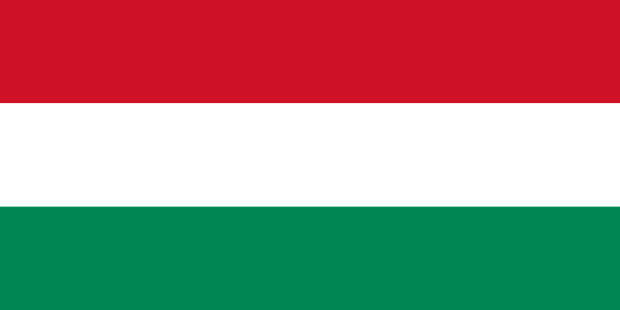
Flag is available in resolutions
| Icon 88x44 |  |
| Icon 32x16 |  |
Hungary
Hungary: A Land of Rich History, Vibrant Culture, and Enduring Charm
Hungary, a landlocked country nestled in the heart of Central Europe, boasts a captivating tapestry woven from centuries of history, a unique linguistic heritage, and a resilient spirit. Its geographical position, straddling the Great Hungarian Plain and the foothills of the Carpathian Mountains, has shaped its destiny, making it a crossroads of cultures and a strategically important region throughout the ages. From the ancient Magyars who first settled the Carpathian Basin to its modern-day identity as a member of the European Union, Hungary’s story is one of survival, innovation, and an enduring appreciation for its cultural treasures. This article delves into the multifaceted aspects of Hungary, exploring its people, its storied past, its diverse landscapes, its industrial prowess, and the myriad of attractions that draw visitors from across the globe.
The Hungarian population, numbering around 9.7 million, is characterized by its strong sense of national identity and a deep connection to its ancestral roots. The official language, Hungarian (Magyar), is a Finno-Ugric language, making it an linguistic outlier in the Indo-European dominated Europe. This linguistic uniqueness is a source of national pride and contributes to a distinct cultural identity. While the majority of the population identifies as ethnic Hungarian, the country has also historically been home to various ethnic minorities, including Roma, Germans, Slovaks, and Serbs, though their numbers have fluctuated over time. The Hungarian people are often described as warm, hospitable, and possessing a dry sense of humor. Family ties are highly valued, and traditional customs and celebrations continue to play a significant role in social life. The capital city, Budapest, is a melting pot of cultures and a vibrant center of contemporary Hungarian life, while rural areas often preserve more traditional ways of living.
Hungary’s history is a saga of triumphs and tribulations, marked by periods of great power, foreign domination, and remarkable resilience. The foundation of the Hungarian state dates back to the late 9th century with the arrival of the Magyar tribes led by Árpád. The establishment of the Kingdom of Hungary under Saint Stephen I in the year 1000 marked a pivotal moment, ushering in a new era of Christianization and statehood. The medieval period saw Hungary rise to prominence, with powerful kings and a flourishing court. However, this golden age was tragically cut short by the devastating Mongol invasion in the 13th century. Later, the Ottoman expansion in the 16th century led to a prolonged period of division and foreign rule, with much of the country falling under Ottoman control for over 150 years. Following the expulsion of the Ottomans, Hungary became part of the vast Habsburg Empire. The 19th century witnessed a surge of national consciousness, culminating in the Austro-Hungarian Compromise of 1867, which granted Hungary a degree of autonomy within the dual monarchy. The 20th century brought further upheaval, including the devastating consequences of World War I, the brief existence of the Hungarian Soviet Republic, and the brutal occupation during World War II. The post-war era saw Hungary fall under Soviet influence, experiencing the communist regime and the tragic events of the 1956 Hungarian Revolution, a brave but ultimately suppressed uprising against Soviet domination. The fall of communism in 1989 ushered in a new era of democracy and a renewed sense of national sovereignty, leading to Hungary’s accession to NATO in 1999 and the European Union in 2004.
Geographically, Hungary is a land of gentle plains and rolling hills, dominated by the Great Hungarian Plain (Nagy Alföld) in the east and south, and traversed by the Danube River, which divides the country into two distinct regions: Transdanubia (Dunántúl) to the west and the Great Hungarian Plain to the east. The Danube, one of Europe’s longest rivers, is a vital artery, flowing through the heart of Budapest and serving as a crucial waterway for transport and trade. The western part of the country is characterized by the Transdanubian Hills, a more varied landscape with low mountains, including the Bakony Mountains and the Mecsek Mountains, offering opportunities for hiking and exploring natural beauty. Lake Balaton, Central Europe’s largest freshwater lake, is a major tourist destination, particularly in the summer months, attracting sunbathers, swimmers, and water sports enthusiasts. Hungary also boasts a rich geothermal heritage, with numerous thermal springs scattered throughout the country, most notably in and around Budapest, earning it the moniker “City of Spas.” The climate is continental, with warm summers and cold winters, though the influence of the Atlantic Ocean brings a degree of moderation.
Hungary’s industrial landscape is diverse and has undergone significant transformation in recent decades. Historically, agriculture played a dominant role, with fertile plains ideal for growing grains, corn, and sunflowers, as well as producing renowned Hungarian wines. While agriculture remains important, the country has successfully transitioned to a more industrialized and service-oriented economy. Key sectors include automotive manufacturing, with major international car producers establishing significant operations in Hungary, contributing substantially to its export economy. Electronics, pharmaceuticals, and food processing are also vital industries. The country benefits from a skilled workforce and a strategic location within Europe, making it an attractive destination for foreign investment. The transition from a centrally planned economy to a market economy has presented challenges, but Hungary has demonstrated a remarkable capacity for adaptation and growth. Efforts are ongoing to further develop its technological sectors and embrace innovation.
Hungary is a treasure trove of tourist attractions, offering a captivating blend of historical sites, vibrant cultural experiences, and stunning natural beauty. The capital city, Budapest, is undoubtedly the crown jewel. Nicknamed the “Pearl of the Danube,” it is a city of breathtaking architecture, grand boulevards, and a rich cultural scene. The Parliament Building, a magnificent neo-Gothic masterpiece, stands majestically on the banks of the Danube, while Buda Castle, perched on a hill overlooking the city, offers panoramic views and houses historical museums. The Chain Bridge, an iconic symbol of Budapest, connects the Buda and Pest sides of the city, and a stroll along Andrássy Avenue, a UNESCO World Heritage site, reveals elegant buildings and the Hungarian State Opera House. The city’s thermal baths, such as Széchenyi and Gellért, are world-renowned for their medicinal waters and opulent settings, offering a unique relaxation experience. Beyond Budapest, numerous historical towns and cities beckon. Eger is famous for its castle and its robust red wines, particularly Egri Bikavér. Pécs, in the south, boasts a rich Roman and Ottoman heritage, with its impressive mosque and cathedral. The charming Danube Bend, a picturesque stretch of the river north of Budapest, features historic towns like Esztergom, with its magnificent basilica, and Visegrád, with its medieval citadel. The Great Hungarian Plain offers a glimpse into traditional rural life, with opportunities to explore national parks like Hortobágy, a UNESCO World Heritage site renowned for its unique flora and fauna and its herds of grey cattle. Hungary’s culinary heritage is another major draw, with dishes like goulash, lángos, and chimney cake (kürtőskalács) delighting palates. The country’s wines, particularly from regions like Tokaj and Eger, are highly acclaimed and offer a delightful accompaniment to its hearty cuisine. From its majestic capital to its serene countryside, Hungary offers a journey through time, a feast for the senses, and an unforgettable experience for every traveler.
Information about Hungary
The information comes from the publication CIA The World Factbook.
Automated text translation, excuse errors, please!
Country Hungary is situated in a location / continent Europe. Hungary has an area of 93 028 km2 and 9 958 453 residents. The highest point has a height 1 014 above sea level. and it is called Kekes. The lowest point is located at the level of 78 above sea level and it is named Tisza river. System of government is republic and the date of independence 25th December 1000. The capital city is Budapest. Hungary has the international abbreviation HU.
Hungary - economy
Total gross domestic product (GDP) is 198 100 000 000 $. Total gross domestic product per capita in purchasing power parity is 19 800 $. GDP grows by 1.70 % a year. Inflation (consumer price index) is equal to 3.90 % a year. Hungary have 4 274 000 working-age population (from a total population 9 958 453 people). Unemployment is at 10.90 %. Hungary issued 8.20 % GDP to healt care and 1,75 % GDP to army. The public debt of the country is 80.60 % GDP. The total amount of foreign debt is 184 500 000 000 USD.
Hungary - demography
As suggested above, Hungary has 9 958 453 people. Population growth is in the amount -0.18 % per year. Number of children born per 1000 population per year is 9.49.Every mother has average 1.41 children. The infant mortality rate is 5.24 and maternal mortality 21.00 deaths per 100,000 births. Average estimated life expectancy makes 75.02 years. Mortality is 12.70 people per 1000 population per year.
Hungary - transport and telecommunications
Hungary has 197 519 km of roads, 8 057 km of railway lines and 41 airports. The total length of waterways (navigable rivers, canals, etc.) is 1 622 km.
Number of active mobile phones (sim card) in the country Hungary is 11 690 000. Number of active fixed telephone lines is 2 933 000. Hungary has 6 176 000 internet users, who have the available 3 064 000 Internet connections. Hungary has been assigned a domain first Choose range .hu.
Hungary - energetics
Hungary consumes a year 35 850 000 000 kWh of electricity. Annual electricity production is 35 340 000 000 kWh in power plants with a total installed electrical capacity 8 804 000 kW. Hungary exports 4 702 000 000 kWh and imports 9 897 000 000 kWh of electricity per year Energy mix of power generation is as follows: fossil fuels: 69 %, nuclear energy: 22 %, renewable: 8.3 %, hydropower: 0.6 %. The country Hungary is harvested annually 22 560 barrels of oil.
Keywords: demography, list of countries, economy, Flag of Hungary, transport, world countries, list of flags, all flags, Flags of countries, flag states, flags of countries in the world, telecommunications, national flags, Hungary, information, flag, energetics, politic.