Montenegro
Flag of Montenegro
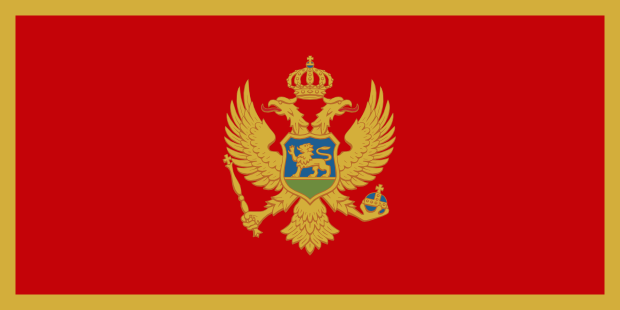
Flag is available in resolutions
| Icon 88x44 |  |
| Icon 32x16 |  |
Montenegro
Montenegro: A Jewel of the Adriatic
Montenegro, a small but captivating country nestled on the Balkan Peninsula, boasts a dramatic coastline, rugged mountains, and a rich tapestry of history and culture. Its name, meaning Black Mountain, aptly describes the imposing peaks that dominate its interior, providing a stunning contrast to the azure waters of the Adriatic Sea that lap its shores. This compact nation, though modest in size, punches well above its weight in terms of natural beauty and historical significance, offering a diverse and rewarding experience for any visitor. From its ancient fortified towns to its breathtaking national parks, Montenegro is a land of enduring allure.
The population of Montenegro is a vibrant mosaic, reflecting centuries of interaction and influence from various empires and cultures. Predominantly Montenegrin, the population also includes significant Serb, Bosniak, Albanian, and Croat minorities, contributing to a rich cultural landscape. The official language is Montenegrin, a South Slavic language closely related to Serbian, Bosnian, and Croatian, and many inhabitants also speak English, particularly in tourist areas. The dominant religion is Orthodox Christianity, with a notable Muslim minority, especially in the southern regions. This religious diversity has, for the most part, coexisted peacefully, shaping the countrys traditions and festivals. The Montenegrin people are often characterized by their warmth, hospitality, and a deep pride in their heritage, a heritage forged through a long and often turbulent history. Life in Montenegro, while increasingly embracing modern advancements, retains a strong connection to traditional values and community ties.
The history of Montenegro is a saga of resilience and defiance, marked by a long struggle for independence against powerful empires. For centuries, the region was a feudal principality, fiercely guarding its autonomy. The Ottoman Empire exerted considerable influence, but Montenegro managed to retain a degree of independence, often referred to as the Black Mountain Republic. This period of resistance is a cornerstone of Montenegrin national identity. In the 20th century, Montenegro became part of Yugoslavia, experiencing periods of monarchy and then communism. Following the breakup of Yugoslavia in the early 1990s, Montenegro remained in a union with Serbia. In 2006, a referendum led to Montenegros declaration of independence, marking a new chapter in its history. This journey from a fiercely independent principality to a modern nation-state is a testament to the enduring spirit of its people. The historical sites scattered across the country, from ancient fortresses to monasteries, bear witness to this rich and complex past, offering a tangible connection to the generations who shaped this land.
Geographically, Montenegro is a land of striking contrasts. The country can be broadly divided into three distinct regions: the coastal strip along the Adriatic Sea, the karst highlands, and the mountainous interior. The coastline, though relatively short, is one of the most beautiful in the Mediterranean, characterized by dramatic cliffs, secluded bays, and picturesque islands. The Bay of Kotor, a UNESCO World Heritage site, is a particularly stunning example, resembling a fjord with its deep inlets and surrounding mountains. Inland, the landscape transforms into rugged karst terrain, characterized by limestone formations, underground rivers, and deep canyons. The Durmitor National Park, another UNESCO site, is a prime example of Montenegros mountainous grandeur, featuring dramatic peaks, glacial lakes, and dense pine forests. The Skadar Lake, the largest lake in the Balkans, straddles the border with Albania and is a vital habitat for diverse bird species, offering a serene counterpoint to the rugged mountains. This diverse geography provides a wealth of natural attractions, from sun-drenched beaches to challenging hiking trails, making Montenegro a paradise for nature lovers and adventurers alike.
Montenegro’s economy, while still developing, is increasingly driven by tourism and its strategic location. The country has made significant strides in diversifying its industries. Tourism is undoubtedly the star performer, with the stunning Adriatic coastline and the majestic mountains attracting visitors from around the globe. The hospitality sector is a major employer, and investment in infrastructure, including hotels and resorts, continues to grow. Beyond tourism, Montenegro has a notable agricultural sector, producing wine, olives, and dairy products. Its industrial base includes aluminum processing, shipbuilding, and forestry, though these sectors have faced challenges in recent years. The country is also actively seeking foreign investment to further modernize its economy and create new opportunities. The government is committed to aligning its economic policies with European Union standards, as Montenegro is an aspiring member. This economic evolution reflects a nation striving for prosperity while leveraging its inherent natural and cultural assets.
Montenegro is replete with tourist attractions, offering something for every kind of traveler. The Bay of Kotor is an absolute must-see, with its charming medieval towns such as Kotor, Perast, and Herceg Novi. The fortified city of Kotor, a UNESCO World Heritage site, is a labyrinth of narrow streets, ancient churches, and bustling squares, all overshadowed by imposing city walls that climb the steep mountainside. Perast, a picturesque town known for its two enchanting islands, Our Lady of the Rocks and Saint George, offers a glimpse into a bygone era. The coastal town of Budva is renowned for its vibrant nightlife and beautiful beaches, while the exclusive island resort of Sveti Stefan, a former fishing village now transformed into a luxury hotel, is an iconic symbol of Montenegrin tourism. Inland, the Durmitor National Park beckons hikers and nature enthusiasts with its dramatic landscapes, including the Tara River Canyon, the deepest canyon in Europe, and the Black Lake, a stunning glacial lake. The historical capital, Cetinje, nestled in the mountains, offers a glimpse into Montenegros royal past with its palaces and museums. For those seeking a more serene experience, Skadar Lake National Park provides opportunities for birdwatching and boat trips amidst its tranquil waters and surrounding wetlands. The rugged beauty and historical depth of Montenegro ensure an unforgettable travel experience.
Information about Montenegro
The information comes from the publication CIA The World Factbook.
Automated text translation, excuse errors, please!
Country Montenegro is situated in a location / continent Europe. Montenegro has an area of 13 812 km2 and 657 394 residents. The highest point has a height 2 522 above sea level. and it is called Bobotov Kuk. The lowest point is located at the level of 0 above sea level and it is named Adriatic Sea. System of government is republic and the date of independence Third June 2006. The capital city is Podgorica. Montenegro has the international abbreviation MJ.
Montenegro - economy
Total gross domestic product (GDP) is 7 249 000 000 $. Total gross domestic product per capita in purchasing power parity is 11 700 $. GDP grows by 2.50 % a year. Inflation (consumer price index) is equal to 3.00 % a year. Montenegro have 251 300 working-age population (from a total population 657 394 people). Unemployment is at 11.50 %. The public debt of the country is 45.00 % GDP. The total amount of foreign debt is 1 200 000 000 USD.
Montenegro - demography
As suggested above, Montenegro has 657 394 people. Population growth is in the amount -0.63 % per year. Number of children born per 1000 population per year is 10.89. and maternal mortality 8.00 deaths per 100,000 births. Mortality is 9.03 people per 1000 population per year.
Montenegro - transport and telecommunications
Montenegro has 7 624 km of roads, 250 km of railway lines and 5 airports. There is registered 2 ships.
Number of active mobile phones (sim card) in the country Montenegro is 1 170 000. Number of active fixed telephone lines is 169 500. Montenegro has 280 000 internet users, who have the available 9 915 Internet connections. Montenegro has been assigned a domain first Choose range .me.
Montenegro - energetics
Montenegro consumes a year 4 100 000 000 kWh of electricity. Annual electricity production is 2 621 000 000 kWh in power plants with a total installed electrical capacity 868 000 kW. Montenegro exports 0 kWh and imports 1 500 000 000 kWh of electricity per year Energy mix of power generation is as follows: fossil fuels: 24.2 %, nuclear energy: 0 %, renewable: 0.0 %, hydropower: 75.8 %.
Keywords: transport, telecommunications, demography, flags of countries in the world, all flags, flag, flag states, Montenegro, Flags of countries, list of flags, national flags, information, world countries, list of countries, economy, energetics, Flag of Montenegro, politic.