Switzerland
Flag of Switzerland
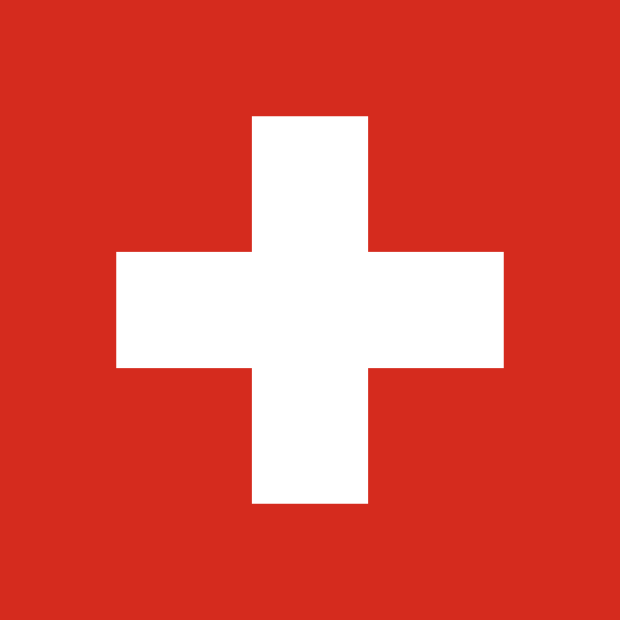
Flag is available in resolutions
| Icon 88x88 |  |
| Icon 32x32 |  |
Switzerland
Switzerland: A Tapestry of Mountains, Innovation, and Enduring Neutrality
Nestled in the heart of Europe, Switzerland, officially known as the Swiss Confederation, is a land of breathtaking natural beauty, a rich and complex history, and an economy driven by innovation and precision. Its iconic Alpine landscapes, pristine lakes, and charming villages draw millions of visitors each year, while its reputation for political stability, financial prowess, and high quality of life makes it a desirable home for many. This landlocked nation, often perceived as a single, homogenous entity, is in reality a vibrant mosaic of cultures, languages, and traditions, a testament to centuries of coexistence and a commitment to federalism.
The population of Switzerland, currently around 8.7 million people, is characterized by its linguistic diversity. The country officially recognizes four national languages: German, spoken by approximately 62% of the population, primarily in the northern, eastern, and central parts; French, spoken by about 23%, concentrated in the western regions; Italian, spoken by roughly 8%, in the southern canton of Ticino; and Romansh, a Romance language spoken by a small minority of less than 1%, predominantly in the canton of Graubünden. This linguistic mosaic is not merely a statistical curiosity but a fundamental aspect of Swiss identity, fostering a deep respect for cultural differences and a pragmatic approach to governance that accommodates diverse regional interests. Beyond its national languages, a significant portion of the population consists of foreign nationals, drawn to Switzerland by its economic opportunities and high standard of living, contributing further to its cosmopolitan character. The Swiss are known for their punctuality, efficiency, and a strong sense of civic duty, often reflected in their high participation in local and national referendums.
The history of Switzerland is a long and often turbulent journey from a loose confederation of cantons to the stable, prosperous nation it is today. Its origins can be traced back to the late 13th century with the Federal Charter of 1291, a defensive alliance formed by the cantons of Uri, Schwyz, and Unterwalden against the Habsburgs. This nascent confederation gradually expanded, incorporating new cantons and developing a unique system of governance characterized by decentralized power and a strong emphasis on cantonal autonomy. A pivotal moment in Swiss history was the Reformation in the 16th century, which led to religious divisions and internal conflicts, notably the Kappel Wars. However, the country managed to navigate these religious tensions, establishing a fragile peace that laid the groundwork for future religious tolerance. The Napoleonic era brought significant changes, with Switzerland briefly becoming a Helvetic Republic under French influence. Following Napoleon’s defeat, the Congress of Vienna in 1815 recognized Switzerland’s perpetual neutrality, a cornerstone of its foreign policy that has endured to this day, allowing it to remain outside major European conflicts for centuries. The 19th century also saw the rise of industrialization and the establishment of the modern Swiss federal state in 1848, which solidified the balance of power between the federal government and the cantons and introduced elements of direct democracy, such as the referendum and the popular initiative.
Geographically, Switzerland is a land of dramatic contrasts, dominated by the majestic Alps, which cover over 60% of its territory. These towering peaks, including iconic summits like the Matterhorn and the Eiger, offer unparalleled opportunities for skiing, mountaineering, and hiking, attracting adventurers and nature lovers from around the globe. Interspersed within the mountainous terrain are verdant valleys, crystal-clear lakes, and rolling hills, creating a picturesque landscape that is both awe-inspiring and serene. The country’s major lakes, such as Lake Geneva, Lake Zurich, and Lake Lucerne, are not only beautiful but also vital for transportation, recreation, and as sources of hydroelectric power. Switzerland’s strategic location in the heart of Europe, bordered by France, Germany, Italy, Austria, and Liechtenstein, has historically influenced its development and its role in international affairs. Despite its mountainous terrain, Switzerland boasts an exceptionally efficient and well-developed transportation network, with its renowned railway system, the SBB, connecting even the most remote villages and offering breathtaking scenic routes.
The Swiss economy is a global powerhouse, renowned for its stability, innovation, and high value-added products and services. The country’s industrial sector is characterized by its focus on high-precision manufacturing, particularly in the fields of pharmaceuticals, chemicals, watches, and machinery. The Swiss watchmaking industry, with its legacy of intricate craftsmanship and luxury brands, is a globally recognized symbol of Swiss quality and precision. The pharmaceutical and chemical industries are at the forefront of research and development, producing essential medicines and innovative materials. Beyond manufacturing, Switzerland is a leading global financial center, with its banking sector playing a crucial role in international finance. The country’s reputation for discretion, stability, and strong regulatory frameworks has attracted significant foreign investment. Furthermore, the tourism industry is a vital component of the Swiss economy, capitalizing on the country’s stunning natural beauty and well-developed infrastructure. Agriculture, while a smaller sector, is important for maintaining the rural landscape and providing high-quality local produce. The Swiss commitment to research and development, a highly skilled workforce, and a stable political environment have all contributed to its remarkable economic success.
Switzerland offers a wealth of tourist attractions that cater to a wide range of interests. The Swiss Alps are, of course, a primary draw, with resorts like Zermatt, St. Moritz, and Interlaken offering world-class skiing and winter sports. In the summer months, these regions transform into paradise for hikers and mountaineers, with an extensive network of trails and stunning vistas. Beyond the mountains, cities like Zurich, Geneva, Bern, and Lausanne are cultural hubs, boasting impressive museums, historic old towns, vibrant arts scenes, and excellent culinary offerings. Bern, the capital, is a UNESCO World Heritage site with its well-preserved medieval architecture and charming arcades. Lake Geneva, with its Jet d’Eau fountain and picturesque lakeside towns like Montreux, offers a more relaxed and sophisticated experience. The Swiss transportation system itself is a tourist attraction, with scenic train journeys like the Glacier Express and the Bernina Express providing unforgettable views of the country’s diverse landscapes. For those interested in history and culture, numerous castles, monasteries, and historical sites dot the landscape, offering glimpses into Switzerland’s rich past. The Swiss commitment to cleanliness, safety, and efficiency ensures that visitors can enjoy their stay with ease and comfort, making Switzerland a truly unforgettable destination.
Information about Switzerland
The information comes from the publication CIA The World Factbook.
Automated text translation, excuse errors, please!
Country Switzerland is situated in a location / continent Europe. Switzerland has an area of 41 277 km2 and 7 925 517 residents. The highest point has a height 4 634 above sea level. and it is called Dufourspitze. The lowest point is located at the level of 195 above sea level and it is named Lake Maggiore. System of government is Federal Republic and the date of independence First August 1291. The capital city is Bern. Switzerland has the international abbreviation SZ.
Switzerland - economy
Total gross domestic product (GDP) is 344 200 000 000 $. Total gross domestic product per capita in purchasing power parity is 43 900 $. GDP grows by 1.90 % a year. Inflation (consumer price index) is equal to 0.20 % a year. Switzerland have 4 898 000 working-age population (from a total population 7 925 517 people). Unemployment is at 3.10 %. Switzerland issued 11.30 % GDP to healt care and 1,00 % GDP to army. The public debt of the country is 52.40 % GDP. The total amount of foreign debt is 1 346 000 000 000 USD.
Switzerland - demography
As suggested above, Switzerland has 7 925 517 people. Population growth is in the amount 0.20 % per year. Number of children born per 1000 population per year is 9.51.Every mother has average 1.53 children. The infant mortality rate is 4.03 and maternal mortality 8.00 deaths per 100,000 births. Average estimated life expectancy makes 81.17 years. Mortality is 8.80 people per 1000 population per year.
Switzerland - transport and telecommunications
Switzerland has 71 454 km of roads, 4 876 km of railway lines and 64 airports. The total length of waterways (navigable rivers, canals, etc.) is 1 292 km. There is registered 38 ships.
Number of active mobile phones (sim card) in the country Switzerland is 10 017 000. Number of active fixed telephone lines is 4 684 000. Switzerland has 6 152 000 internet users, who have the available 5 249 000 Internet connections. Switzerland has been assigned a domain first Choose range .ch.
Switzerland - energetics
Switzerland consumes a year 57 700 000 000 kWh of electricity. Annual electricity production is 63 980 000 000 kWh in power plants with a total installed electrical capacity 19 540 000 kW. Switzerland exports 32 880 000 000 kWh and imports 33 400 000 000 kWh of electricity per year Energy mix of power generation is as follows: fossil fuels: 2.5 %, nuclear energy: 16.6 %, renewable: 2.5 %, hydropower: 69.2 %.
Keywords: flags of countries in the world, information, flag states, world countries, national flags, demography, transport, Flags of countries, list of countries, telecommunications, all flags, flag, Switzerland, energetics, economy, Flag of Switzerland, list of flags, politic.