Portugal
Flag of Portugal
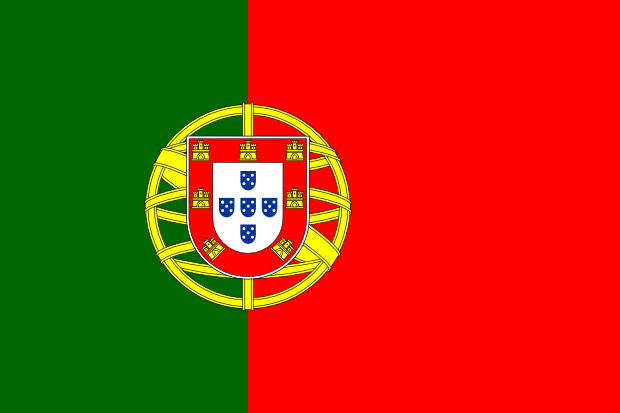
Flag is available in resolutions
| Icon 88x59 |  |
| Icon 32x21 |  |
Portugal
Portugal: A Land of Discovery and Enduring Charm
Nestled on the western edge of the Iberian Peninsula, Portugal is a country that whispers tales of ancient mariners, vibrant Fado melodies, and sun-drenched landscapes. For centuries, it has captivated explorers and travelers alike with its rich history, diverse geography, and warm, welcoming culture. From the bustling metropolises to the tranquil beaches and rolling vineyards, Portugal offers a tapestry of experiences that leave an indelible mark on every visitor. Its strategic location, facing the vast Atlantic Ocean, has profoundly shaped its identity, fostering a spirit of exploration and a deep connection to the sea that continues to resonate today. The Portuguese people, known for their resilience and hospitality, have a profound sense of national pride, deeply rooted in their glorious past and optimistic about their future.
The population of Portugal, currently numbering around 10.3 million, is a fascinating blend of ancient Lusitanian roots, Roman influences, and waves of Germanic, Moorish, and later, African and Brazilian migrations. This rich heritage is reflected in the country’s diverse culture, language, and even its cuisine. Lisbon, the capital city, is a vibrant hub, pulsating with life and a palpable sense of history. Porto, the second-largest city, is renowned for its port wine and its picturesque Ribeira district, a UNESCO World Heritage site. Beyond these urban centers, smaller towns and villages dot the landscape, each with its own unique character and traditions, offering a glimpse into the authentic Portuguese way of life. The Portuguese language, a Romance language descended from Latin, is spoken not only in Portugal but also in Brazil, Angola, Mozambique, and other former Portuguese colonies, making it a global language with a significant cultural reach. The demographic landscape has been influenced by both emigration and immigration, with significant Portuguese communities established worldwide and a growing influx of immigrants contributing to the nation’s multicultural fabric.
Portugal’s history is a saga of ambition, discovery, and enduring influence. Its origins stretch back to prehistoric times, with evidence of human settlement dating back millennia. The Romans arrived in the 2nd century BCE, leaving behind a lasting legacy of infrastructure and language. The subsequent Moorish rule, from the 8th to the 13th century, introduced new agricultural techniques, architectural styles, and scientific knowledge, particularly in the south. However, it was the Age of Discovery, beginning in the 15th century, that truly catapulted Portugal onto the world stage. Under the patronage of figures like Prince Henry the Navigator, Portuguese explorers embarked on daring voyages, charting unknown seas and establishing vast colonial empires in Africa, Asia, and the Americas. This era of maritime dominance brought immense wealth and prestige to Portugal, but also led to centuries of colonial administration and, eventually, the complex legacy of decolonization. The 20th century saw periods of political upheaval, including the establishment of a dictatorship under Salazar, followed by the Carnation Revolution in 1974, which ushered in democracy and the end of its African colonies. Today, Portugal is a proud member of the European Union, a parliamentary republic that embraces its past while actively participating in the global community. The echoes of its imperial past are still felt, shaping its identity and its relationships with former colonies.
Geographically, Portugal is a land of striking contrasts. Its mainland territory, bordered by Spain to the east and north and the Atlantic Ocean to the west and south, boasts a diverse topography. The north is characterized by lush, green mountains and fertile river valleys, ideal for agriculture and home to the Douro wine region. As one moves south, the landscape becomes drier and more arid, with rolling hills, olive groves, and cork oak forests. The Algarve, in the south, is famed for its golden beaches, dramatic cliffs, and picturesque coves, making it a major tourist destination. Portugal also encompasses the archipelagos of Madeira and the Azores, volcanic islands in the Atlantic Ocean, each with its own unique subtropical climate and breathtaking natural beauty. Madeira, known as the “Pearl of the Atlantic,” offers dramatic mountain scenery, lush levada walks, and vibrant flora. The Azores, a chain of nine islands, are a haven for nature lovers, with pristine volcanic landscapes, crater lakes, and abundant marine life, making them a prime destination for whale watching and diving. The country’s extensive coastline, stretching over 1,794 kilometers, plays a crucial role in its economy and identity, influencing its climate, its culture, and its historical exploration.
The Portuguese economy has undergone a significant transformation in recent decades. Historically reliant on agriculture and maritime trade, it has diversified into a modern, service-based economy. Key sectors include tourism, which has become a major contributor to GDP, attracting millions of visitors annually with its cultural heritage, natural beauty, and vibrant cities. The manufacturing sector remains important, with industries such as textiles, footwear, and automotive production contributing to exports. Portugal is also a significant producer of cork, accounting for a substantial portion of the world’s supply, and its wine industry, particularly port and Madeira wine, enjoys international acclaim. Renewable energy, especially wind and solar power, is an increasingly important area of investment and development. The country’s strategic location and its membership in the European Union provide access to a large market and facilitate trade and investment. Despite facing economic challenges in the past, Portugal has demonstrated resilience and a commitment to sustainable growth, with a focus on innovation and technological advancement. The service sector, encompassing finance, telecommunications, and IT, is rapidly expanding, creating new opportunities and driving economic diversification.
Portugal’s tourist attractions are as varied as its landscapes. Lisbon, the vibrant capital, beckons with its historic Alfama district, the iconic Belém Tower, and the Jerónimos Monastery, both UNESCO World Heritage sites. The city’s charming trams, melancholic Fado music, and lively nightlife offer an unforgettable experience. Porto, with its Ribeira district, the picturesque Dom Luís I Bridge, and its world-renowned port wine cellars, provides a captivating glimpse into the country’s rich heritage. Further south, the Algarve region offers a sun-drenched paradise of stunning beaches, charming fishing villages, and world-class golf courses. Beyond the mainland, the islands of Madeira and the Azores present unique opportunities for adventure and relaxation. Madeira’s dramatic landscapes are perfect for hiking and exploring its unique levada irrigation channels, while the Azores offer unparalleled opportunities for whale watching, diving, and experiencing raw, volcanic beauty. Historical sites abound, from ancient Roman ruins and Moorish castles to grand palaces and medieval towns, each telling a story of Portugal’s long and fascinating past. The culinary scene is another major draw, with fresh seafood, delicious pastries like the iconic *pastel de nata*, and excellent wines offering a true taste of Portugal.
In conclusion, Portugal is a country that effortlessly blends its rich historical legacy with a forward-looking spirit. Its people, its landscapes, and its culture combine to create a destination that is both profoundly captivating and enduringly charming. From the echoes of its Age of Discovery to the modern pulse of its thriving cities, Portugal offers a journey of discovery for every traveler, leaving them with memories that linger long after they have departed its shores. It is a land where tradition and modernity coexist harmoniously, where the past is honored and the future is embraced with optimism and a characteristic warmth that defines the Portuguese soul.
Information about Portugal
The information comes from the publication CIA The World Factbook.
Automated text translation, excuse errors, please!
Country Portugal is situated in a location / continent Europe. Portugal has an area of 92 090 km2 and 10 781 459 residents. The highest point has a height 2 351 above sea level. and it is called Ponta do Pico. The lowest point is located at the level of 0 above sea level and it is named Atlantic Ocean. System of government is republic and the date of independence 5th October 1910. The capital city is Lisbon. Portugal has the international abbreviation PO.
Portugal - economy
Total gross domestic product (GDP) is 252 200 000 000 $. Total gross domestic product per capita in purchasing power parity is 23 700 $. GDP grows by -1.50 % a year. Inflation (consumer price index) is equal to 3.70 % a year. Portugal have 5 543 000 working-age population (from a total population 10 781 459 people). Unemployment is at 12.70 %. Portugal issued 11.30 % GDP to healt care and 2,30 % GDP to army. The public debt of the country is 112.80 % GDP. The total amount of foreign debt is 548 300 000 000 USD.
Portugal - demography
As suggested above, Portugal has 10 781 459 people. Population growth is in the amount 0.18 % per year. Number of children born per 1000 population per year is 9.76.Every mother has average 1.51 children. The infant mortality rate is 4.60 and maternal mortality 8.00 deaths per 100,000 births. Average estimated life expectancy makes 78.70 years. Mortality is 10.86 people per 1000 population per year.
Portugal - transport and telecommunications
Portugal has 82 900 km of roads, 3 319 km of railway lines and 65 airports. The total length of waterways (navigable rivers, canals, etc.) is 210 km. There is registered 109 ships.
Number of active mobile phones (sim card) in the country Portugal is 12 285 000. Number of active fixed telephone lines is 4 525 000. Portugal has 5 168 000 internet users, who have the available 3 664 000 Internet connections. Portugal has been assigned a domain first Choose range .pt.
Portugal - energetics
Portugal consumes a year 47 810 000 000 kWh of electricity. Annual electricity production is 50 300 000 000 kWh in power plants with a total installed electrical capacity 17 390 000 kW. Portugal exports 3 191 000 000 kWh and imports 5 814 000 000 kWh of electricity per year Energy mix of power generation is as follows: fossil fuels: 48.3 %, nuclear energy: 0 %, renewable: 22.5 %, hydropower: 23.3 %. The country Portugal is harvested annually 1 926 barrels of oil.
Keywords: Portugal, information, world countries, Flags of countries, telecommunications, demography, transport, list of flags, Flag of Portugal, economy, flag states, flag, flags of countries in the world, energetics, all flags, list of countries, national flags, politic.