Greece
Flag of Greece
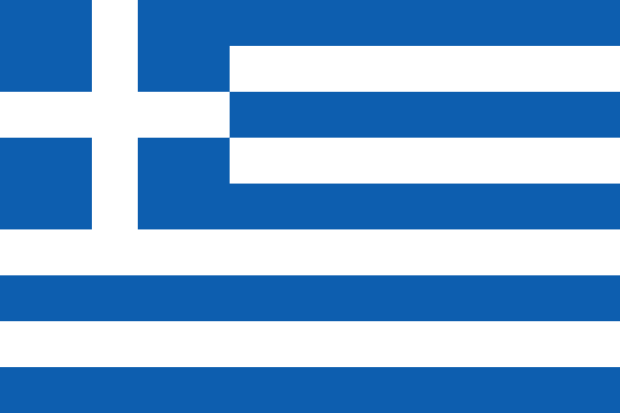
Flag is available in resolutions
| Icon 88x59 |  |
| Icon 32x21 |  |
Greece
Here is an article about Greece, approximately 5000 characters long, written in English.
Greece: A Tapestry of Ancient Wonders and Modern Vibrancy
Greece, a nation steeped in millennia of history and blessed with breathtaking natural beauty, stands as a cornerstone of Western civilization. Its influence resonates through philosophy, art, democracy, and science, leaving an indelible mark on the world. From the sun-drenched Aegean islands to the rugged mainland mountains, Greece offers a captivating blend of ancient ruins, vibrant modern culture, and unparalleled hospitality. This article delves into the multifaceted character of Greece, exploring its population, rich history, diverse geography, burgeoning industries, and the myriad of tourist attractions that draw millions to its shores each year.
The population of Greece, as of recent estimates, hovers around 10.4 million people. The majority of Greeks reside in urban centers, with Athens, the capital, being the largest and most populous city. Thessaloniki, the second-largest city, is a vital economic and cultural hub in the north. The Greek people are known for their strong sense of family, their deep-rooted cultural traditions, and their warm, welcoming demeanor towards visitors. The Greek Orthodox Church plays a significant role in the social and cultural fabric of the nation, with religious festivals and traditions being an integral part of daily life for many. The language spoken is Greek, an ancient language that has evolved over thousands of years, and its written form, the Greek alphabet, has provided the basis for many other alphabets, including the Latin one.
The history of Greece is a saga that stretches back to the dawn of civilization. Its origins lie in the Minoan and Mycenaean civilizations of the Bronze Age, followed by the Archaic and Classical periods, which witnessed the flourishing of city-states like Athens and Sparta. This era gave birth to groundbreaking achievements in philosophy, with figures like Socrates, Plato, and Aristotle laying the foundations for Western thought. The arts, drama, and architecture also reached their zenith, leaving behind iconic structures like the Parthenon. The Hellenistic period, following the conquests of Alexander the Great, saw the spread of Greek culture and influence across a vast empire. Subsequently, Greece became part of the Roman Empire, then the Byzantine Empire, and later, for centuries, under Ottoman rule. The Greek War of Independence in the early 19th century marked the rebirth of the modern Greek state. The 20th century brought its own set of challenges, including two World Wars and a period of military junta, but Greece has emerged as a proud and resilient European democracy, a member of the European Union since 1981.
Geographically, Greece is a land of striking contrasts. Situated at the southern tip of the Balkan Peninsula, it is a predominantly mountainous country, with over 80% of its territory being mountainous or semi-mountainous. This rugged terrain has historically fostered the development of independent city-states and contributed to the unique dialects and traditions found across the country. Greece boasts an extensive coastline, stretching for over 13,600 kilometers, making it the country with the longest coastline in the Mediterranean. This maritime heritage is deeply ingrained in the Greek identity, with fishing and seafaring being vital to its economy and way of life for centuries. The country is also home to an astonishing number of islands – estimated to be between 1,200 and 6,000, depending on the definition of an island – each with its own distinct character and allure. The most famous island groups include the Cyclades, the Dodecanese, the Ionian Islands, the Saronic Islands, and Crete, the largest of all Greek islands. The climate is Mediterranean, characterized by hot, dry summers and mild, wet winters, making it an ideal destination for year-round tourism, particularly during the warmer months.
In terms of industry, Greece has a diverse economic landscape. Historically, agriculture has been a cornerstone, with olives, grapes, wheat, and tobacco being major crops. The olive oil produced in Greece is world-renowned for its quality and health benefits. Tourism, however, has become the dominant sector of the Greek economy in recent decades. The country’s rich history, stunning natural landscapes, and beautiful islands attract millions of visitors annually, contributing significantly to employment and foreign exchange earnings. Shipping is another vital industry, with Greece possessing one of the largest merchant fleets in the world. The countrys strategic location and maritime tradition have made it a global leader in international shipping. Other important sectors include manufacturing, particularly in food processing and textiles, as well as the growing renewable energy sector, with significant investments in solar and wind power. Despite facing economic challenges in recent years, Greece is actively working to diversify its economy and foster innovation.
The tourist attractions in Greece are virtually limitless, catering to every taste and interest. For history enthusiasts, a pilgrimage to Athens is essential. The Acropolis, crowned by the majestic Parthenon, stands as an enduring symbol of classical Greece. The Ancient Agora, the Temple of Olympian Zeus, and the National Archaeological Museum offer deeper insights into the countrys rich past. Venturing further afield, the ancient site of Delphi, the oracle’s sanctuary nestled in the Parnassus Mountains, evokes a sense of ancient mystery. Olympia, the birthplace of the Olympic Games, transports visitors back to the grandeur of ancient athletic competitions. The Peloponnese peninsula is dotted with significant archaeological sites like Mycenae, Epidaurus with its remarkably preserved ancient theater, and Mystras, a Byzantine ghost city.
Beyond the mainland, the Greek islands offer an unparalleled escape. Santorini, with its iconic whitewashed villages clinging to volcanic cliffs and breathtaking sunsets, is a perennial favorite. Mykonos, known for its vibrant nightlife and cosmopolitan atmosphere, attracts a fashionable crowd. Crete, the largest island, boasts a diverse landscape, from the Minoan palace of Knossos to the dramatic Samaria Gorge and beautiful beaches. Rhodes, with its medieval Old Town, a UNESCO World Heritage site, offers a glimpse into the era of the Knights of St. John. Corfu, in the Ionian Sea, is characterized by its Venetian architecture and lush greenery. Each island, from the popular to the lesser-known, possesses its own unique charm, be it the pristine beaches of Zakynthos, the ancient ruins of Delos, or the tranquil beauty of Naxos.
Beyond historical sites and idyllic beaches, Greece offers a wealth of cultural experiences. Traditional music and dance are an integral part of celebrations and daily life, particularly in rural areas. The cuisine, celebrated worldwide for its health benefits and delicious flavors, is a major draw. Fresh seafood, succulent grilled meats, vibrant salads drizzled with olive oil, and a delightful array of cheeses and pastries are staples. Experiencing a traditional Greek taverna, with its lively atmosphere and generous portions, is an essential part of any visit. The warmth and hospitality of the Greek people, their readiness to share stories and a glass of ouzo, further enhance the unforgettable experience of visiting this remarkable country. Greece, with its enduring legacy and captivating present, continues to enchant and inspire all who have the privilege to explore its shores.
Information about Greece
The information comes from the publication CIA The World Factbook.
Automated text translation, excuse errors, please!
Country Greece is situated in a location / continent Europe. Greece has an area of 131 957 km2 and 10 767 827 residents. The highest point has a height 2 917 above sea level. and it is called Mount Olympus. The lowest point is located at the level of 0 above sea level and it is named Mediterranean Sea. System of government is republic.The capital city is Athens. Greece has the international abbreviation GR.
Greece - economy
Total gross domestic product (GDP) is 298 100 000 000 $. Total gross domestic product per capita in purchasing power parity is 26 600 $. GDP grows by -6.90 % a year. Inflation (consumer price index) is equal to 3.30 % a year. Greece have 4 959 000 working-age population (from a total population 10 767 827 people). Unemployment is at 17.30 %. Greece issued 7.40 % GDP to healt care and 4,30 % GDP to army. The public debt of the country is 161.70 % GDP. The total amount of foreign debt is 583 300 000 000 USD.
Greece - demography
As suggested above, Greece has 10 767 827 people. Population growth is in the amount 0.06 % per year. Number of children born per 1000 population per year is 9.08.Every mother has average 1.39 children. The infant mortality rate is 4.92 and maternal mortality 3.00 deaths per 100,000 births. Average estimated life expectancy makes 80.05 years. Mortality is 10.80 people per 1000 population per year.
Greece - transport and telecommunications
Greece has 116 711 km of roads, 2 548 km of railway lines and 82 airports. The total length of waterways (navigable rivers, canals, etc.) is 6 km. There is registered 860 ships.
Number of active mobile phones (sim card) in the country Greece is 12 128 000. Number of active fixed telephone lines is 5 685 000. Greece has 4 971 000 internet users, who have the available 3 115 000 Internet connections. Greece has been assigned a domain first Choose range .gr.
Greece - energetics
Greece consumes a year 58 710 000 000 kWh of electricity. Annual electricity production is 57 110 000 000 kWh in power plants with a total installed electrical capacity 14 360 000 kW. Greece exports 2 571 000 000 kWh and imports 8 517 000 000 kWh of electricity per year Energy mix of power generation is as follows: fossil fuels: 70.5 %, nuclear energy: 0 %, renewable: 8.5 %, hydropower: 17.0 %. The country Greece is harvested annually 1 751 barrels of oil.
Keywords: national flags, demography, economy, Flags of countries, transport, flags of countries in the world, information, list of countries, Greece, flag states, list of flags, telecommunications, world countries, all flags, flag, Flag of Greece, energetics, politic.