Italy
Flag of Italy
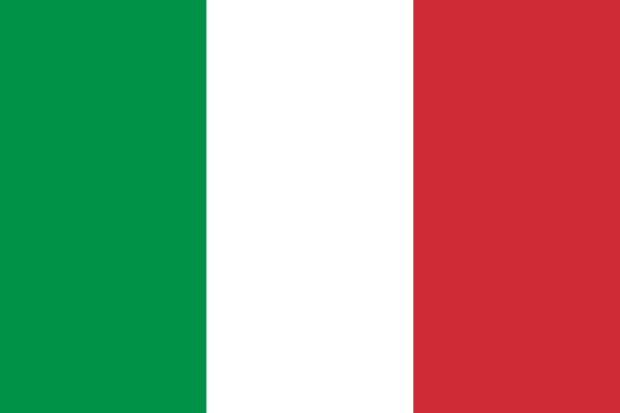
Flag is available in resolutions
| Icon 88x59 |  |
| Icon 32x21 |  |
Italy
Italy: A Tapestry of History, Culture, and Breathtaking Landscapes
Italy, officially the Italian Republic, is a country that resonates with a profound sense of history, art, and natural beauty. Situated in Southern Europe, it occupies the Italian Peninsula, the islands of Sicily and Sardinia, and numerous smaller islands. Its distinctive boot-like shape, jutting into the Mediterranean Sea, has long captured the imagination and served as a geographical marker for millennia. From the snow-capped peaks of the Alps in the north to the sun-drenched shores of the Mediterranean in the south, Italy presents a remarkably diverse range of landscapes, each contributing to its unique charm and allure. The nation’s rich past, marked by the rise and fall of empires, the flourishing of artistic renaissances, and profound philosophical and scientific contributions, has left an indelible mark on the world. This legacy continues to shape Italy’s identity and attract millions of visitors who come to experience its unparalleled cultural heritage, exquisite cuisine, and vibrant way of life. The very name Italy evokes images of ancient ruins, Renaissance masterpieces, rolling vineyards, and lively piazzas, a testament to its enduring global appeal.
The population of Italy, as of recent estimates, hovers around 59 million people, making it one of the more populous countries in Europe. This demographic landscape is characterized by a generally aging population, a trend observed in many developed nations, with a declining birth rate. The majority of Italians reside in urban areas, with major cities like Rome, Milan, Naples, and Turin serving as significant economic and cultural hubs. The Italian people are renowned for their strong sense of family, their passion for life, and their deep connection to their regional identities. While a common Italian language, derived from the Tuscan dialect, unites the nation, numerous regional dialects and languages persist, reflecting the country’s long history of independent city-states and distinct cultural traditions. This regional diversity is not just linguistic but also culinary, artistic, and social, contributing to the rich mosaic that is modern Italy. The Italian diaspora has also spread across the globe, with significant Italian communities found in countries like the United States, Argentina, Brazil, and Australia, carrying their cultural heritage with them.
Italy’s history is a monumental saga, stretching back to ancient civilizations and continuing through pivotal periods of Western civilization. The earliest inhabitants of the Italian peninsula laid the groundwork for what would eventually become a dominant force in the ancient world. The Etruscans, a mysterious and sophisticated civilization, flourished in the northern and central regions, leaving behind impressive tombs and intricate artwork. However, it was the Romans who truly forged the destiny of Italy and much of the Western world. Emerging from humble beginnings in the city of Rome, they gradually expanded their dominion, first across the peninsula and then throughout Europe, North Africa, and the Middle East. The Roman Empire, with its unparalleled military prowess, sophisticated legal system, engineering marvels like aqueducts and roads, and its lasting influence on language and governance, remains one of history’s most significant achievements. Following the decline and fall of the Western Roman Empire in the 5th century CE, Italy entered a period of fragmentation, marked by invasions, the rise of various kingdoms, and the growing influence of the Papacy. The Middle Ages saw the emergence of powerful city-states like Venice, Florence, and Genoa, which became centers of trade, banking, and culture, laying the foundation for the Renaissance. The Renaissance, a period of extraordinary artistic, intellectual, and scientific flowering from the 14th to the 16th centuries, saw Italy produce luminaries such as Leonardo da Vinci, Michelangelo, Raphael, and Dante Alighieri. This era transformed European art, literature, and thought, with its impact still palpable today. The subsequent centuries witnessed Italy’s gradual unification, culminating in the formation of the Kingdom of Italy in 1861. The 20th century brought challenges, including two World Wars and periods of political upheaval, but Italy emerged as a democratic republic in 1946 and has since become a prominent member of the European Union and a significant player on the global stage.
Geographically, Italy is a land of striking contrasts and remarkable beauty. Its most defining feature is the Italian Peninsula, a long, slender landmass that stretches southward into the Mediterranean Sea, resembling a high-heeled boot. This peninsula is bordered by the Alps to the north, a formidable mountain range that forms a natural barrier with the rest of Europe and offers breathtaking alpine scenery and world-class skiing. South of the Alps lie the fertile plains of the Po River Valley, a crucial agricultural and industrial region. The Apennine Mountains form the backbone of the peninsula, running from north to south and creating a dramatic, rugged landscape characterized by rolling hills, picturesque valleys, and charming hilltop towns. Italy’s extensive coastline, stretching over 7,600 kilometers, is dotted with numerous bays, coves, and a variety of islands. The largest islands, Sicily and Sardinia, possess their own unique geographical features and distinct cultural identities. Sicily, located off the southern tip of the mainland, is known for its active volcanoes, including Mount Etna, its fertile plains, and its rich historical tapestry influenced by Greek, Roman, Arab, and Norman conquerors. Sardinia, to the west, boasts rugged mountains, pristine beaches, and a unique ancient Nuragic civilization. Italy is also prone to seismic activity, particularly in its southern regions, due to its location on the boundary of tectonic plates. The diverse climate ranges from alpine in the north to Mediterranean along the coasts, resulting in a wide array of flora and fauna.
Italy’s economy is one of the largest in the world, characterized by a strong industrial base, a significant service sector, and a renowned agricultural output. Historically, Italy was known for its agricultural prowess, and this remains an important sector, producing world-famous wines, olive oil, pasta, and a variety of fruits and vegetables. However, the Italian economy has evolved significantly, with a strong emphasis on manufacturing and exports. Key industrial sectors include fashion and luxury goods, automotive manufacturing, machinery, chemicals, and pharmaceuticals. The northern regions, particularly Lombardy, Piedmont, and Veneto, are the industrial heartland, while the south has historically faced greater economic challenges, though there are ongoing efforts to revitalize its economy. Tourism is a colossal industry for Italy, drawing millions of visitors annually to its historical sites, artistic treasures, and natural landscapes. The countrys rich cultural heritage, combined with its stunning natural beauty, makes it a premier global tourist destination. The Made in Italy brand, associated with high quality, craftsmanship, and design, is highly regarded internationally, particularly in sectors like fashion, furniture, and food products. Despite its economic strengths, Italy has also faced challenges, including a significant national debt and regional economic disparities.
Italy is a treasure trove of tourist attractions, offering something for every kind of traveler. The eternal city of Rome, the capital, is an open-air museum, boasting iconic landmarks such as the Colosseum, the Roman Forum, the Pantheon, and the Vatican City, home to St. Peters Basilica and the Sistine Chapel. Florence, the cradle of the Renaissance, captivates with its artistic masterpieces in the Uffizi Gallery and the Accademia Gallery, as well as the magnificent Duomo and Ponte Vecchio. Venice, the city of canals, offers a unique and romantic experience with its gondola rides, St. Marks Square, and the Doges Palace. Beyond these iconic cities, Italy offers a wealth of other unforgettable destinations. The Amalfi Coast, with its dramatic cliffs, pastel-colored villages, and azure waters, is a UNESCO World Heritage site of unparalleled beauty. The rolling hills of Tuscany, dotted with vineyards, olive groves, and medieval towns like Siena and San Gimignano, offer a quintessential Italian countryside experience. The lakes region, with the stunning Lake Como, Lake Garda, and Lake Maggiore, provides breathtaking mountain scenery and elegant lakeside resorts. For history enthusiasts, the ancient ruins of Pompeii and Herculaneum, preserved by the eruption of Mount Vesuvius, offer a poignant glimpse into Roman life. The islands of Sicily and Sardinia beckon with their ancient Greek temples, Norman cathedrals, and pristine beaches. Italy’s culinary landscape is an attraction in itself, with regional specialties ranging from Neapolitan pizza and Roman pasta dishes to Florentine steak and Sicilian seafood. The opportunity to indulge in authentic Italian cuisine, paired with exquisite local wines, is an integral part of the Italian travel experience. From the grandeur of its historical monuments to the intimate charm of its villages, Italy continues to enchant and inspire visitors from around the globe.
Information about Italy
The information comes from the publication CIA The World Factbook.
Automated text translation, excuse errors, please!
Country Italy is situated in a location / continent Europe. Italy has an area of 301 340 km2 and 61 261 254 residents. The highest point has a height 4 748 above sea level. and it is called Mont Blanc. The lowest point is located at the level of 0 above sea level and it is named Mediterranean Sea. System of government is republic and the date of independence 17th March 1861. The capital city is Rome. Italy has the international abbreviation IT.
Italy - economy
Total gross domestic product (GDP) is 1 871 000 000 000 $. Total gross domestic product per capita in purchasing power parity is 30 900 $. GDP grows by 0.40 % a year. Inflation (consumer price index) is equal to 2.90 % a year. Italy have 25 080 000 working-age population (from a total population 61 261 254 people). Unemployment is at 8.40 %. Italy issued 5.10 % GDP to healt care and 1,80 % GDP to army. The public debt of the country is 120.10 % GDP. The total amount of foreign debt is 2 684 000 000 000 USD.
Italy - demography
As suggested above, Italy has 61 261 254 people. Population growth is in the amount 0.38 % per year. Number of children born per 1000 population per year is 9.06.Every mother has average 1.40 children. The infant mortality rate is 3.36 and maternal mortality 4.00 deaths per 100,000 births. Average estimated life expectancy makes 81.86 years. Mortality is 9.93 people per 1000 population per year.
Italy - transport and telecommunications
Italy has 487 700 km of roads, 20 255 km of railway lines and 130 airports. The total length of waterways (navigable rivers, canals, etc.) is 2 400 km. There is registered 681 ships.
Number of active mobile phones (sim card) in the country Italy is 92 300 000. Number of active fixed telephone lines is 21 060 000. Italy has 29 235 000 internet users, who have the available 25 456 000 Internet connections. Italy has been assigned a domain first Choose range .it.
Italy - energetics
Italy consumes a year 296 300 000 000 kWh of electricity. Annual electricity production is 279 000 000 000 kWh in power plants with a total installed electrical capacity 101 200 000 kW. Italy exports 1 817 000 000 kWh and imports 45 760 000 000 kWh of electricity per year Energy mix of power generation is as follows: fossil fuels: 70.3 %, nuclear energy: 0 %, renewable: 8.6 %, hydropower: 13.7 %. The country Italy is harvested annually 111 800 barrels of oil.
Keywords: all flags, Flags of countries, telecommunications, national flags, information, list of flags, economy, flags of countries in the world, Flag of Italy, flag states, energetics, world countries, flag, demography, list of countries, Italy, transport, politic.