Sweden
Flag of Sweden
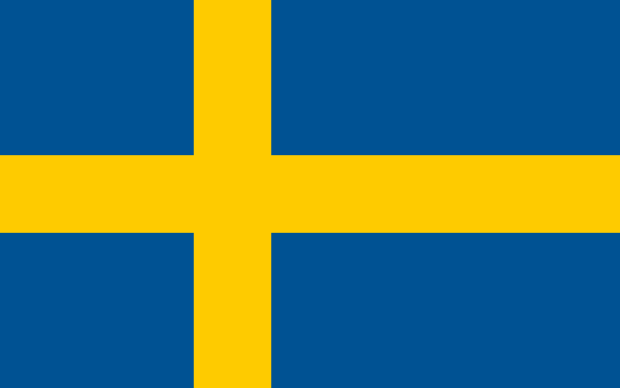
Flag is available in resolutions
| Icon 88x55 |  |
| Icon 32x20 |  |
Sweden
Sweden: A Land of Northern Lights, Innovation, and Enduring Charm
Sweden, officially the Kingdom of Sweden, is a Scandinavian nation nestled in the northern reaches of Europe. Its vast and diverse landscape, stretching from the dense forests and pristine lakes of the south to the dramatic, snow-capped mountains and the ethereal glow of the Northern Lights in the north, offers a captivating tapestry of natural beauty. With a population that values equality, sustainability, and a strong social welfare system, Sweden has carved a unique identity for itself on the global stage, renowned for its innovative spirit, high quality of life, and rich cultural heritage. This article delves into the multifaceted nature of Sweden, exploring its demographics, historical trajectory, geographical features, industrial prowess, and the myriad of tourist attractions that draw visitors from across the world.
The population of Sweden, currently around 10.5 million people, is characterized by a high level of homogeneity, though recent decades have seen a significant increase in immigration, contributing to a more multicultural society. The Swedes are known for their reserved yet polite demeanor, a strong sense of individualism within a collectivist framework, and a deep appreciation for nature. The country boasts one of the lowest population densities in Europe, with a significant portion of its inhabitants concentrated in the southern regions, particularly around the major cities of Stockholm, Gothenburg, and Malmö. Stockholm, the capital and largest city, is a vibrant metropolis spread across 14 islands, a testament to Sweden’s intimate relationship with water. The Swedish language, a North Germanic tongue, is spoken by the vast majority, though English proficiency is exceptionally high, making communication relatively easy for international visitors. The country’s social structure is built upon principles of equality and welfare, with a robust public healthcare system, free education, and generous parental leave policies. This commitment to social well-being contributes to Sweden’s consistently high rankings in global happiness and quality of life indices.
Sweden’s history is a compelling narrative of Viking explorers, powerful kingdoms, and a gradual transition to a modern, peaceful nation. The Viking Age, from the late 8th to the mid-11th century, saw Swedish Vikings, known as the Rus, travel extensively, establishing trade routes and settlements as far east as modern-day Russia. Following this era, Sweden emerged as a significant European power, particularly during the 17th century, known as the Swedish Empire. This period of military dominance saw Sweden control vast territories around the Baltic Sea. However, the empire eventually declined, and Sweden entered a long period of neutrality, a stance it has largely maintained throughout the 20th and 21st centuries, famously abstaining from participation in both World War I and World War II. This neutrality, coupled with a pragmatic approach to foreign policy, has allowed Sweden to focus on domestic development and international cooperation, particularly through its involvement in the United Nations and its role in mediating international conflicts. The legacy of this history is evident in Sweden’s well-preserved historical sites, from ancient rune stones to grand Baroque palaces, each whispering tales of a nation that has navigated centuries of change with resilience and foresight.
Geographically, Sweden is a land of striking contrasts and immense natural beauty. It is the largest country in Northern Europe by area, with a coastline stretching over 3,200 kilometers along the Baltic Sea. The country is characterized by its vast expanse of forests, covering approximately two-thirds of its landmass, earning it the moniker the green lung of Europe. These forests are interspersed with countless lakes, estimated to be around 100,000, offering serene landscapes and abundant opportunities for outdoor recreation. To the west, the Kjlen Mountains form a natural border with Norway, their rugged peaks and deep valleys a haven for hikers and skiers. The northernmost part of Sweden, Lapland, is a region of stark beauty, famous for its midnight sun during the summer months and the mesmerizing dance of the Aurora Borealis, or Northern Lights, during winter. This natural abundance has shaped Swedish culture, fostering a deep respect for the environment and a strong tradition of allemansrätten, the right of public access, which allows people to roam freely across the countryside, provided they respect nature and private property. The climate varies significantly across the country, with milder temperatures in the south and harsh, cold winters in the north, characterized by heavy snowfall and frozen lakes.
Sweden’s industrial landscape is a testament to its innovative spirit and its ability to adapt to changing global demands. Historically, industries such as mining, forestry, and agriculture played a crucial role. Today, Sweden is a global leader in a wide range of sectors, including telecommunications, automotive manufacturing, pharmaceuticals, and renewable energy. Companies like IKEA, Volvo, Ericsson, and H&M are household names worldwide, reflecting Sweden’s success in developing and exporting high-quality products and services. The country has also embraced the digital revolution, with a thriving tech sector and a strong emphasis on research and development. Sustainability is a core principle that underpins much of Sweden’s industrial activity. The nation is at the forefront of developing and implementing green technologies, from advanced waste management systems to renewable energy sources like wind and hydroelectric power. This commitment to environmental responsibility not only benefits the planet but also drives economic growth and creates new opportunities. The strong emphasis on innovation, coupled with a highly educated workforce and a supportive business environment, continues to position Sweden as a key player in the global economy.
For tourists, Sweden offers an unparalleled experience, blending the allure of its natural wonders with the charm of its historical cities and the warmth of its modern culture. Stockholm, the capital, is a must-visit, with its picturesque Old Town (Gamla Stan), the majestic Royal Palace, and world-class museums such as the Vasa Museum, home to a remarkably preserved 17th-century warship. The archipelago surrounding Stockholm provides a stunning escape, with opportunities for sailing, kayaking, and exploring charming island villages. Further south, Gothenburg, Sweden’s second-largest city, boasts a vibrant cultural scene, beautiful canals, and the world-renowned Liseberg amusement park. Malmö, in the south, is known for its striking modern architecture, including the Turning Torso skyscraper, and its proximity to Denmark, connected by the impressive Öresund Bridge. For those seeking a more profound connection with nature, the Swedish Lapland offers an unforgettable adventure. Here, visitors can experience the magic of the Northern Lights, go dog sledding, visit the iconic Icehotel in Jukkasjärvi, and explore the vast wilderness. The countrys efficient public transportation system, including its extensive train network, makes it easy to traverse the diverse landscapes and discover hidden gems. From the bustling city life to the tranquil embrace of its natural landscapes, Sweden promises a journey filled with discovery, inspiration, and a unique sense of Scandinavian charm.
Information about Sweden
The information comes from the publication CIA The World Factbook.
Automated text translation, excuse errors, please!
Country Sweden is situated in a location / continent Europe. Sweden has an area of 450 295 km2 and 9 103 788 residents. The highest point has a height 2 111 above sea level. and it is called Kebnekaise. The lowest point is located at the level of -2,4 above sea level and it is named reclaimed bay of Lake Hammarsjon, near Kristianstad. System of government is constitutional monarchy and the date of independence 6th June 1523. The capital city is Stockholm. Sweden has the international abbreviation SW.
Sweden - economy
Total gross domestic product (GDP) is 386 600 000 000 $. Total gross domestic product per capita in purchasing power parity is 40 900 $. GDP grows by 4.00 % a year. Inflation (consumer price index) is equal to 3.00 % a year. Sweden have 5 018 000 working-age population (from a total population 9 103 788 people). Unemployment is at 7.50 %. Sweden issued 9.90 % GDP to healt care and 1,50 % GDP to army. The public debt of the country is 37.50 % GDP. The total amount of foreign debt is 1 016 000 000 000 USD.
Sweden - demography
As suggested above, Sweden has 9 103 788 people. Population growth is in the amount 0.17 % per year. Number of children born per 1000 population per year is 10.24.Every mother has average 1.67 children. The infant mortality rate is 2.74 and maternal mortality 4.00 deaths per 100,000 births. Average estimated life expectancy makes 81.18 years. Mortality is 10.21 people per 1000 population per year.
Sweden - transport and telecommunications
Sweden has 572 900 km of roads, 11 633 km of railway lines and 230 airports. The total length of waterways (navigable rivers, canals, etc.) is 2 052 km. There is registered 135 ships.
Number of active mobile phones (sim card) in the country Sweden is 11 194 000. Number of active fixed telephone lines is 4 600 000. Sweden has 8 398 000 internet users, who have the available 5 727 000 Internet connections. Sweden has been assigned a domain first Choose range .se.
Sweden - energetics
Sweden consumes a year 127 100 000 000 kWh of electricity. Annual electricity production is 147 800 000 000 kWh in power plants with a total installed electrical capacity 35 290 000 kW. Sweden exports 12 850 000 000 kWh and imports 14 930 000 000 kWh of electricity per year Energy mix of power generation is as follows: fossil fuels: 12.5 %, nuclear energy: 25 %, renewable: 15.2 %, hydropower: 46.9 %.
Keywords: Sweden, flag, transport, information, energetics, list of flags, economy, flags of countries in the world, Flag of Sweden, Flags of countries, national flags, list of countries, flag states, demography, world countries, all flags, telecommunications, politic.