Luxembourg
Flag of Luxembourg
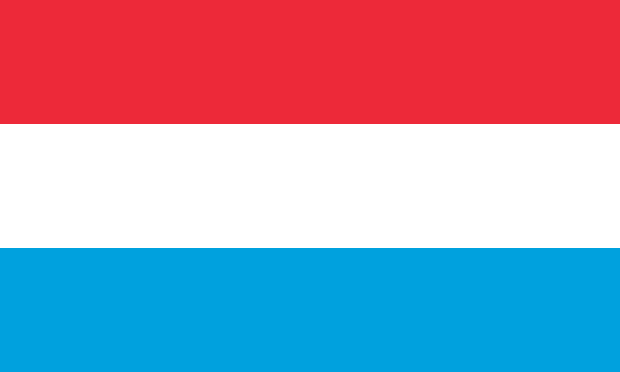
Flag is available in resolutions
| Icon 88x53 |  |
| Icon 32x19 |  |
Luxembourg
Luxembourg: A Microcosm of Grandeur and Resilience
Nestled in the heart of Western Europe, bordered by Belgium, France, and Germany, lies the Grand Duchy of Luxembourg. This diminutive nation, often overlooked due to its size, punches well above its weight in terms of economic prosperity, historical significance, and cultural richness. From its strategic fortress origins to its modern-day role as a global financial hub, Luxembourg offers a captivating blend of history, innovation, and breathtaking landscapes, all within a compact and accessible territory. Its story is one of resilience, adaptation, and a persistent pursuit of excellence that has shaped its unique identity.
The population of Luxembourg is a testament to its international appeal and economic magnetism. With a total population of just over 640,000 people, it is one of the smallest countries in Europe. However, this seemingly small number belies a remarkable demographic diversity. Luxembourg boasts one of the highest proportions of foreign-born residents in the world, with a significant portion of its workforce commuting from neighboring countries, particularly France, Germany, and Belgium. This influx of international talent and diverse cultures has profoundly shaped Luxembourgish society, fostering a cosmopolitan atmosphere and contributing to a vibrant multicultural tapestry. The official languages reflect this diversity: Luxembourgish is the national language, but French and German are also widely spoken and used in official capacities. English is also prevalent, especially in business and international circles. This linguistic fluidity is a hallmark of Luxembourg’s ability to integrate and thrive in a globalized world. The society is characterized by a high standard of living, excellent social welfare systems, and a strong emphasis on education and personal development, contributing to a contented and productive populace.
The history of Luxembourg is a long and often tumultuous journey, marked by its strategic importance and the constant struggle for sovereignty. Its origins can be traced back to the Roman era, with settlements and fortifications dotting the landscape. However, it was in the Middle Ages that Luxembourg began to emerge as a significant entity. In 963, Count Siegfried acquired the territory and built a castle on the Bock rock, laying the foundation for the city of Luxembourg. Over centuries, the House of Luxembourg rose to prominence, producing Holy Roman Emperors and kings of Bohemia and Hungary. The strategically located fortress, often referred to as the Gibraltar of the North, made Luxembourg a highly coveted prize for various European powers. It was successively ruled by the Dukes of Burgundy, the Habsburgs of Spain and Austria, and the French. The Congress of Vienna in 1815 elevated Luxembourg to the status of a Grand Duchy, granting it personal union with the Netherlands under the House of Orange-Nassau. However, Luxembourg’s independence was further solidified in 1839 with the Treaty of London, which recognized its full sovereignty. The 20th century presented new challenges. Despite its neutrality, Luxembourg was occupied by German forces during both World War I and World War II. The post-war period marked a turning point, with Luxembourg becoming a founding member of the European Economic Community (EEC), the precursor to the European Union. This decision proved prescient, as Luxembourg’s focus on international cooperation and its strategic location within the nascent European project helped to propel its economic growth and solidify its place on the global stage.
Geographically, Luxembourg is a land of rolling hills, dense forests, and picturesque valleys, offering a surprisingly diverse landscape for its size. The country can be broadly divided into two main regions: the Oesling in the north, a more rugged and sparsely populated area characterized by hills and plateaus, and the Gutland in the south, which is more fertile and densely populated. The Ardennes mountain range extends into the Oesling, offering opportunities for hiking and outdoor activities. The Moselle River forms a natural border with Germany and is renowned for its vineyards, producing some of Europe’s finest white wines and sparkling wines. The capital city, Luxembourg City, is perched dramatically on a rocky promontory overlooking the Alzette and Pétrusse rivers, a breathtaking setting that has earned it the nickname Gibraltar of the North. The city’s historic fortifications, a UNESCO World Heritage site, are a stark reminder of its past as an impregnable fortress. Despite its mountainous terrain, Luxembourg is well-connected by an efficient network of roads and railways, making exploration easy and enjoyable.
The economy of Luxembourg is a remarkable success story, characterized by its high degree of openness, diversification, and an exceptionally high GDP per capita. While historically an industrial nation, particularly in steel production, Luxembourg has successfully transitioned into a leading global financial center. The banking sector is a cornerstone of its economy, attracting international financial institutions due to its stable political environment, favorable tax regime, and skilled multilingual workforce. Beyond finance, the country has also developed strong sectors in information technology, telecommunications, logistics, and space exploration. The presence of numerous European Union institutions, including the European Court of Justice, the European Court of Auditors, and the European Investment Bank, further bolsters its economic standing and international influence. The government has consistently invested in education and innovation, fostering an environment conducive to research and development, which has been crucial in maintaining its competitive edge. The commitment to economic diversification has proven to be a wise strategy, ensuring resilience against global economic fluctuations and securing long-term prosperity for its citizens.
Luxembourgs tourist attractions are as varied as its landscape, offering something for every type of traveler. The capital city, Luxembourg City, is undoubtedly the crown jewel. Its UNESCO-listed Old Town and Fortifications are a must-see, with the Bock Casemates offering a fascinating glimpse into the city’s defensive past. The Grand Ducal Palace, the official residence of the Grand Duke, is another prominent landmark. Wandering through the charming cobblestone streets, exploring museums like the National Museum of History and Art, and enjoying the panoramic views from the Chemin de la Corniche, often called the most beautiful balcony in Europe, are unforgettable experiences. Beyond the capital, the picturesque valleys of the Moselle region beckon wine enthusiasts. Here, visitors can tour vineyards, sample local wines, and enjoy leisurely boat trips along the river. The Ardennes region in the north offers a more rugged and natural escape, with opportunities for hiking, cycling, and exploring charming medieval villages like Vianden, dominated by its magnificent castle. The medieval castle of Bourglinster and the remains of the Roman villa at Echternach also provide glimpses into the countrys rich historical tapestry. For those interested in industrial heritage, the Fond-de-Gras offers a unique experience, with a preserved mining railway and a glimpse into the countrys industrial past. Luxembourgs compact size makes it ideal for day trips and extensive exploration, allowing visitors to experience a diverse range of attractions within a short period.
In conclusion, the Grand Duchy of Luxembourg, despite its small stature, stands as a testament to the power of strategic vision, economic adaptability, and a commitment to international cooperation. Its rich history, from its formidable fortress origins to its modern-day role as a global financial hub, is a narrative of continuous evolution. The nations diverse population, its stunning natural landscapes, and its thriving economy combine to create a unique and captivating destination. Luxembourg is more than just a point on the map; it is a dynamic and prosperous nation that continues to inspire with its resilience, innovation, and an unwavering dedication to building a brighter future. It is a country that truly embodies grandeur in a microcosm, offering a profound experience for all who have the opportunity to discover its charms.
Information about Luxembourg
The information comes from the publication CIA The World Factbook.
Automated text translation, excuse errors, please!
Country Luxembourg is situated in a location / continent Europe. Luxembourg has an area of 2 586 km2 and 509 074 residents. The highest point has a height 559 above sea level. and it is called Buurgplaatz. The lowest point is located at the level of 133 above sea level and it is named Moselle River. System of government is constitutional monarchy.The capital city is Luxembourg. Luxembourg has the international abbreviation LU.
Luxembourg - economy
Total gross domestic product (GDP) is 41 750 000 000 $. Total gross domestic product per capita in purchasing power parity is 81 100 $. GDP grows by 1.00 % a year. Inflation (consumer price index) is equal to 3.40 % a year. Luxembourg have 207 500 working-age population (from a total population 509 074 people). Unemployment is at 5.90 %. Luxembourg issued 4.10 % GDP to healt care and 0,90 % GDP to army. The public debt of the country is 16.90 % GDP. The total amount of foreign debt is 2 146 000 000 000 USD.
Luxembourg - demography
As suggested above, Luxembourg has 509 074 people. Population growth is in the amount 1.14 % per year. Number of children born per 1000 population per year is 11.70.Every mother has average 1.77 children. The infant mortality rate is 4.39 and maternal mortality 20.00 deaths per 100,000 births. Average estimated life expectancy makes 79.75 years. Mortality is 8.50 people per 1000 population per year.
Luxembourg - transport and telecommunications
Luxembourg has 5 227 km of roads, 275 km of railway lines and 2 airports. The total length of waterways (navigable rivers, canals, etc.) is 37 km. There is registered 49 ships.
Number of active mobile phones (sim card) in the country Luxembourg is 765 000. Number of active fixed telephone lines is 279 100. Luxembourg has 424 500 internet users, who have the available 253 959 Internet connections. Luxembourg has been assigned a domain first Choose range .lu.
Luxembourg - energetics
Luxembourg consumes a year 5 973 000 000 kWh of electricity. Annual electricity production is 2 490 000 000 kWh in power plants with a total installed electrical capacity 1 702 000 kW. Luxembourg exports 3 216 000 000 kWh and imports 7 280 000 000 kWh of electricity per year Energy mix of power generation is as follows: fossil fuels: 28.4 %, nuclear energy: 0 %, renewable: 5.0 %, hydropower: 2.0 %.
Keywords: transport, economy, national flags, list of flags, Flag of Luxembourg, Flags of countries, world countries, all flags, telecommunications, Luxembourg, list of countries, information, flags of countries in the world, flag states, flag, energetics, demography, politic.