Austria
Flag of Austria
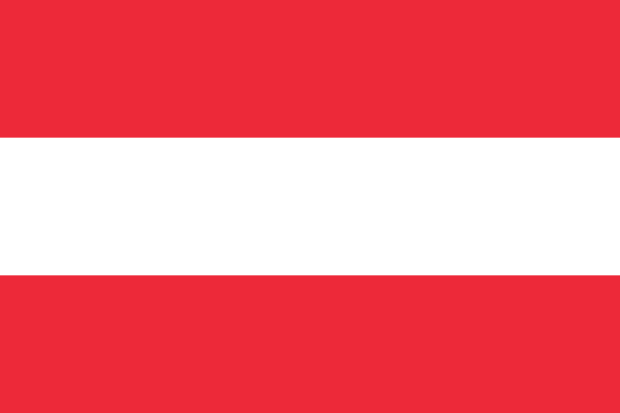
Flag is available in resolutions
| Icon 88x59 |  |
| Icon 32x21 |  |
Austria
Here is an article about Austria, around 5000 characters long, written in English with the specified formatting:
Austria, officially the Republic of Austria, is a landlocked country situated in the heart of Central Europe. Nestled amidst the majestic Alps, its breathtaking landscapes, rich cultural heritage, and vibrant cities have long captivated visitors and residents alike. Austria’s strategic location has historically placed it at a crossroads of European powers, shaping its destiny and contributing to its unique identity. From its imperial past to its modern-day status as a prosperous and culturally influential nation, Austria offers a compelling narrative of history, innovation, and enduring beauty. The country is renowned for its stunning natural scenery, characterized by towering mountains, pristine alpine lakes, and verdant valleys, providing a picturesque backdrop for a multitude of outdoor activities and a profound connection with nature.
The population of Austria, as of recent estimates, stands at approximately 9 million people. The majority of Austrians are of Germanic descent, with German being the official language, though regional dialects are widely spoken. Austrian German, while mutually intelligible with standard German, possesses its own distinct vocabulary and pronunciation. The country is also home to several recognized ethnic minorities, including Slovenes, Croats, Hungarians, and Roma, who contribute to Austria’s multicultural tapestry. The demographic landscape is characterized by a relatively high life expectancy and a well-established social welfare system. Vienna, the capital city, is the most populous urban center, serving as the nation’s political, economic, and cultural hub. Other significant cities include Graz, Linz, Salzburg, and Innsbruck, each with its own unique character and historical significance. The religious landscape is predominantly Roman Catholic, although a growing secular population and the presence of other faiths add to the country’s diversity. The Austrians are often described as reserved yet polite, with a strong appreciation for tradition, punctuality, and a good quality of life.
Austria’s history is a saga of empires, conflicts, and artistic flourishing. Its origins can be traced back to the Roman province of Noricum. The region gained prominence during the Middle Ages as the Duchy of Austria, ruled by the Babenberg dynasty. In the 13th century, the powerful Habsburg dynasty ascended to the throne, marking the beginning of an era that would see Austria grow into a vast and influential empire. For centuries, the Habsburgs ruled over a multi-ethnic realm that stretched across much of Central and Eastern Europe. Vienna became a magnificent imperial capital, a center of art, music, and scientific advancement. This period witnessed the construction of iconic palaces like Schönbrunn and the Hofburg, testaments to the empire’s grandeur. The 19th century brought about significant political and social changes, including the Austro-Hungarian Compromise of 1867, which established the Dual Monarchy. However, the empire’s vastness and internal tensions ultimately proved unsustainable. The assassination of Archduke Franz Ferdinand in Sarajevo in 1914 triggered the outbreak of World War I, which led to the dissolution of the Austro-Hungarian Empire in 1918. The subsequent establishment of the First Austrian Republic was a period of political instability and economic hardship. The country was annexed by Nazi Germany in 1938 (the Anschluss) and became part of the Third Reich. Following World War II, Austria was occupied by the Allied powers and was re-established as an independent and democratic republic in 1955, with the signing of the Austrian State Treaty. Since then, Austria has pursued a policy of neutrality and has become a prosperous member of the European Union.
Geographically, Austria is defined by the imposing presence of the Alps, which cover roughly two-thirds of the country. These majestic mountains offer stunning vistas, challenging hiking trails, and world-class ski resorts, making Austria a premier destination for winter sports enthusiasts and nature lovers. The highest peak is the Grossglockner, standing at 3,798 meters. Beyond the alpine regions, Austria features rolling hills, fertile river valleys, and several picturesque lakes, such as the Salzkammergut lake district. The Danube River, Europe’s second-longest river, flows through Austria, playing a vital role in transportation and commerce, and passing through historical cities like Linz and Vienna. The country shares its borders with eight other nations: Germany to the north-west, the Czech Republic to the north, Slovakia to the north-east, Hungary to the east, Slovenia to the south, Italy to the south, Switzerland to the west, and Liechtenstein to the west. This central location has fostered a rich exchange of cultures and influences throughout its history. The climate varies across the country, with alpine regions experiencing colder temperatures and significant snowfall, while lower-lying areas enjoy milder summers and more moderate winters.
Austria’s economy is highly developed and diversified, characterized by a strong industrial base, a robust service sector, and a significant contribution from tourism. Key industries include machinery and equipment manufacturing, automotive production, food processing, and the chemical industry. Austria is also a leading producer of iron ore and has a well-developed energy sector, with a focus on hydropower. The service sector, particularly finance, banking, and information technology, plays an increasingly important role. Tourism is a cornerstone of the Austrian economy, attracting millions of visitors annually who come to experience its natural beauty, historical sites, and cultural events. The country boasts a highly skilled workforce and a strong commitment to research and development, fostering innovation and competitiveness. Austria is a member of the European Union, and its economy is closely integrated with that of the EU. The Austrian Schilling was replaced by the Euro in 2002, further solidifying its economic ties with the eurozone. The country’s economic policies generally emphasize fiscal responsibility and social partnership, aiming to maintain a balance between economic growth and social well-being.
Austria is a treasure trove of tourist attractions, offering something for every visitor. The imperial grandeur of Vienna is undeniable, with its magnificent palaces, world-class museums, and vibrant music scene. Schönbrunn Palace, the former summer residence of the Habsburg emperors, is a UNESCO World Heritage site and a must-see. The Hofburg Palace, the former imperial palace in the city center, now houses several museums and the Spanish Riding School. St. Stephen’s Cathedral, a Gothic masterpiece, dominates the city skyline. Salzburg, the birthplace of Wolfgang Amadeus Mozart, is renowned for its Baroque architecture, charming Old Town, and the annual Salzburg Festival, a world-famous celebration of music and drama. The Hohensalzburg Fortress, one of the largest medieval castles in Europe, offers panoramic views of the city and surrounding countryside. Innsbruck, nestled in the heart of the Alps, is a gateway to winter sports and boasts the iconic Golden Roof, a symbol of the city. The picturesque Salzkammergut region, with its crystal-clear lakes and charming villages like Hallstatt, offers breathtaking natural beauty and opportunities for hiking, swimming, and boating. For those interested in history and culture, numerous castles, monasteries, and historical sites dot the Austrian landscape, each with its own unique story to tell. The culinary scene is also a significant draw, with traditional Austrian dishes like Wiener Schnitzel, Sachertorte, and Apfelstrudel delighting palates. The coffee house culture, particularly in Vienna, is a cherished tradition, offering a unique ambiance for relaxation and conversation.
In conclusion, Austria is a country that seamlessly blends its illustrious past with a dynamic present. Its stunning alpine landscapes, coupled with a profound cultural heritage shaped by centuries of imperial rule, create a captivating destination. The warmth and resilience of its people, the efficiency of its economy, and the enduring appeal of its artistic and architectural marvels all contribute to Austria’s status as a truly exceptional European nation. Whether one is drawn to the grandeur of its imperial cities, the serenity of its mountain retreats, or the richness of its cultural traditions, Austria promises an unforgettable experience, leaving visitors with a deep appreciation for its unique charm and enduring spirit.
Information about Austria
The information comes from the publication CIA The World Factbook.
Automated text translation, excuse errors, please!
Country Austria is situated in a location / continent Europe. Austria has an area of 83 871 km2 and 8 219 743 residents. The highest point has a height 3 798 above sea level. and it is called Grossglockner. The lowest point is located at the level of 115 above sea level and it is named Neusiedler See. System of government is Federal Republic and the date of independence 12th November 1918. The capital city is Vienna. Austria has the international abbreviation AU.
Austria - economy
Total gross domestic product (GDP) is 356 500 000 000 $. Total gross domestic product per capita in purchasing power parity is 42 400 $. GDP grows by 3.10 % a year. Inflation (consumer price index) is equal to 3.50 % a year. Austria have 3 668 000 working-age population (from a total population 8 219 743 people). Unemployment is at 4.20 %. Austria issued 11.00 % GDP to healt care and 0,80 % GDP to army. The public debt of the country is 73.60 % GDP. The total amount of foreign debt is 883 500 000 000 USD.
Austria - demography
As suggested above, Austria has 8 219 743 people. Population growth is in the amount 0.03 % per year. Number of children born per 1000 population per year is 8.69.Every mother has average 1.41 children. The infant mortality rate is 4.26 and maternal mortality 4.00 deaths per 100,000 births. Average estimated life expectancy makes 79.91 years. Mortality is 10.23 people per 1000 population per year.
Austria - transport and telecommunications
Austria has 110 778 km of roads, 6 399 km of railway lines and 52 airports. The total length of waterways (navigable rivers, canals, etc.) is 358 km. There is registered 3 ships.
Number of active mobile phones (sim card) in the country Austria is 13 023 000. Number of active fixed telephone lines is 3 388 000. Austria has 6 143 000 internet users, who have the available 3 445 000 Internet connections. Austria has been assigned a domain first Choose range .at.
Austria - energetics
Austria consumes a year 61 510 000 000 kWh of electricity. Annual electricity production is 63 980 000 000 kWh in power plants with a total installed electrical capacity 20 850 000 kW. Austria exports 17 530 000 000 kWh and imports 19 750 000 000 kWh of electricity per year Energy mix of power generation is as follows: fossil fuels: 19.6 %, nuclear energy: 0 %, renewable: 20.4 %, hydropower: 38.7 %. The country Austria is harvested annually 25 750 barrels of oil.
Keywords: Austria, list of flags, telecommunications, energetics, all flags, flags of countries in the world, world countries, economy, Flag of Austria, list of countries, information, transport, demography, flag, flag states, national flags, Flags of countries, politic.