Kosovo
Flag of Kosovo
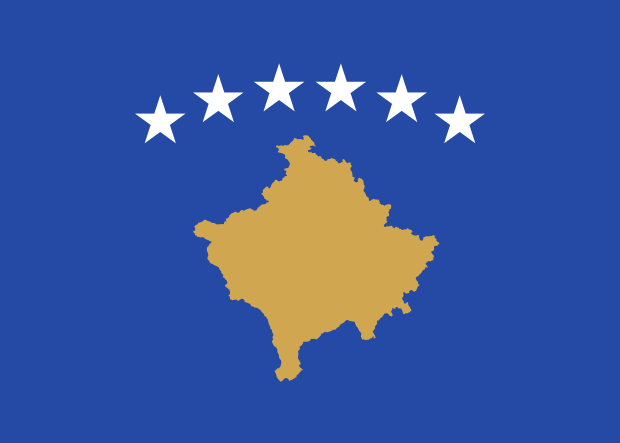
Flag is available in resolutions
| Icon 88x63 |  |
| Icon 32x23 |  |
Kosovo
Kosovo: A Land of Resilience and Emerging Potential
Nestled in the heart of the Balkans, Kosovo is a land of dramatic landscapes, rich history, and a resilient spirit. Though relatively young as an independent nation, its story is deeply interwoven with the broader narrative of Southeastern Europe, marked by centuries of cultural exchange, conflict, and a persistent yearning for self-determination. This article will delve into the multifaceted aspects of Kosovo, exploring its demographics, historical trajectory, geographical features, burgeoning economy, and the captivating attractions that draw visitors to its shores.
The demographic tapestry of Kosovo is vibrant and complex, reflecting its historical migrations and ethnic compositions. The majority population consists of ethnic Albanians, who constitute around 92% of the total inhabitants. This Albanian majority shares a common language, culture, and religion, predominantly Islam, though with a notable presence of Catholicism and Orthodoxy among certain communities. Alongside the Albanian majority, a significant Serbian minority resides in Kosovo, primarily concentrated in the northern parts of the country. This ethnic division has been a central element in Kosovo’s modern history and political landscape, often leading to tensions and international involvement. Other smaller ethnic groups, such as Bosniaks, Gorani, Roma, Ashkali, and Egyptians, also contribute to Kosovo’s multicultural mosaic, each with their unique traditions and languages. The population is relatively young, with a median age significantly lower than the European average, indicating a dynamic and growing demographic. This youthful population presents both opportunities and challenges for the nation’s future development, particularly in terms of education, employment, and economic growth. The capital city, Pristina, is the largest urban center and a hub of political, economic, and cultural activity, attracting a significant portion of the country’s population and serving as a melting pot for its diverse communities.
Kosovo’s history is a saga of empires, invasions, and aspirations for freedom. Its strategic location has made it a crossroads for various civilizations throughout the ages. Evidence of prehistoric settlements, such as the Vinča culture, points to a long human presence in the region. During antiquity, the area was inhabited by Illyrian tribes, who were later incorporated into the Roman Empire. The arrival of Slavic peoples in the early Middle Ages marked another significant shift, leading to the eventual formation of medieval Serbian states. The Battle of Kosovo Polje in 1389, a pivotal moment in Balkan history, saw the Ottoman Empire’s decisive victory over a Serbian-led coalition, ushering in centuries of Ottoman rule. Under Ottoman administration, Kosovo became a significant administrative and cultural center, with the construction of mosques, bathhouses, and other architectural marvels that still stand today. This period also witnessed a gradual Islamization of the Albanian population. The 19th century brought a resurgence of Balkan nationalism, and Kosovo became a focal point of Serbian aspirations to reclaim lost territories and Albanian desires for greater autonomy and eventual independence. Following the Balkan Wars in the early 20th century, Kosovo was incorporated into Serbia, and later into the Kingdom of Yugoslavia. During World War II, it was occupied by Axis powers and annexed by Greater Albania, a puppet state of Fascist Italy. After the war, it was re-established as an autonomous province within socialist Yugoslavia, under the leadership of Josip Broz Tito. However, the late 20th century saw growing ethnic tensions and a systematic suppression of Albanian rights, leading to widespread dissent and ultimately, a violent conflict in the late 1990s. NATO’s intervention in 1999, following a period of intense ethnic cleansing, led to UN administration and a de facto separation from Serbia. On February 17, 2008, Kosovo unilaterally declared its independence, a move recognized by a significant number of UN member states, but still contested by Serbia and a handful of other nations. This declaration marked the culmination of decades of struggle and a new chapter in the nation’s journey.
Geographically, Kosovo is a landlocked territory located in the southeastern part of the Balkan Peninsula. Its landscape is characterized by a diverse topography, ranging from fertile plains to rugged mountain ranges. The country is predominantly mountainous, with the Šar Mountains in the south forming a natural border with North Macedonia and Albania, and the Kopaonik mountains to the north separating it from Serbia. These mountain ranges offer breathtaking vistas, hiking opportunities, and are home to rich biodiversity. The central part of Kosovo is dominated by the Kosovo Field (Kosovo Polje), a fertile plain that has historically been a significant agricultural region and the site of pivotal historical events. Several rivers crisscross the country, with the Sitnica and the White Drin being the most prominent. These rivers not only provide vital water resources but also contribute to the scenic beauty of the landscape. Kosovo’s climate is continental, with hot summers and cold, snowy winters. The mountainous regions experience more extreme weather conditions. The natural resources of Kosovo, though not as extensive as in some other European nations, include significant deposits of lignite coal, which is a primary source of energy for the country. There are also deposits of lead, zinc, silver, and nickel, which have the potential to contribute to the economy if properly exploited. The country’s natural beauty, with its mountains, rivers, and fertile valleys, offers considerable potential for eco-tourism and outdoor recreation.
The industrial sector in Kosovo is still in its nascent stages of development, grappling with the legacy of the Yugoslav era and the challenges of post-conflict reconstruction. Historically, mining and metallurgy played a significant role in the Kosovar economy, particularly the extraction of lignite, lead, zinc, and nickel. While these sectors remain important, efforts are underway to diversify the economy and move towards more value-added industries. The energy sector, heavily reliant on lignite-fired power plants, is a cornerstone of the economy, though it faces challenges related to environmental impact and modernization. Agriculture continues to be a vital sector, employing a significant portion of the population and contributing to food security. The fertile plains are ideal for cultivating crops such as maize, wheat, fruits, and vegetables. Dairy farming and livestock production are also prevalent. The service sector, particularly in areas such as telecommunications, banking, and retail, has seen substantial growth in recent years, driven by foreign investment and increased domestic demand. The government is actively seeking to attract foreign direct investment, improve the business environment, and promote entrepreneurship to foster economic growth and create employment opportunities. Efforts are being made to develop key sectors such as information technology, renewable energy, and tourism, capitalizing on the country’s potential. The presence of a young, educated, and increasingly skilled workforce is a significant asset for future economic development.
Despite its relatively short history as an independent state, Kosovo offers a wealth of tourist attractions that appeal to a variety of interests. For history enthusiasts, the medieval monasteries, designated as UNESCO World Heritage Sites, are an absolute must-see. The Visoki Dečani Monastery, with its stunning frescoes and imposing architecture, and the Patriarchate of Peć, a complex of churches and monastic buildings, stand as testaments to Kosovo’s rich Orthodox heritage. The Ottoman influence is evident in the well-preserved old towns of Prizren and Gjakova, with their charming cobblestone streets, historic mosques like the Sinan Pasha Mosque in Prizren, and traditional bazaars where local crafts and produce are sold. Prizren, often referred to as the “cultural capital” of Kosovo, boasts the impressive Prizren Fortress, offering panoramic views of the city and the surrounding valley. For nature lovers, the Rugova Gorge, a dramatic canyon carved by the Peja Bistrica river, offers spectacular hiking trails, opportunities for rock climbing, and breathtaking natural scenery. The Sharr Mountains National Park is another haven for outdoor adventurers, providing opportunities for trekking, skiing in winter, and exploring pristine alpine landscapes. The capital city, Pristina, while more modern, offers a glimpse into contemporary Kosovar life. Visitors can explore the National Museum of Kosovo, the Newborn monument symbolizing independence, and enjoy the vibrant cafe culture. The emerging tourism sector is actively developing infrastructure, including hotels, restaurants, and tour operators, making it increasingly accessible for international visitors. The warmth and hospitality of the Kosovar people, coupled with the country’s unique blend of history, culture, and natural beauty, make it a compelling destination for those seeking an authentic Balkan experience. Kosovo is a land of contrasts, a place where ancient traditions meet modern aspirations, and where the resilience of its people is etched into the very fabric of its landscape and history. As it continues to forge its path on the international stage, Kosovo offers a compelling narrative of a nation striving for peace, prosperity, and a bright future.
Information about Kosovo
The information comes from the publication CIA The World Factbook.
Automated text translation, excuse errors, please!
Country Kosovo is situated in a location / continent Europe. Kosovo has an area of 10 887 km2 and 1 836 529 residents. The highest point has a height 2 656 above sea level. and it is called Gjeravica/Deravica. The lowest point is located at the level of 297 above sea level and it is named Dogwood and Bardhe / Beli Drim. System of government is republic and the date of independence 17th February 2008. The capital city is Pristina (Prishtine, Prishtina). Kosovo has the international abbreviation KV.
Kosovo - economy
Total gross domestic product (GDP) is 13 020 000 000 $. Total gross domestic product per capita in purchasing power parity is 6 500 $. GDP grows by 5.00 % a year. Inflation (consumer price index) is equal to 8.30 % a year. Kosovo have 800 000 working-age population (from a total population 1 836 529 people). Unemployment is at 45.30 %. The public debt of the country is 5.60 % GDP. The total amount of foreign debt is 326 000 000 USD.
Kosovo - demography
As suggested above, Kosovo has 1 836 529 people.
Kosovo - transport and telecommunications
Kosovo has 1 964 km of roads, 430 km of railway lines and 8 airports.
Number of active mobile phones (sim card) in the country Kosovo is 562 000. Number of active fixed telephone lines is 106 300.
Kosovo - energetics
Kosovo consumes a year 5 674 000 000 kWh of electricity. Annual electricity production is 5 160 000 000 kWh ..
Keywords: Flag of Kosovo, list of countries, national flags, economy, information, energetics, flag states, flags of countries in the world, demography, telecommunications, Kosovo, list of flags, Flags of countries, transport, world countries, flag, all flags, politic.