Denmark
Flag of Denmark
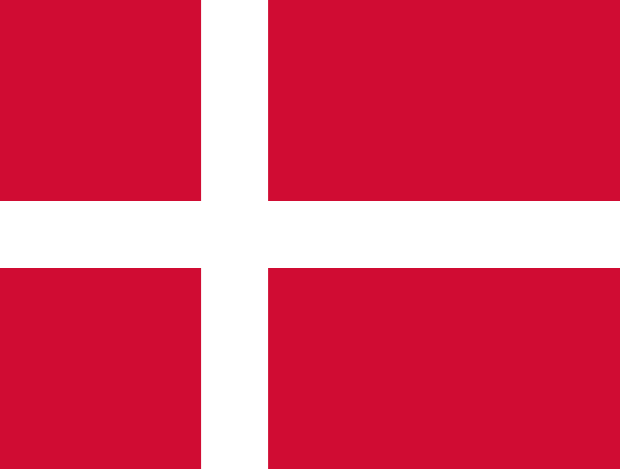
Flag is available in resolutions
| Icon 88x67 |  |
| Icon 32x24 |  |
Denmark
Denmark: A Tapestry of History, Innovation, and Hygge
Denmark, a Scandinavian nation nestled in Northern Europe, is a country that consistently ranks high in global happiness indices, a testament to its well-being, social cohesion, and commitment to a balanced lifestyle. This seemingly small kingdom, often perceived as a land of fairy tales and Vikings, possesses a rich and complex history, a unique geography shaped by the sea, and a forward-thinking economy driven by innovation and sustainability. Its cultural identity is deeply intertwined with the concept of „hygge,“ an untranslatable Danish word embodying coziness, contentment, and togetherness, which permeates everyday life and influences its approach to living.
The Danish population, approximately 5.9 million people, is characterized by its homogeneity, with a vast majority being of Danish descent. However, like many European nations, Denmark has experienced increasing immigration in recent decades, leading to a more diverse society. Danes are known for their egalitarianism, a strong sense of community, and a high level of trust in their institutions and fellow citizens. This trust is a cornerstone of the Danish welfare state, which provides extensive social services, including universal healthcare and free education, funded by a relatively high tax burden. The Danish language, a North Germanic language, is spoken by all citizens, and English proficiency is remarkably high, making communication relatively easy for visitors. The Danes’ dedication to work-life balance is legendary; it’s not uncommon for people to leave work on time to spend evenings with family, engage in hobbies, or simply enjoy the simple pleasures of life. This cultural emphasis on well-being and community contributes significantly to the nations high quality of life.
Denmark’s history is a captivating saga stretching back millennia. From its early settlement by Germanic tribes to the formidable Viking Age, the country has left an indelible mark on European history. The Vikings, renowned for their seafaring prowess and raiding expeditions, also established trade routes and settlements across Europe, influencing language, culture, and political landscapes. The Kalmar Union, established in the late 14th century, briefly united Denmark, Sweden, and Norway under a single monarch, showcasing Denmark’s historical dominance in the region. The subsequent centuries saw Denmark engaged in numerous wars and territorial disputes, particularly with Sweden, which significantly shaped its borders and national identity. The 19th century brought about significant political reforms, including the establishment of a constitutional monarchy in 1849, granting more power to elected officials. Denmark’s neutrality during World War I was maintained, but the country was occupied by Nazi Germany during World War II, a period that profoundly impacted its people and led to a strong resistance movement. Post-war, Denmark embraced its role as a founding member of NATO and the European Union, actively participating in international cooperation and promoting peace and democracy. The legacy of its past, from the grandeur of Viking longships to the resilience shown during wartime, continues to inform Danish society and its outlook on the world.
Geographically, Denmark is a peninsula extending from mainland Europe, bordered by Germany to the south and surrounded by the North Sea and the Baltic Sea. It comprises the Jutland peninsula and numerous islands, the largest of which are Zealand, Funen, and Lolland. The landscape is predominantly flat and fertile, characterized by rolling hills, extensive coastlines, and a network of fjords and inlets. Denmark’s coastline is remarkably long, stretching over 7,300 kilometers, and the sea has always played a central role in its economy and culture, from fishing and trade to its modern-day emphasis on renewable energy sources like offshore wind power. The climate is temperate maritime, with mild summers and cool winters, often influenced by the prevailing westerly winds. The country’s low elevation makes it particularly vulnerable to rising sea levels, a challenge that Denmark is actively addressing through innovative engineering and sustainable urban planning. The proximity to the sea also means that weather can change rapidly, adding to the dynamic nature of its natural environment. The numerous islands, each with its own distinct character, offer a diverse range of landscapes, from rugged cliffs to sandy beaches.
Denmark’s economy is a highly developed, mixed economy, renowned for its strong social safety net and commitment to innovation and sustainability. The country boasts a high GDP per capita and a remarkably low unemployment rate. Key sectors include pharmaceuticals, renewable energy, maritime shipping, agriculture, and design. Denmark is a global leader in wind energy technology, with companies like Vestas playing a significant role in the global transition to clean energy. The agricultural sector, while having decreased in its share of employment, remains highly efficient and export-oriented, focusing on high-quality dairy products, pork, and grains. The design industry, with its minimalist aesthetic and functional approach, has garnered international acclaim, with Danish furniture, lighting, and architecture influencing design trends worldwide. The country also has a thriving service sector, including tourism, IT, and logistics. The emphasis on lifelong learning and a highly skilled workforce, supported by the robust education system, is a crucial factor in Denmark’s economic success. Its commitment to green technologies and sustainable practices positions it as a frontrunner in addressing global environmental challenges.
Denmark is brimming with tourist attractions that cater to a wide range of interests. Copenhagen, the vibrant capital city, is a must-visit, offering a blend of historical charm and modern sophistication. Visitors can explore the iconic Little Mermaid statue, wander through the colorful Nyhavn harbor, and visit the royal palaces of Amalienborg and Rosenborg. Tivoli Gardens, one of the world’s oldest amusement parks, provides enchanting entertainment for all ages. Beyond the capital, the country offers a wealth of historical sites, including Viking ship museums in Roskilde, the ancient rune stones at Jelling, and the impressive Kronborg Castle, the setting for Shakespeare’s Hamlet. For those seeking natural beauty, the Danish islands provide picturesque landscapes, charming fishing villages, and pristine beaches. The island of Bornholm, in the Baltic Sea, is renowned for its unique rock formations, medieval churches, and artistic communities. Legoland Billund, the original home of the famous building bricks, is a perennial favorite for families. The Danes’ dedication to cycling is evident throughout the country, with extensive bike paths making it an ideal destination for exploring on two wheels. The emphasis on accessibility and the welcoming nature of the people further enhance the tourist experience.
In conclusion, Denmark is far more than just a fairy-tale land; it is a modern, progressive nation that has successfully blended its rich historical heritage with a forward-thinking approach to society, economy, and environment. Its commitment to social welfare, its innovative spirit, and its deep appreciation for the simple joys of life, encapsulated by the essence of „hygge,“ make it a truly unique and inspiring country. From its ancient Viking roots to its leadership in renewable energy, Denmark offers a compelling narrative of resilience, innovation, and a profound understanding of what it means to live a good life. Its enduring appeal lies in its harmonious balance of tradition and modernity, its dedication to sustainability, and the genuine warmth and contentment of its people.
Information about Denmark
The information comes from the publication CIA The World Factbook.
Automated text translation, excuse errors, please!
Country Denmark is situated in a location / continent Europe. Denmark has an area of 43 094 km2 and 5 543 453 residents. The highest point has a height 173 above sea level. and it is called Yding Skovhoej. The lowest point is located at the level of -7 above sea level and it is named Lammefjord. System of government is constitutional monarchy.The capital city is Copenhagen. Denmark has the international abbreviation DA.
Denmark - economy
Total gross domestic product (GDP) is 209 200 000 000 $. Total gross domestic product per capita in purchasing power parity is 37 600 $. GDP grows by 1.10 % a year. Inflation (consumer price index) is equal to 2.80 % a year. Denmark have 2 853 000 working-age population (from a total population 5 543 453 people). Unemployment is at 6.00 %. Denmark issued 7.00 % GDP to healt care and 1,30 % GDP to army. The public debt of the country is 44.20 % GDP. The total amount of foreign debt is 626 900 000 000 USD.
Denmark - demography
As suggested above, Denmark has 5 543 453 people. Population growth is in the amount 0.24 % per year. Number of children born per 1000 population per year is 10.22.Every mother has average 1.74 children. The infant mortality rate is 4.19 and maternal mortality 12.00 deaths per 100,000 births. Average estimated life expectancy makes 78.78 years. Mortality is 10.19 people per 1000 population per year.
Denmark - transport and telecommunications
Denmark has 73 197 km of roads, 2 667 km of railway lines and 89 airports. The total length of waterways (navigable rivers, canals, etc.) is 400 km. There is registered 367 ships.
Number of active mobile phones (sim card) in the country Denmark is 7 047 000. Number of active fixed telephone lines is 2 515 000. Denmark has 4 750 000 internet users, who have the available 4 285 000 Internet connections. Denmark has been assigned a domain first Choose range .dk.
Denmark - energetics
Denmark consumes a year 32 420 000 000 kWh of electricity. Annual electricity production is 36 390 000 000 kWh in power plants with a total installed electrical capacity 13 420 000 kW. Denmark exports 11 730 000 000 kWh and imports 10 600 000 000 kWh of electricity per year Energy mix of power generation is as follows: fossil fuels: 65.8 %, nuclear energy: 0 %, renewable: 34.2 %, hydropower: 0.1 %. The country Denmark is harvested annually 221 100 barrels of oil.
Keywords: telecommunications, transport, Flags of countries, energetics, Denmark, list of flags, list of countries, Flag of Denmark, flag states, world countries, flags of countries in the world, all flags, information, flag, demography, national flags, economy, politic.