Ireland
Flag of Ireland
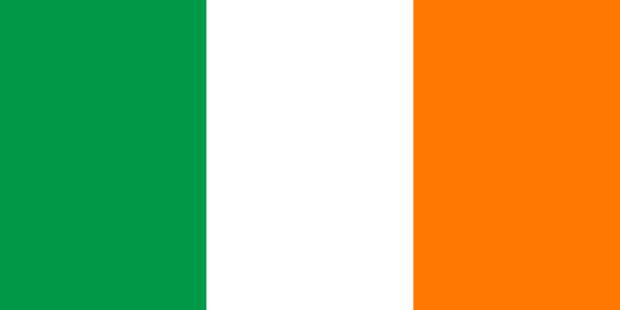
Flag is available in resolutions
| Icon 88x44 |  |
| Icon 32x16 |  |
Ireland
Ireland: The Emerald Isles Enduring Charm
Ireland, often affectionately called the Emerald Isle for its vibrant, verdant landscapes, is an island nation situated in the North Atlantic Ocean, to the east of Great Britain. It is a land steeped in ancient history, rich in culture, and blessed with breathtaking natural beauty, drawing visitors from across the globe. The island is divided into two political entities: the Republic of Ireland, which constitutes the majority of the island and is an independent sovereign state, and Northern Ireland, which is part of the United Kingdom. This article will primarily focus on the Republic of Ireland, exploring its diverse facets, from its population and intricate history to its captivating geography, burgeoning industries, and the myriad of tourist attractions that make it such a compelling destination.
The population of Ireland, as of recent estimates, stands at approximately 5 million people within the Republic of Ireland. This figure represents a nation that has, over centuries, experienced significant demographic shifts, including periods of emigration and, more recently, a resurgence in population growth fueled by both natural increase and immigration. The Irish people are renowned for their warmth, hospitality, and a strong sense of community. The Celtic heritage is deeply ingrained in the national identity, evident in the enduring popularity of traditional music, dance, and storytelling. English is the predominant language spoken, though Irish Gaelic (Gaeilge) remains an official language and is spoken by a dedicated minority, particularly in the Gaeltacht regions. This linguistic duality adds another layer to Irelands unique cultural tapestry. The social fabric is characterized by a blend of traditional values and a progressive outlook, with a young and increasingly diverse population contributing to a dynamic contemporary society. Major cities like Dublin, Cork, Galway, and Limerick serve as vibrant hubs of culture, commerce, and education, each possessing its own distinct character and charm.
Irelands history is a long and often tumultuous narrative, stretching back millennia. Archaeological evidence points to human settlement on the island as far back as 8000 BC. The arrival of the Celts in the first millennium BC brought with it a rich culture of mythology, art, and social structure. The subsequent arrival of Christianity in the 5th century AD, largely credited to Saint Patrick, profoundly shaped the islands spiritual and cultural landscape, leading to the establishment of numerous monastic centers that became renowned for learning and scholarship throughout Europe. The Viking invasions in the 9th and 10th centuries left their mark, with many coastal settlements, including Dublin, founded by Norsemen. The most significant turning point in Irish history, however, was the Norman invasion in the late 12th century, which gradually led to English dominance. Over the ensuing centuries, Ireland endured periods of oppression, rebellion, and famine, most notably the Great Famine of the 1840s, a catastrophic event that decimated the population and led to mass emigration, profoundly altering the demographic and socio-political landscape of the island. The struggle for independence gained momentum in the late 19th and early 20th centuries, culminating in the Easter Rising of 1916 and the subsequent War of Independence. The Anglo-Irish Treaty of 1921 led to the establishment of the Irish Free State, which later became the Republic of Ireland in 1949. The partition of Ireland, however, remained a contentious issue, leading to decades of conflict in Northern Ireland. Despite these historical challenges, Ireland has emerged as a resilient and forward-looking nation, deeply proud of its heritage and its achievements.
Geographically, Ireland is characterized by its rolling green hills, dramatic coastlines, and a temperate maritime climate. The island is roughly rectangular in shape, with an area of approximately 84,421 square kilometers. The interior of the island is dominated by a central plain, which is largely agricultural land, interspersed with bogs and lakes. The coastline, on the other hand, is far more rugged and varied, featuring towering cliffs, sandy beaches, and numerous inlets and bays. The west coast, in particular, is renowned for its wild and windswept beauty, with iconic sights like the Cliffs of Moher standing sentinel over the Atlantic. Mountain ranges, though not particularly high, are scattered across the island, with the MacGillycuddys Reeks in County Kerry home to Carrauntoohil, the islands highest peak. Irelands numerous rivers and lakes contribute to its lush greenery and provide habitats for a diverse range of flora and fauna. The climate is predominantly influenced by the Gulf Stream, resulting in mild winters and cool summers, with rainfall distributed fairly evenly throughout the year, contributing to the islands iconic verdant appearance. This natural beauty is a significant draw for tourism and a source of national pride.
In terms of industry, Ireland has undergone a remarkable economic transformation in recent decades. While agriculture has historically been a cornerstone of the Irish economy, with significant production of beef, dairy products, and grains, the country has successfully diversified into a modern, knowledge-based economy. The technology sector has become a major driver of growth, with Ireland attracting significant foreign direct investment from leading global technology companies, earning it the moniker of the Silicon Valley of Europe. This influx of investment has created a wealth of employment opportunities and fostered innovation. The pharmaceutical and medical technology industries are also thriving, contributing significantly to exports and economic output. Furthermore, Irelands strong tourism sector, fueled by its natural beauty, rich history, and vibrant culture, is a vital source of revenue and employment. The financial services sector also plays a crucial role, with Dublin serving as a significant European financial center. The countrys commitment to education and its highly skilled workforce have been instrumental in this economic evolution, allowing Ireland to compete effectively on the global stage.
The tourist attractions in Ireland are as diverse as its landscapes and history. For those seeking natural wonders, the Cliffs of Moher in County Clare offer breathtaking views of the Atlantic Ocean, while the Ring of Kerry is a scenic drive renowned for its stunning coastal scenery, mountains, and lakes. The Giants Causeway in Northern Ireland, a UNESCO World Heritage site, is a geological marvel of interlocking basalt columns. History buffs will be captivated by ancient sites like Newgrange, a prehistoric passage tomb older than the pyramids, and the monastic settlement of Glendalough in County Wicklow, a place of immense historical and spiritual significance. Dublin Castle, Trinity College with its magnificent Long Room, and the historic Kilmainham Gaol offer glimpses into the islands past. The lively city of Galway is celebrated for its vibrant arts scene, traditional music, and proximity to the rugged beauty of Connemara. For those interested in literature, visiting the birthplace of literary giants like James Joyce, Oscar Wilde, and W.B. Yeats adds a unique dimension to their exploration. The islands many charming villages, traditional pubs with live music sessions, and the warmth of the Irish people further enhance the visitor experience. From the dramatic western coastlines to the historical heartlands, Ireland offers an unforgettable journey through time and natural splendor, a testament to its enduring appeal as a global destination.
Information about Ireland
The information comes from the publication CIA The World Factbook.
Automated text translation, excuse errors, please!
Country Ireland is situated in a location / continent Europe. Ireland has an area of 70 273 km2 and 4 722 028 residents. The highest point has a height 1 041 above sea level. and it is called Carrauntoohil. The lowest point is located at the level of 0 above sea level and it is named Atlantic Ocean. System of government is republic and the date of independence 6th December 1921. The capital city is Dublin. Ireland has the international abbreviation EI.
Ireland - economy
Total gross domestic product (GDP) is 183 900 000 000 $. Total gross domestic product per capita in purchasing power parity is 40 100 $. GDP grows by 0.70 % a year. Inflation (consumer price index) is equal to 2.60 % a year. Ireland have 2 126 000 working-age population (from a total population 4 722 028 people). Unemployment is at 14.40 %. Ireland issued 7.60 % GDP to healt care and 0,90 % GDP to army. The public debt of the country is 105.40 % GDP. The total amount of foreign debt is 2 352 000 000 000 USD.
Ireland - demography
As suggested above, Ireland has 4 722 028 people. Population growth is in the amount 1.11 % per year. Number of children born per 1000 population per year is 15.81.Every mother has average 2.01 children. The infant mortality rate is 3.81 and maternal mortality 6.00 deaths per 100,000 births. Average estimated life expectancy makes 80.32 years. Mortality is 6.38 people per 1000 population per year.
Ireland - transport and telecommunications
Ireland has 96 036 km of roads, 3 237 km of railway lines and 39 airports. The total length of waterways (navigable rivers, canals, etc.) is 956 km. There is registered 31 ships.
Number of active mobile phones (sim card) in the country Ireland is 4 906 000. Number of active fixed telephone lines is 2 047 000. Ireland has 3 042 000 internet users, who have the available 1 380 000 Internet connections. Ireland has been assigned a domain first Choose range .ie.
Ireland - energetics
Ireland consumes a year 26 100 000 000 kWh of electricity. Annual electricity production is 26 350 000 000 kWh in power plants with a total installed electrical capacity 7 401 000 kW. Ireland exports 242 000 000 kWh and imports 732 000 000 kWh of electricity per year Energy mix of power generation is as follows: fossil fuels: 75.3 %, nuclear energy: 0 %, renewable: 17.5 %, hydropower: 3.2 %.
Keywords: demography, all flags, Flags of countries, list of flags, flag, flags of countries in the world, Flag of Ireland, flag states, economy, telecommunications, information, world countries, national flags, energetics, Ireland, list of countries, transport, politic.