Norway
Flag of Norway
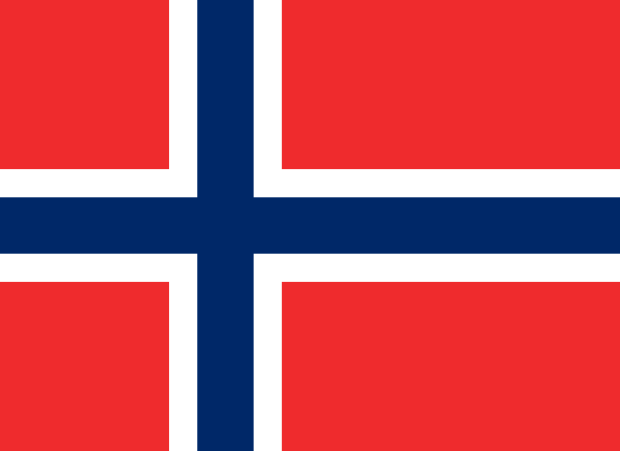
Flag is available in resolutions
| Icon 88x64 |  |
| Icon 32x23 |  |
Norway
Norway: A Land of Fjords, Northern Lights, and Enduring Spirit
Norway, officially the Kingdom of Norway, is a captivating Scandinavian nation that consistently ranks high in global happiness and quality of life indices. Its dramatic landscapes, characterized by majestic fjords, rugged mountains, and the ethereal dance of the Northern Lights, have long drawn people to its shores. Beyond its breathtaking natural beauty, Norway boasts a rich and complex history, a resilient and forward-thinking population, and a robust economy driven by innovation and natural resources. Understanding Norway requires delving into its unique geography, tracing its historical evolution, exploring its diverse industries, and appreciating the allure of its iconic tourist attractions.
The geography of Norway is undeniably its most striking feature. Situated on the westernmost part of the Scandinavian Peninsula, it shares a long border with Sweden to the east and a shorter one with Finland and Russia to the northeast. The country is renowned for its extensive coastline, stretching over 25,000 kilometers, intricately sculpted by glaciers into a labyrinth of deep, narrow fjords. These dramatic inlets, such as Geirangerfjord and Nryfjord, both UNESCO World Heritage sites, are carved into steep cliffs, often dotted with cascading waterfalls and small, picturesque villages clinging to their sides. Inland, the landscape transforms into vast mountain ranges, including the Jotunheimen Mountains, home to Galdhpiggen, the highest peak in Scandinavia. Glaciers, remnants of the last Ice Age, still cap many of these peaks, feeding pristine rivers and lakes. Further north, the landscape becomes more arctic, with sparse vegetation and a stark, yet beautiful, tundra. Norway also encompasses numerous islands, the most significant being the Svalbard archipelago, located in the Arctic Ocean, a region known for its polar bears, glaciers, and scientific research stations. The climate varies significantly across the country, with a mild, maritime climate along the coast influenced by the Gulf Stream, and a colder, continental climate in the interior and the north. This geographical diversity has profoundly shaped Norway’s history, economy, and the character of its people. The long, dark winters in the north, coupled with the extended daylight hours of the midnight sun in summer, have fostered a unique rhythm of life and a deep connection to the natural world.
Norway’s history is a saga of Viking explorers, medieval kingdoms, periods of foreign rule, and eventual independence and prosperity. The Viking Age, roughly from the late 8th to the mid-11th century, saw Norwegians as renowned seafarers, traders, and raiders who explored vast territories, from the British Isles and continental Europe to Iceland, Greenland, and even North America. Their longships and their adventurous spirit left an indelible mark on European history. Following the Viking Age, Norway gradually consolidated into a unified kingdom, but its independence was short-lived. For centuries, it was part of the Kalmar Union, a personal union of Scandinavian kingdoms, and later came under Danish rule for over 400 years. This period, known as the “long night,” saw a decline in Norway’s political influence and economic standing. In 1814, Norway was ceded to Sweden as a prize for its participation in the Napoleonic Wars, but Norwegians resisted and adopted their own constitution, which is still celebrated today as Constitution Day on May 17th. While Norway entered into a personal union with Sweden, it retained its constitution and a significant degree of autonomy. This union eventually dissolved peacefully in 1905, leading to Norway’s full independence and the establishment of a constitutional monarchy with King Haakon VII at its head. The 20th century brought further challenges, including the Nazi occupation during World War II, a period of immense hardship and resistance. Post-war, Norway embarked on a path of reconstruction and social welfare development, further solidified by the discovery of significant oil and gas reserves in the North Sea in the late 1960s. This discovery fundamentally transformed the nation’s economy and its global standing, allowing for the creation of one of the world’s largest sovereign wealth funds.
The Norwegian population, while relatively small at just over 5.5 million people, is known for its homogeneity, strong social cohesion, and high levels of education. The majority of Norwegians are of Germanic descent, with a small indigenous Sámi population primarily residing in the northern regions, recognized for their distinct culture, language, and traditional reindeer herding practices. The Norwegian language, with its two official written forms, Bokml and Nynorsk, reflects the country’s historical linguistic development. Norwegians are often characterized by their reserved nature, directness, and a deep appreciation for nature and outdoor activities. The concept of “friluftsliv,” meaning “open-air living,” is central to Norwegian culture, emphasizing the importance of spending time outdoors for physical and mental well-being. This ethos is reflected in the high participation rates in hiking, skiing, fishing, and other recreational pursuits. Socially, Norway is a highly egalitarian society, with a strong emphasis on social welfare, gender equality, and environmental protection. The country has a comprehensive healthcare system, free education, and generous parental leave policies, contributing to its high quality of life. Despite its wealth, Norway maintains a pragmatic approach to resource management and a commitment to sustainability, striving to balance economic development with environmental preservation.
Norway’s economy is a remarkable success story, largely driven by its abundant natural resources and a highly skilled workforce. The petroleum sector, encompassing oil and gas extraction, remains a cornerstone of the Norwegian economy, generating substantial revenue and funding the country’s extensive welfare state. However, Norway has proactively diversified its economy, investing heavily in renewable energy, particularly hydropower, which accounts for a vast majority of its electricity production. The country is a global leader in sustainable energy solutions. Other significant industries include fisheries and aquaculture, with Norway being one of the world’s largest exporters of seafood, particularly salmon. The maritime industry, including shipping and shipbuilding, also plays a crucial role, leveraging Norway’s extensive coastline and seafaring heritage. Furthermore, Norway has a strong and growing technology sector, with a focus on innovation in areas such as offshore technology, green tech, and digital solutions. The service sector, including tourism, finance, and retail, is also a major contributor to employment and economic output. The Norwegian government plays a significant role in the economy through state-owned enterprises and its management of the sovereign wealth fund, the Government Pension Fund Global, which is one of the largest in the world, investing oil revenues for future generations. This prudent financial management has ensured long-term economic stability and prosperity.
Norway’s tourist attractions are as diverse and spectacular as its landscapes. The fjords, as mentioned, are a primary draw, with boat tours, hiking trails, and scenic drives offering unparalleled views. The Geirangerfjord and Nryfjord are perennial favorites, but the Sognefjord, the country’s longest and deepest fjord, also offers breathtaking scenery. For those seeking the magic of the Northern Lights, Troms, known as the “Gateway to the Arctic,” is a prime destination during the winter months, offering opportunities for aurora chasing, dog sledding, and experiencing the arctic wilderness. The Lofoten Islands, a dramatic archipelago north of the Arctic Circle, are renowned for their rugged mountains rising directly from the sea, picturesque fishing villages, and opportunities for hiking, fishing, and photography. The historic city of Bergen, with its UNESCO-listed Bryggen wharf, offers a glimpse into Norway’s Hanseatic past, while Oslo, the capital, boasts world-class museums, including the Viking Ship Museum and the Munch Museum, as well as the stunning Vigeland Sculpture Park. Further inland, the Jotunheimen National Park provides opportunities for challenging mountain hikes and glacier adventures. The scenic railway journeys, such as the Flm Railway, one of the steepest standard-gauge railways in the world, offer a unique perspective on Norway’s mountainous terrain. For a truly unique experience, a visit to Svalbard offers the chance to witness polar bears in their natural habitat and explore a starkly beautiful arctic environment. The emphasis on sustainable tourism and the integration of nature into the visitor experience make Norway a destination that offers not just sights, but profound connections with the natural world. Norway, with its captivating blend of natural wonders, rich history, and a forward-looking society, continues to enchant and inspire visitors from across the globe, solidifying its reputation as a truly exceptional country.
Information about Norway
The information comes from the publication CIA The World Factbook.
Automated text translation, excuse errors, please!
Country Norway is situated in a location / continent Europe. Norway has an area of 323 802 km2 and 4 707 270 residents. The highest point has a height 2 469 above sea level. and it is called Galdhopiggen. The lowest point is located at the level of 0 above sea level and it is named Norwegian Sea. System of government is constitutional monarchy and the date of independence 7th June 1905. The capital city is Oslo. Norway has the international abbreviation NO.
Norway - economy
Total gross domestic product (GDP) is 269 300 000 000 $. Total gross domestic product per capita in purchasing power parity is 54 200 $. GDP grows by 1.70 % a year. Inflation (consumer price index) is equal to 1.30 % a year. Norway have 2 629 000 working-age population (from a total population 4 707 270 people). Unemployment is at 3.30 %. Norway issued 9.70 % GDP to healt care and 1,90 % GDP to army. The public debt of the country is 57.50 % GDP. The total amount of foreign debt is 644 500 000 000 USD.
Norway - demography
As suggested above, Norway has 4 707 270 people. Population growth is in the amount 0.33 % per year. Number of children born per 1000 population per year is 10.80.Every mother has average 1.77 children. The infant mortality rate is 3.50 and maternal mortality 7.00 deaths per 100,000 births. Average estimated life expectancy makes 80.32 years. Mortality is 9.22 people per 1000 population per year.
Norway - transport and telecommunications
Norway has 93 509 km of roads, 4 169 km of railway lines and 98 airports. The total length of waterways (navigable rivers, canals, etc.) is 1 577 km. There is registered 585 ships.
Number of active mobile phones (sim card) in the country Norway is 5 750 000. Number of active fixed telephone lines is 2 104 000. Norway has 4 431 000 internet users, who have the available 3 584 000 Internet connections. Norway has been assigned a domain first Choose range .no.
Norway - energetics
Norway consumes a year 110 800 000 000 kWh of electricity. Annual electricity production is 122 200 000 000 kWh in power plants with a total installed electrical capacity 30 950 000 kW. Norway exports 7 123 000 000 kWh and imports 14 670 000 000 kWh of electricity per year Energy mix of power generation is as follows: fossil fuels: 2.6 %, nuclear energy: 0 %, renewable: 2.0 %, hydropower: 91.1 %. The country Norway is harvested annually 1 998 000 barrels of oil.
Keywords: Norway, flags of countries in the world, flag, economy, energetics, transport, flag states, Flag of Norway, information, list of countries, all flags, demography, list of flags, telecommunications, national flags, Flags of countries, world countries, politic.