Lithuania
Flag of Lithuania
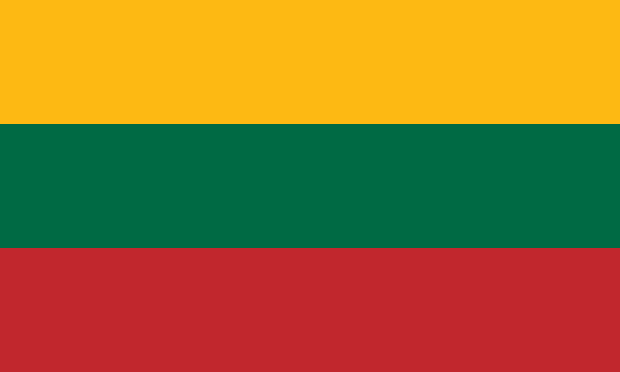
Flag is available in resolutions
| Icon 88x53 |  |
| Icon 32x19 |  |
Lithuania
Lithuania: A Baltic Jewel of Resilience and Rich Heritage
Lithuania, the largest of the three Baltic states, stands as a testament to enduring spirit, a nation that has navigated centuries of turbulent history to emerge as a vibrant and modern European country. Nestled on the southeastern shores of the Baltic Sea, it is a land of sprawling forests, rolling plains, and a coastline dotted with picturesque fishing villages. Its identity is deeply rooted in a proud past, a unique language, and a resilient people who have fiercely protected their independence and cultural heritage. From its ancient pagan roots to its pivotal role in the medieval Grand Duchy of Lithuania, and through periods of foreign occupation and eventual rebirth, Lithuania’s story is one of remarkable perseverance and a captivating journey through time.
The demographic landscape of Lithuania is characterized by a relatively homogeneous population, with Lithuanians forming the vast majority. The Lithuanian language, an ancient Indo-European tongue, is a cornerstone of national identity and is spoken by nearly everyone. While Russian and Polish are spoken by significant minority groups, the Lithuanian language remains the official and dominant language, a point of pride for its citizens. Historically, Lithuania has experienced periods of demographic shifts, including significant emigration during the Soviet era and, more recently, following its accession to the European Union. However, the nation is actively working to reverse these trends, encouraging return migration and fostering a sense of belonging for all its inhabitants. The current population, while modest in size, possesses a strong sense of community and a deep connection to their land and traditions. This shared heritage, passed down through generations, forms the bedrock of Lithuanian society, fostering a collective memory that influences its present and shapes its future. The emphasis on family, community, and a strong work ethic are palpable, creating a society that, despite its historical challenges, is forward-looking and optimistic.
Lithuania’s history is a tapestry woven with threads of both triumph and hardship. Its origins can be traced back to the early formation of tribal states in the 13th century, culminating in the establishment of the Grand Duchy of Lithuania. This powerful medieval state, at its zenith, stretched from the Baltic Sea to the Black Sea, encompassing vast territories and diverse peoples. The Union of Lublin in 1569 created the Polish-Lithuanian Commonwealth, a unique political entity that lasted for over two centuries, fostering a rich cultural exchange and a period of relative prosperity. However, the Commonwealth’s decline led to its partition by neighboring powers, and Lithuania found itself under Russian imperial rule for over a century. The 20th century brought further upheaval. Following World War I, Lithuania declared its independence in 1918, a brief but cherished period of sovereignty that was tragically interrupted by Soviet and Nazi occupations during World War II. For nearly fifty years, Lithuania endured Soviet rule, a period marked by repression, forced collectivization, and the suppression of national identity. Yet, the spirit of independence never died. The Baltic Way, a human chain of over two million people across Estonia, Latvia, and Lithuania in 1989, symbolized their yearning for freedom and their unwavering determination to regain sovereignty. In 1990, Lithuania became the first Soviet republic to declare the restoration of its independence, a bold move that ultimately paved the way for the dissolution of the Soviet Union. This hard-won independence is a defining element of the modern Lithuanian identity, a constant reminder of the sacrifices made and the importance of vigilance in safeguarding their freedom.
Geographically, Lithuania is a predominantly flat country, characterized by fertile plains, extensive forests, and numerous lakes and rivers. Its landscape is sculpted by the last Ice Age, leaving behind a mosaic of moraine hills, glacial valleys, and vast swathes of woodland that cover over 30% of the country. The Curonian Spit, a UNESCO World Heritage Site, is a unique natural wonder – a long, narrow sand dune peninsula separating the Curonian Lagoon from the Baltic Sea. This fragile ecosystem, with its towering dunes and rare flora and fauna, is a testament to the power of nature and the importance of conservation. The country’s coastline, though relatively short, is a significant feature, offering sandy beaches and picturesque fishing villages. Major rivers like the Nemunas (Neman) flow through the country, serving as vital waterways and contributing to the fertile agricultural land. The climate is temperate, with warm summers and cold, snowy winters, offering a distinct seasonality that influences both the natural landscape and the rhythm of life. The abundance of natural resources, particularly forests and fertile soil, has historically played a crucial role in the Lithuanian economy and continues to shape its industrial and agricultural sectors.
The Lithuanian economy has undergone a significant transformation since regaining independence. Once heavily reliant on agriculture and heavy industry during the Soviet era, it has successfully transitioned to a diversified, market-oriented economy. Key sectors now include manufacturing, particularly in the fields of electronics, machinery, and pharmaceuticals. The IT sector is experiencing rapid growth, attracting foreign investment and fostering innovation. Agriculture remains important, with Lithuania being a significant producer of dairy products, grains, and meat. The country’s strategic location has also made it a growing logistics and transport hub, leveraging its access to Baltic Sea ports. Since joining the European Union in 2004, Lithuania has benefited from increased trade, investment, and access to the single market, further bolstering its economic development. The government has focused on creating a favorable business environment, attracting foreign direct investment, and promoting entrepreneurship. While challenges remain, such as addressing regional disparities and adapting to global economic trends, Lithuania’s economic trajectory is one of steady progress and increasing integration into the European economic landscape.
Lithuania boasts a wealth of tourist attractions, drawing visitors with its captivating blend of history, culture, and natural beauty. The capital city, Vilnius, is a UNESCO World Heritage site, renowned for its stunning Baroque Old Town, a labyrinth of cobblestone streets, magnificent churches, and charming squares. The Gediminas’ Tower, offering panoramic views of the city, and the Vilnius Cathedral are iconic landmarks. The University of Vilnius, one of the oldest in Eastern Europe, adds to the city’s intellectual and historical significance. Outside the capital, the medieval Trakai Island Castle, perched on an island in a picturesque lake, is a must-see, evoking images of knights and ancient grandeur. The coastal city of Klaipda serves as the gateway to the Curonian Spit, a place of unparalleled natural beauty. Further inland, the Hill of Crosses near Šiauliai, a unique pilgrimage site adorned with hundreds of thousands of crosses, is a powerful symbol of faith and resilience. Lithuania’s numerous national parks and nature reserves offer opportunities for hiking, birdwatching, and exploring its pristine landscapes. From the vibrant cultural scene of its cities to the tranquil beauty of its countryside, Lithuania offers a diverse and rewarding experience for every traveler, inviting them to discover its rich heritage and warm hospitality.
Information about Lithuania
The information comes from the publication CIA The World Factbook.
Automated text translation, excuse errors, please!
Country Lithuania is situated in a location / continent Europe. Lithuania has an area of 65 300 km2 and 3 525 761 residents. The highest point has a height 294 above sea level. and it is called Juozapines Kalnas. The lowest point is located at the level of 0 above sea level and it is named Baltic Sea. System of government is republic and the date of independence 11th March 1990. The capital city is Vilnius. Lithuania has the international abbreviation LH.
Lithuania - economy
Total gross domestic product (GDP) is 62 390 000 000 $. Total gross domestic product per capita in purchasing power parity is 19 100 $. GDP grows by 5.90 % a year. Inflation (consumer price index) is equal to 4.10 % a year. Lithuania have 1 624 000 working-age population (from a total population 3 525 761 people). Unemployment is at 15.40 %. Lithuania issued 7.80 % GDP to healt care and 0,90 % GDP to army. The public debt of the country is 36.30 % GDP. The total amount of foreign debt is 31 030 000 000 USD.
Lithuania - demography
As suggested above, Lithuania has 3 525 761 people. Population growth is in the amount -0.28 % per year. Number of children born per 1000 population per year is 9.34.Every mother has average 1.27 children. The infant mortality rate is 6.18 and maternal mortality 8.00 deaths per 100,000 births. Average estimated life expectancy makes 75.55 years. Mortality is 11.40 people per 1000 population per year.
Lithuania - transport and telecommunications
Lithuania has 82 131 km of roads, 1 767 km of railway lines and 81 airports. The total length of waterways (navigable rivers, canals, etc.) is 441 km. There is registered 38 ships.
Number of active mobile phones (sim card) in the country Lithuania is 5 004 000. Number of active fixed telephone lines is 723 000. Lithuania has 1 964 000 internet users, who have the available 1 184 000 Internet connections. Lithuania has been assigned a domain first Choose range .lt.
Lithuania - energetics
Lithuania consumes a year 9 566 000 000 kWh of electricity. Annual electricity production is 13 470 000 000 kWh in power plants with a total installed electrical capacity 4 706 000 kW. Lithuania exports 2 184 000 000 kWh and imports 8 174 000 000 kWh of electricity per year Energy mix of power generation is as follows: fossil fuels: 53.8 %, nuclear energy: 25.2 %, renewable: 2.4 %, hydropower: 2.4 %. The country Lithuania is harvested annually 2 000 barrels of oil.
Keywords: world countries, telecommunications, demography, national flags, energetics, Flag of Lithuania, list of flags, Lithuania, flag states, flags of countries in the world, Flags of countries, all flags, flag, transport, information, economy, list of countries, politic.