Netherlands
Flag of Netherlands
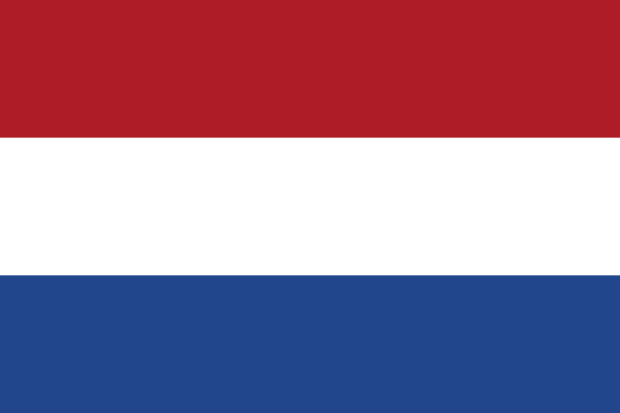
Flag is available in resolutions
| Icon 88x59 |  |
| Icon 32x21 |  |
Netherlands
The Netherlands: A Tapestry of Water, Wind, and Ingenuity
The Netherlands, a nation synonymous with windmills, tulips, and a landscape sculpted by water, is a country that has consistently defied its geographical limitations. Situated in northwestern Europe, its very name, meaning low lands, hints at the constant struggle and remarkable ingenuity that have defined its existence. This small but densely populated country, often referred to as Holland, though technically only comprising two of its twelve provinces, boasts a rich and complex history, a vibrant culture, and an economy that punches well above its weight. From its ancient origins to its modern-day status as a global hub for trade, innovation, and tourism, the Netherlands offers a compelling narrative of human resilience and adaptation.
The Dutch population, numbering around 17.5 million people, is one of the most densely populated in the world. This density has fostered a unique social fabric, characterized by a pragmatic, egalitarian, and often direct communication style. The Dutch are renowned for their tolerance and openness, a legacy of centuries of welcoming immigrants and diverse communities. This multiculturalism is evident in the vibrant cities, where a multitude of languages and traditions intermingle. The Dutch language, a West Germanic tongue, is spoken by the vast majority, but English proficiency is exceptionally high, making it easy for visitors to navigate and communicate. The aging population is a growing concern, as in many developed nations, but the country also boasts a high quality of life, excellent healthcare, and a strong social welfare system that contributes to the well-being of its citizens. The Dutch are also known for their cycling culture, with bicycles being a primary mode of transport for many, reflecting a commitment to sustainability and active living.
The history of the Netherlands is a saga of relentless struggle against the sea and a gradual ascent to power and influence. The earliest inhabitants were hunter-gatherers, followed by agricultural communities. The region was later incorporated into the Roman Empire, and after its fall, it became part of various Germanic kingdoms. The medieval period saw the rise of powerful counts and dukes, and the development of important trading cities like Amsterdam and Utrecht. The 16th century marked a pivotal moment with the Eighty Years War of Independence (1568-1648) against Spanish Habsburg rule. This protracted and bloody conflict, fueled by religious differences and a desire for self-determination, ultimately led to the formation of the Dutch Republic, a confederation of seven northern provinces. This period, known as the Dutch Golden Age, saw the Netherlands emerge as a dominant global maritime and economic power. Its merchant fleet dominated international trade, its art flourished with masters like Rembrandt and Vermeer, and its scientific advancements laid the groundwork for future innovations. However, this golden era eventually waned, and the country faced periods of decline and occupation, including the Napoleonic Wars and two World Wars. Despite these setbacks, the Dutch spirit of perseverance and innovation remained, allowing them to rebuild and adapt. Post-World War II, the Netherlands became a founding member of the European Economic Community, now the European Union, and has played an active role in international cooperation and peace-keeping efforts.
Geographically, the Netherlands is defined by its low-lying terrain, with a significant portion of its land lying below sea level. This vulnerability has paradoxically become its greatest strength. The Dutch have become world leaders in water management, developing sophisticated systems of dikes, dams, windmills, and pumping stations to reclaim land from the sea and protect it from flooding. The iconic windmills, once vital for draining polders and powering mills, are now largely historical monuments, but they serve as a powerful symbol of Dutch ingenuity and their relationship with water. The country is crisscrossed by a network of rivers, including the Rhine, Maas, and Scheldt, which are crucial for transportation and trade. The coastline is characterized by sandy beaches and dunes, while the interior is dominated by flat plains, fertile agricultural land, and numerous lakes and canals. The climate is temperate maritime, with mild summers and cool winters, often characterized by rain and wind. The famous Dutch tulips, while an iconic symbol, are grown in vast quantities in the spring, creating breathtaking landscapes of vibrant colors that attract visitors from around the globe.
The Dutch economy is highly developed, diversified, and export-oriented. It is a major player in international trade, benefiting from its strategic location and excellent infrastructure, including the port of Rotterdam, one of the largest in Europe. Key sectors include agriculture and food processing, where the Netherlands is a leading global exporter of produce, dairy, and flowers. The country is also a hub for the chemical industry, advanced manufacturing, and technology. The financial services sector is robust, with Amsterdam serving as a significant financial center. Innovation is a cornerstone of the Dutch economy, with strong investment in research and development, particularly in areas like sustainable energy, water technology, and logistics. The high level of education and skilled workforce further contributes to its economic competitiveness. Despite its small size, the Netherlands consistently ranks among the top countries globally for ease of doing business and innovation.
The Netherlands offers a wealth of tourist attractions, catering to a diverse range of interests. Amsterdam, the capital city, is a must-visit, with its picturesque canals, historic architecture, world-class museums like the Rijksmuseum and the Van Gogh Museum, and its vibrant nightlife. Beyond Amsterdam, the country is dotted with charming historic cities, each with its unique character. Utrecht, with its distinctive wharf cellars, is a lively university city. The Hague, the seat of government and home to the International Court of Justice, offers a more stately ambiance. Delft, famous for its blue pottery and as the birthplace of Vermeer, retains a timeless charm. For those seeking natural beauty, the Keukenhof Gardens, a spectacular display of tulips and other spring flowers, is an unforgettable experience. The Wadden Islands, a UNESCO World Heritage site, offer pristine natural landscapes and opportunities for hiking and birdwatching. Windmills, of course, are a ubiquitous sight, with the Kinderdijk-Elshout windmills being particularly impressive and a UNESCO World Heritage site. Traditional Dutch villages, with their characteristic houses and working windmills, offer a glimpse into the countrys past. The culinary scene is also evolving, with a growing appreciation for local produce and international flavors, alongside traditional Dutch fare like stroopwafels and herring. The Dutch commitment to cycling makes exploring the country by bike a truly immersive and enjoyable experience, allowing visitors to discover hidden gems and experience the landscape at a leisurely pace. The Netherlands, in essence, is a country that has mastered the art of living with water, transforming its challenges into opportunities and creating a nation that is both historically rich and forward-looking.
Information about Netherlands
The information comes from the publication CIA The World Factbook.
Automated text translation, excuse errors, please!
Country Netherlands is situated in a location / continent Europe. Netherlands has an area of 41 543 km2 and 16 730 632 residents. The highest point has a height 322 above sea level. and it is called Vaalserberg. The lowest point is located at the level of -7 above sea level and it is named Zuidplaspolder. System of government is constitutional monarchy and the date of independence 23rd January 1579. The capital city is Amsterdam. Netherlands has the international abbreviation NL.
Netherlands - economy
Total gross domestic product (GDP) is 713 100 000 000 $. Total gross domestic product per capita in purchasing power parity is 42 700 $. GDP grows by 1.30 % a year. Inflation (consumer price index) is equal to 2.30 % a year. Netherlands have 7 809 000 working-age population (from a total population 16 730 632 people). Unemployment is at 4.40 %. Netherlands issued 10.80 % GDP to healt care and 1,60 % GDP to army. The public debt of the country is 65.20 % GDP. The total amount of foreign debt is 2 655 000 000 000 USD.
Netherlands - demography
As suggested above, Netherlands has 16 730 632 people. Population growth is in the amount 0.45 % per year. Number of children born per 1000 population per year is 10.89.Every mother has average 1.78 children. The infant mortality rate is 3.73 and maternal mortality 6.00 deaths per 100,000 births. Average estimated life expectancy makes 80.91 years. Mortality is 8.39 people per 1000 population per year.
Netherlands - transport and telecommunications
Netherlands has 136 827 km of roads, 2 896 km of railway lines and 27 airports. The total length of waterways (navigable rivers, canals, etc.) is 6 214 km. There is registered 744 ships.
Number of active mobile phones (sim card) in the country Netherlands is 19 835 000. Number of active fixed telephone lines is 7 135 000. Netherlands has 14 872 000 internet users, who have the available 13 715 000 Internet connections. Netherlands has been assigned a domain first Choose range .nl.
Netherlands - energetics
Netherlands consumes a year 107 400 000 000 kWh of electricity. Annual electricity production is 108 000 000 000 kWh in power plants with a total installed electrical capacity 25 990 000 kW. Netherlands exports 12 810 000 000 kWh and imports 15 580 000 000 kWh of electricity per year Energy mix of power generation is as follows: fossil fuels: 84.1 %, nuclear energy: 2 %, renewable: 13.7 %, hydropower: 0.1 %. The country Netherlands is harvested annually 41 990 barrels of oil.
Keywords: Flags of countries, telecommunications, flag states, demography, world countries, flags of countries in the world, Netherlands, energetics, list of countries, information, economy, transport, all flags, national flags, flag, Flag of Netherlands, list of flags, politic.