Slovenia
Flag of Slovenia
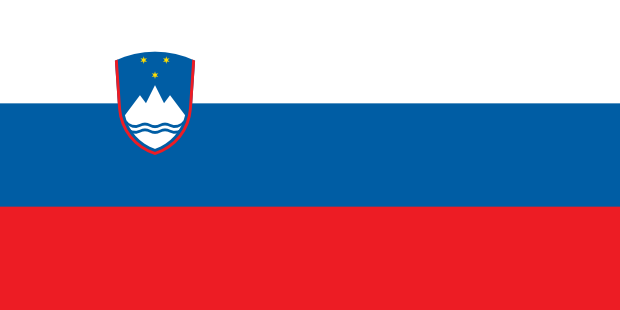
Flag is available in resolutions
| Icon 88x44 |  |
| Icon 32x16 |  |
Slovenia
The Emerald Jewel of the Adriatic: Slovenia
Nestled in the heart of Europe, where the Alps meet the Mediterranean, lies Slovenia, a country that often surprises with its diverse landscapes, rich history, and vibrant culture. Despite its relatively small size, Slovenia packs an incredible punch, offering a captivating blend of natural beauty, historical depth, and modern innovation. From its snow-capped peaks and verdant valleys to its charming coastal towns and bustling capital, Slovenia is a true emerald jewel, waiting to be discovered. This article will delve into the multifaceted essence of Slovenia, exploring its demographics, historical tapestry, geographical wonders, burgeoning industries, and the myriad of tourist attractions that draw visitors from across the globe.
Slovenias population, numbering just over two million people, is characterized by a strong sense of national identity and a deep connection to their heritage. The vast majority of Slovenians are ethnic Slovenians, with smaller minorities including Serbs, Croats, Bosniaks, and Italians, reflecting the countrys historical position as a crossroads of cultures and empires. The official language is Slovenian, a South Slavic tongue with a rich literary tradition. While English is widely spoken in tourist areas and among younger generations, understanding a few basic Slovenian phrases can greatly enhance interactions and demonstrate respect for the local culture. The Slovenian people are generally known for their politeness, reserve, and a strong work ethic, often coupled with a deep appreciation for nature and outdoor activities. Family plays a central role in Slovenian society, and theres a palpable sense of community, particularly in the more rural areas. The country boasts a high standard of living and an excellent healthcare system, contributing to a high life expectancy. Urban centers like Ljubljana, Maribor, and Koper are cosmopolitan hubs, while the numerous villages and hamlets scattered throughout the countryside retain a more traditional and tranquil way of life.
The history of Slovenia is a complex and compelling narrative, shaped by centuries of foreign rule and a persistent desire for self-determination. For centuries, the territory of present-day Slovenia was part of various larger empires, most notably the Habsburg Monarchy of the Austro-Hungarian Empire. This long period of imperial rule left an indelible mark on Slovenias architecture, administrative structures, and cultural landscape. The Slovenians developed their own distinct language and cultural identity, often expressed through literature and folklore, even under foreign dominion. The early 20th century brought significant upheaval. Following the collapse of the Austro-Hungarian Empire after World War I, Slovenia became part of the Kingdom of Serbs, Croats, and Slovenes, which later evolved into Yugoslavia. During World War II, Slovenia was occupied by Nazi Germany, Fascist Italy, and Hungary. After the war, it became a constituent republic within the Socialist Federal Republic of Yugoslavia. The push for independence gained momentum in the late 1980s, culminating in a peaceful, ten-day war of independence against the Yugoslav Peoples Army in 1991. Slovenias subsequent transition to a democratic, market-oriented economy was remarkably smooth, and it joined the European Union in 2004 and adopted the Euro in 2007, solidifying its place as a modern European nation. This rich historical journey has fostered a resilient and proud populace, deeply aware of their past and optimistic about their future.
Geographically, Slovenia is a land of astonishing diversity, a microcosm of Europe compressed into a relatively small area. Its landscape is dominated by the majestic Julian Alps in the northwest, part of the larger Alpine mountain range, offering breathtaking vistas, challenging hiking trails, and world-class skiing opportunities. Mount Triglav, Slovenias highest peak, stands as a national symbol and a testament to the countrys rugged beauty. Descending from the mountains, one encounters rolling hills, fertile plains, and extensive forests, which cover over half of the countrys territory, making Slovenia one of the most forested nations in Europe. The country is also dotted with numerous rivers and lakes, the most famous being the glacial Lake Bled, with its iconic island church and medieval castle perched on a cliff, and the serene Lake Bohinj, surrounded by pristine wilderness. To the southwest, Slovenia opens up to a short but picturesque coastline along the Adriatic Sea, featuring charming Venetian-style towns like Piran, Izola, and Koper, with their narrow cobblestone streets, colorful buildings, and fresh seafood. The karst region, a unique geological phenomenon, is characterized by underground cave systems, including the famous Postojna Cave and the Škocjan Caves (a UNESCO World Heritage site), where underground rivers have sculpted spectacular formations of stalactites and stalagmites over millennia. This geographical mosaic provides endless opportunities for outdoor recreation, from alpine climbing and hiking to swimming in the Adriatic and exploring subterranean wonders.
Slovenias economy has undergone a significant transformation since gaining independence, evolving from a centrally planned system to a dynamic, export-oriented market economy. Key sectors include manufacturing, particularly in automotive parts, machinery, and pharmaceuticals, where Slovenian companies have achieved global recognition for their quality and innovation. The IT sector is also experiencing rapid growth, with a burgeoning startup scene and a skilled workforce. Agriculture remains important, with a focus on sustainable practices and the production of high-quality food products, including wine, dairy, and meat. However, perhaps the most rapidly expanding and increasingly vital sector is tourism. Slovenias natural beauty, rich history, and commitment to sustainability have made it an attractive destination for eco-tourism, adventure tourism, and cultural tourism. The government has actively invested in infrastructure and promotional efforts to further develop this sector, recognizing its potential for economic growth and job creation. The countrys strategic location in Central Europe, coupled with its membership in the EU and the Eurozone, provides a stable and favorable business environment, attracting foreign investment and fostering international trade.
The tourist attractions in Slovenia are as diverse as its landscape, offering something for every type of traveler. Ljubljana, the capital city, is a gem of a European capital, renowned for its beautiful architecture, vibrant cultural scene, and pedestrian-friendly city center bisected by the Ljubljanica River. The Triple Bridge, Dragon Bridge, and the iconic Ljubljana Castle overlooking the city are must-see landmarks. The citys numerous cafes, restaurants, and markets offer a taste of Slovenian life. As mentioned, Lake Bled is arguably Slovenias most famous postcard-perfect destination. The island church, reachable by traditional pletna boats, and the imposing Bled Castle provide unforgettable experiences. Further into the Julian Alps, Lake Bohinj offers a more tranquil and wilder natural escape, ideal for hiking, swimming, and exploring the Triglav National Park. The Škocjan Caves and Postojna Cave are essential stops for anyone interested in natural wonders, showcasing the breathtaking artistry of underground landscapes. For those seeking coastal charm, the medieval town of Piran, with its narrow alleys and stunning sea views, is a delight. The Julian Alps also offer exceptional skiing resorts like Kranjska Gora and Vogel, attracting winter sports enthusiasts. Beyond these well-known sites, Slovenia is replete with charming medieval towns, picturesque vineyards, thermal spas, and opportunities for adventure sports like white-water rafting and paragliding, making it a destination that truly captivates and enchants.
Information about Slovenia
The information comes from the publication CIA The World Factbook.
Automated text translation, excuse errors, please!
Country Slovenia is situated in a location / continent Europe. Slovenia has an area of 20 273 km2 and 1 996 617 residents. The highest point has a height 2 864 above sea level. and it is called Triglav. The lowest point is located at the level of 0 above sea level and it is named Adriatic Sea. System of government is republic and the date of independence 25th June 1991. The capital city is Ljubljana. Slovenia has the international abbreviation SI.
Slovenia - economy
Total gross domestic product (GDP) is 58 630 000 000 $. Total gross domestic product per capita in purchasing power parity is 29 000 $. GDP grows by -0.20 % a year. Inflation (consumer price index) is equal to 1.80 % a year. Slovenia have 934 700 working-age population (from a total population 1 996 617 people). Unemployment is at 11.80 %. Slovenia issued 9.10 % GDP to healt care and 1,70 % GDP to army. The public debt of the country is 42.00 % GDP. The total amount of foreign debt is 61 230 000 000 USD.
Slovenia - demography
As suggested above, Slovenia has 1 996 617 people. Population growth is in the amount -0.19 % per year. Number of children born per 1000 population per year is 8.76.Every mother has average 1.31 children. The infant mortality rate is 4.12 and maternal mortality 12.00 deaths per 100,000 births. Average estimated life expectancy makes 77.48 years. Mortality is 11.00 people per 1000 population per year.
Slovenia - transport and telecommunications
Slovenia has 38 925 km of roads, 1 228 km of railway lines and 16 airports. There is registered 24 ships.
Number of active mobile phones (sim card) in the country Slovenia is 2 168 000. Number of active fixed telephone lines is 872 800. Slovenia has 1 298 000 internet users, who have the available 417 984 Internet connections. Slovenia has been assigned a domain first Choose range .si.
Slovenia - energetics
Slovenia consumes a year 11 600 000 000 kWh of electricity. Annual electricity production is 15 610 000 000 kWh in power plants with a total installed electrical capacity 3 102 000 kW. Slovenia exports 10 140 000 000 kWh and imports 8 014 000 000 kWh of electricity per year Energy mix of power generation is as follows: fossil fuels: 42.2 %, nuclear energy: 21.5 %, renewable: 1.8 %, hydropower: 34.5 %. The country Slovenia is harvested annually 5 barrels of oil.
Keywords: telecommunications, information, all flags, Slovenia, list of flags, economy, Flags of countries, energetics, list of countries, transport, Flag of Slovenia, flag, national flags, demography, world countries, flag states, flags of countries in the world, politic.