Gibraltar
Flag of Gibraltar
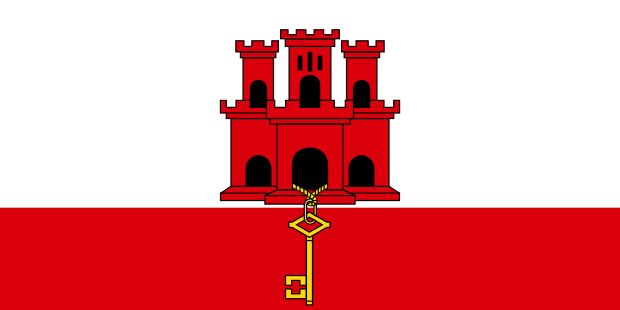
Flag is available in resolutions
| Icon 88x44 |  |
| Icon 32x16 |  |
Gibraltar
Gibraltar: The Rock of Ages, Gateway to the Mediterranean
Perched dramatically at the southern tip of the Iberian Peninsula, Gibraltar, often referred to as The Rock, is a self-governing British Overseas Territory that commands a strategic position overlooking the Strait of Gibraltar. Its imposing limestone promontory, rising majestically from the sea, has been a beacon for mariners and a point of contention for empires for millennia. This small but significant territory, measuring just 6.7 square kilometers, is a captivating blend of British heritage, Spanish influences, and a unique cultural identity forged by its storied past and its pivotal geographical location. From its ancient origins to its modern-day role, Gibraltar offers a fascinating microcosm of history, geography, and human endeavour.
The population of Gibraltar, though modest in number, is remarkably diverse and resilient. Primarily composed of Gibraltarians, a distinct ethnic group with roots tracing back to various nationalities who settled on the Rock over centuries, the demographic landscape also includes a significant expatriate population, predominantly British citizens working in various sectors, as well as individuals from Spain and other European countries. The official language is English, reflecting its British status, but the everyday vernacular is a colourful patois known as Llanito, a unique blend of Spanish, English, and Genoese, with sprinklings of other languages. This linguistic tapestry is a testament to the melting pot of cultures that have converged on Gibraltar throughout its history. Religion plays a prominent role in Gibraltarian society, with Roman Catholicism being the dominant faith, evidenced by its numerous churches and religious festivals. However, the territory also hosts vibrant communities of Anglicans, Jews, Muslims, and Hindus, fostering an atmosphere of religious tolerance and mutual respect. The Gibraltarian people are known for their strong sense of community, their pride in their heritage, and their warm hospitality towards visitors.
The history of Gibraltar is as ancient and enduring as the Rock itself. Its strategic importance was recognized as far back as antiquity, with Phoenicians, Romans, Vandals, and Visigoths all leaving their mark. However, it was in 711 AD that the Rock gained its name, when Tariq ibn-Ziyad, a Berber commander, led the Umayyad conquest of Hispania, establishing a Moorish stronghold. The Moors held sway for over 700 years, during which time the fortifications of the Rock were significantly enhanced. The Reconquista, the Christian reconquest of the Iberian Peninsula, eventually saw Gibraltar fall into Christian hands in 1462, after which it passed through various Spanish hands. The most pivotal moment in its modern history arrived in 1704 during the War of the Spanish Succession, when an Anglo-Dutch fleet, under the command of Admiral Sir George Rooke, captured Gibraltar for Great Britain. The Treaty of Utrecht in 1713 formally ceded Gibraltar to Britain in perpetuity, a decision that has shaped its destiny ever since. The 18th and 19th centuries saw Gibraltar transformed into a formidable naval base, its fortifications expanded and strengthened to defend British interests in the Mediterranean. The 20th century brought further challenges, including its strategic importance during World War II, when it served as a crucial Allied base. The post-war era saw periods of political tension with Spain, which has consistently claimed sovereignty over Gibraltar, leading to border closures and diplomatic disputes. However, through referendums and continued self-governance, the Gibraltarian people have consistently expressed their desire to remain British.
Geographically, Gibraltar is defined by its singular, dominant feature: the Rock of Gibraltar. This towering limestone promontory, rising to a height of 426 meters, is the defining characteristic of the territory. Its sheer cliffs and rugged terrain create a natural fortress, while its summit offers breathtaking panoramic views of the Strait of Gibraltar, the African coast, and the surrounding Spanish coastline. The territory is connected to the Spanish mainland by a narrow isthmus, which also hosts the international airport and the border crossing. The southern part of the Rock is a nature reserve, home to a unique ecosystem and the famous Barbary macaques, the only wild monkey population in Europe. These charismatic primates are a major tourist attraction and a symbol of Gibraltar. The climate of Gibraltar is Mediterranean, characterized by hot, dry summers and mild, wet winters. The prevailing winds, particularly the strong easterly wind known as the Levanter, can significantly influence weather patterns. Despite its small size, Gibraltar possesses a surprisingly diverse range of habitats, from coastal areas and sandy beaches to the scrubland and caves of the Rock.
The economy of Gibraltar has undergone a significant transformation over the decades. Historically, its economy was heavily reliant on its role as a naval base and port. However, with the decline of naval presence and the changing global landscape, Gibraltar has successfully diversified its economic base. Today, it is a thriving offshore financial centre, offering a range of financial services, including banking, insurance, and investment funds. This sector has become a major contributor to its economy, attracting international businesses and skilled professionals. Tourism is another cornerstone of Gibraltars economy. Visitors are drawn to the unique blend of history, culture, and natural beauty. The iconic Rock, with its tunnels, caves, and the Apes Den, is a primary attraction. The Upper Rock Nature Reserve, Saint Michaels Cave, and the Great Siege Tunnels offer a glimpse into the territorys military past and its natural wonders. The charming Old Town, with its narrow streets, historic buildings, and a vibrant mix of shops and restaurants, provides a delightful cultural experience. Duty-free shopping is also a significant draw for many visitors. The maritime sector remains important, with Gibraltar serving as a busy port for cruise ships and a hub for yachting and ship registration.
Gibraltars tourist attractions are as varied as its history. The Rock of Gibraltar itself is the undisputed star, offering a wealth of experiences. Visitors can ascend via the Gibraltar Cable Car, enjoying spectacular views as they climb. At the summit, the Apes Den is a must-visit, where the resident Barbary macaques roam freely. Exploration of the Great Siege Tunnels, a vast network of tunnels carved into the Rock during the Great Siege of the late 18th century, provides a fascinating insight into military engineering and history. Saint Michaels Cave, a stunning natural cavern adorned with stalactites and stalagmites, hosts concerts and events and is a truly awe-inspiring sight. The Moorish Castle, with its imposing Tower of Homage, stands as a testament to Gibraltars centuries of Moorish rule. Down below, the Casemates Square, once a military barracks and prison, is now a lively hub with shops, restaurants, and a vibrant atmosphere. The Gibraltar Botanic Gardens, located at the foot of the Rock, offer a peaceful oasis with a diverse collection of plants. For those interested in maritime history, the National Museum provides a comprehensive overview of Gibraltars past. The Ocean Village complex offers a modern contrast with its marina, bars, restaurants, and entertainment venues. The beaches, such as Eastern Beach and Sandy Bay, provide opportunities for relaxation and water sports. The unique cultural heritage is also evident in the Cathedral of the Holy Trinity, the Immaculate Conception Cathedral, and the Grand Synagogue, reflecting the diverse religious communities.
Gibraltar, though small, possesses a robust and forward-looking economy. Its status as a British Overseas Territory provides a stable political and legal framework, which has been instrumental in attracting foreign investment. The financial services sector, as mentioned, is a significant driver of growth, with a reputation for efficiency and compliance. The territorys strategic location at the crossroads of Europe and Africa, coupled with its well-developed infrastructure, makes it an attractive base for international trade and business. The government actively promotes economic diversification, with a focus on areas such as e-gaming, digital technologies, and niche tourism. The Gibraltar Stock Exchange plays a role in the financial landscape, and the territorys tax regime is designed to be competitive. The commitment to environmental sustainability is also growing, with initiatives aimed at protecting its unique natural heritage and reducing its ecological footprint. The ongoing development of infrastructure, including improvements to transport links and the digital network, further enhances its appeal as a place to live, work, and invest.
In conclusion, Gibraltar is far more than just a geographical anomaly; it is a living testament to resilience, adaptation, and a unique cultural fusion. Its imposing Rock has witnessed the ebb and flow of empires, yet it stands as a symbol of enduring sovereignty and distinct identity. From its ancient origins to its modern role as a dynamic economic hub and a cherished tourist destination, Gibraltar continues to captivate and intrigue. The warmth of its people, the richness of its history, and the sheer drama of its landscape combine to create an unforgettable experience for all who visit this remarkable corner of the world. It is a place where history whispers from every stone, and the future is embraced with a characteristic Gibraltarian spirit.
Information about Gibraltar
The information comes from the publication CIA The World Factbook.
Automated text translation, excuse errors, please!
Country Gibraltar is situated in a location / continent Europe. Gibraltar has an area of 7 km2 and 29 034 residents. The highest point has a height 426 above sea level. and it is called Rock of Gibraltar. The lowest point is located at the level of 0 above sea level and it is named Mediterranean Sea. The capital city is Gibraltar. Gibraltar has the international abbreviation GI.
Gibraltar - economy
Total gross domestic product (GDP) is 1 275 000 000 $. Total gross domestic product per capita in purchasing power parity is 43 000 $. GDP grows by 6.00 % a year. Inflation (consumer price index) is equal to 2.80 % a year. Gibraltar have 12 690 working-age population (from a total population 29 034 people). Unemployment is at 3.00 %. The public debt of the country is 7.50 % GDP.
Gibraltar - demography
As suggested above, Gibraltar has 29 034 people. Population growth is in the amount 0.27 % per year. Number of children born per 1000 population per year is 14.22.Every mother has average 1.94 children. The infant mortality rate is 6.55 .Average estimated life expectancy makes 78.83 years. Mortality is 8.27 people per 1000 population per year.
Gibraltar - transport and telecommunications
Gibraltar has 29 km of roads and 1 airports. There is registered 267 ships.
Number of active mobile phones (sim card) in the country Gibraltar is 32 500. Number of active fixed telephone lines is 24 000. Gibraltar has 20 200 internet users, who have the available 3 445 Internet connections. Gibraltar has been assigned a domain first Choose range .gi.
Gibraltar - energetics
Gibraltar consumes a year 152 500 000 kWh of electricity. Annual electricity production is 164 000 000 kWh in power plants with a total installed electrical capacity 36 000 kW. Gibraltar exports 0 kWh and imports 0 kWh of electricity per year Energy mix of power generation is as follows: fossil fuels: 100 %, nuclear energy: 0 %, renewable: 0.0 %, hydropower: 0.0 %.
Keywords: energetics, world countries, Gibraltar, information, list of countries, flag, flag states, Flags of countries, list of flags, economy, all flags, flags of countries in the world, Flag of Gibraltar, national flags, transport, telecommunications, demography, politic.