Liechtenstein
Flag of Liechtenstein
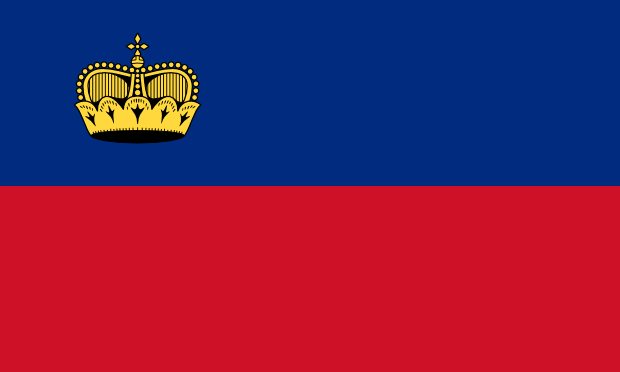
Flag is available in resolutions
| Icon 88x53 |  |
| Icon 32x19 |  |
Liechtenstein
Liechtenstein: A Tiny Principality with a Grand Story
Nestled in the heart of the Alps, between Switzerland and Austria, lies the diminutive Principality of Liechtenstein, a sovereign state whose very existence often sparks curiosity and wonder. Despite its minuscule size, measuring a mere 25.4 square kilometers, Liechtenstein boasts a rich and compelling history, a stable economy, and a surprisingly diverse range of attractions that draw visitors from across the globe. This is a land where ancient traditions meet modern innovation, and where the majestic beauty of the alpine landscape provides a breathtaking backdrop to a nation that has carved out a unique identity for itself on the world stage.
The story of Liechtenstein is one of resilience, strategic alliances, and a persistent desire for self-determination. Its origins can be traced back to the early Middle Ages, with the establishment of the County of Vaduz and the Lordship of Schellenberg. These two territories, situated in a strategically important region, eventually came under the dominion of various noble families. The pivotal moment in the nations history, however, arrived in the 17th century with the acquisition of these lands by the powerful House of Liechtenstein. This illustrious family, with its extensive estates in Bohemia and Moravia (modern-day Czech Republic), sought to acquire a territory within the Holy Roman Empire that would grant them a seat in the Imperial Diet. After a series of complex transactions and consolidations, the Principality of Liechtenstein was officially established in 1719, uniting Vaduz and Schellenberg under a single sovereign ruler. This marked the beginning of a new chapter, one where a small, seemingly insignificant territory would begin to forge its own destiny. Over the ensuing centuries, Liechtenstein navigated the turbulent political landscape of Europe, maintaining its independence through shrewd diplomacy and a keen understanding of international relations. The Napoleonic Wars, the dissolution of the Holy Roman Empire, and the formation of the German Confederation all presented challenges, yet the principality persevered. A significant turning point came in 1866 when Liechtenstein abolished its army, a decision that, while seemingly radical, ultimately contributed to its long-standing peace and neutrality. In the 20th century, the principality forged a close economic and customs union with Switzerland, a partnership that has proven remarkably successful and continues to define Liechtenstein’s international economic and political standing. This enduring relationship has provided a stable framework for growth and security, allowing Liechtenstein to thrive in a complex global environment.
Geographically, Liechtenstein is a land of dramatic contrasts, a testament to the powerful forces that shaped the Alps. The Rhine River forms its western border, a vital artery that connects the principality to its larger neighbors. To the east, the majestic peaks of the Rhaetian Alps rise sharply, creating a stunning natural barrier and offering a playground for outdoor enthusiasts. The highest point in the country is Grauspitz, reaching an elevation of 2,599 meters, a testament to the rugged alpine terrain. Despite its mountainous character, a significant portion of Liechtenstein’s land is covered by forests, contributing to its pristine natural beauty. The country’s relatively short north-south length means that one can experience a remarkable diversity of landscapes within a single day’s journey. From the fertile Rhine Valley floor, with its charming villages and cultivated fields, to the windswept alpine meadows and dramatic rocky outcrops, Liechtenstein’s geography is both inspiring and accessible. The climate is predominantly alpine, with cold, snowy winters and mild, pleasant summers. This climatic variation influences the types of flora and fauna that can be found, with many species adapted to the high-altitude environment. The country’s commitment to environmental protection is evident in its well-preserved natural landscapes, a significant draw for eco-tourists and nature lovers.
The population of Liechtenstein, though small, is a vibrant and cosmopolitan mix. With approximately 39,000 inhabitants, it is one of the smallest nations in the world by population. The official language is German, and the majority of the population identifies as Roman Catholic. However, Liechtenstein’s economic success has attracted a significant number of foreign residents and workers, creating a diverse cultural tapestry. Many of these expatriates come from neighboring Switzerland and Austria, but there is also a notable presence from other European countries and beyond. This influx of international talent has contributed to the principality’s dynamic economy and its open, outward-looking society. Despite its small size, Liechtenstein has a high standard of living and a strong sense of community. Traditional values often coexist harmoniously with modern lifestyles, creating a unique social fabric. The country’s emphasis on education and healthcare ensures that its citizens enjoy a high quality of life, and its commitment to social welfare programs further underscores its dedication to the well-being of its people. The sense of national identity, while perhaps not as pronounced as in larger nations, is nonetheless strong, rooted in a shared history, a common language, and a deep appreciation for their unique sovereign status.
Economically, Liechtenstein is a powerhouse, a testament to its strategic vision and its ability to adapt to global market trends. Despite its size, it is one of the wealthiest countries in the world per capita, with a highly diversified and robust economy. The principality is renowned for its thriving financial sector, with a strong emphasis on private banking, asset management, and trust services. Liechtenstein’s stable political environment, sound legal framework, and strict banking secrecy laws (though these have been significantly reformed in recent years to comply with international standards) have attracted significant foreign investment and solidified its reputation as a reputable financial center. Beyond finance, Liechtenstein has also developed a strong industrial base, particularly in areas such as precision instruments, machinery, and artificial teeth manufacturing. Companies like Hilti, a leading manufacturer of tools and equipment for the construction industry, are globally recognized and have their headquarters in Liechtenstein. The country’s highly skilled workforce, its commitment to research and development, and its favorable tax regime have all contributed to its industrial success. Furthermore, tourism plays an increasingly important role in Liechtenstein’s economy. The principality’s stunning alpine scenery, its rich cultural heritage, and its well-developed infrastructure for outdoor activities attract a steady stream of visitors, contributing to local businesses and employment. The government’s proactive approach to economic diversification and innovation continues to ensure Liechtenstein’s prosperity and its ability to compete on the international stage.
For visitors, Liechtenstein offers a surprisingly rich array of attractions, despite its diminutive size. The capital city, Vaduz, is a charming and picturesque town dominated by its iconic castle, Schloss Vaduz, which perches dramatically on a hillside overlooking the Rhine Valley. While the castle itself is a private residence of the Princely Family, its imposing silhouette is a constant reminder of the principality’s royal heritage. The Kunstmuseum Liechtenstein, a striking modern building, houses an impressive collection of contemporary and classical art, while the National Museum offers a fascinating glimpse into the country’s history and cultural traditions. Wandering through Vaduz’s pedestrianized center, with its quaint shops, cafes, and wine taverns, is a delightful experience. The surrounding countryside beckons with opportunities for hiking and cycling. The Fürstensteig trail, a scenic mountain path offering panoramic views, is a popular choice for walkers. In winter, the small ski resort of Malbun provides excellent opportunities for skiing and snowboarding, attracting families and enthusiasts alike. For those interested in history and architecture, the medieval Burg Gutenberg near Balzers is another must-see, a well-preserved castle that offers a glimpse into the region’s past. Wine enthusiasts will also find much to enjoy, as Liechtenstein produces its own excellent wines, with several local vineyards offering tastings. The principality’s compact size makes it incredibly easy to explore, allowing visitors to experience its diverse offerings without the need for extensive travel. From its historical landmarks to its breathtaking natural beauty, Liechtenstein offers a unique and memorable travel experience, a testament to the fact that good things truly do come in small packages.
Information about Liechtenstein
The information comes from the publication CIA The World Factbook.
Automated text translation, excuse errors, please!
Country Liechtenstein is situated in a location / continent Europe. Liechtenstein has an area of 160 km2 and 36 713 residents. The highest point has a height 2 599 above sea level. and it is called Vorder-Grauspitz. The lowest point is located at the level of 430 above sea level and it is named Ruggeller Riet. System of government is constitutional monarchy and the date of independence 23rd January 1719. The capital city is Vaduz. Liechtenstein has the international abbreviation LS.
Liechtenstein - economy
Total gross domestic product (GDP) is 5 003 000 000 $. Total gross domestic product per capita in purchasing power parity is 143 900 $. GDP grows by -0.50 % a year. Inflation (consumer price index) is equal to 0.30 % a year. Liechtenstein have 34 334 working-age population (from a total population 36 713 people). Unemployment is at 2.80 %. The total amount of foreign debt is 0 USD.
Liechtenstein - demography
As suggested above, Liechtenstein has 36 713 people. Population growth is in the amount 0.80 % per year. Number of children born per 1000 population per year is 10.76.Every mother has average 1.69 children. The infant mortality rate is 4.39 .Average estimated life expectancy makes 81.50 years. Mortality is 6.78 people per 1000 population per year.
Liechtenstein - transport and telecommunications
Liechtenstein has 380 km of roads, 9 km of railway lines. The total length of waterways (navigable rivers, canals, etc.) is 28 km.
Number of active mobile phones (sim card) in the country Liechtenstein is 37 000. Number of active fixed telephone lines is 19 600. Liechtenstein has 23 000 internet users, who have the available 9 969 Internet connections. Liechtenstein has been assigned a domain first Choose range .li.
Liechtenstein - energetics
.
Keywords: Flag of Liechtenstein, Liechtenstein, telecommunications, list of flags, world countries, economy, transport, demography, flag, flag states, energetics, national flags, flags of countries in the world, Flags of countries, information, all flags, list of countries, politic.