Cyprus
Flag of Cyprus
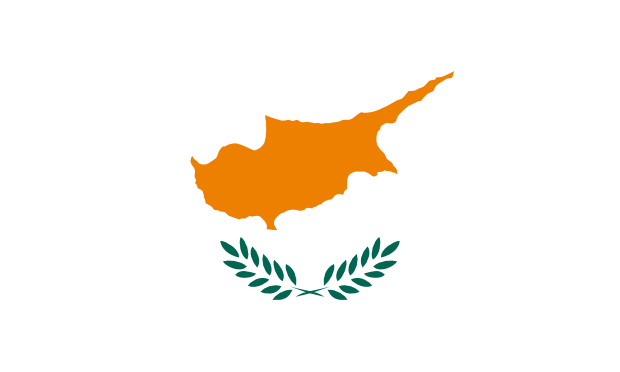
Flag is available in resolutions
| Icon 88x53 |  |
| Icon 32x19 |  |
Cyprus
Here is an article about Cyprus, approximately 5000 characters long, written in English with the specified formatting:
Cyprus: An Island of History, Beauty, and Resilience
Cyprus, the third-largest island in the Mediterranean Sea, is a land steeped in millennia of history, blessed with breathtaking natural beauty, and characterized by a rich cultural tapestry. Situated strategically at the crossroads of Europe, Asia, and Africa, its location has profoundly shaped its destiny, drawing successive waves of conquerors, traders, and settlers who have left indelible marks on its landscape and its people. This island nation, officially the Republic of Cyprus, is a place where ancient ruins whisper tales of bygone empires, vibrant modern cities buzz with energy, and idyllic coastlines offer a serene escape. Its unique geopolitical situation, however, also casts a long shadow, with the island divided since 1974, a reality that continues to define its present and influence its future.
The population of Cyprus is a fascinating blend of ethnicities and cultures, primarily consisting of Greek Cypriots and Turkish Cypriots. The Greek Cypriot community, which forms the majority, predominantly adheres to the Orthodox Christian faith and speaks Greek. The Turkish Cypriot community, largely Muslim, speaks Turkish. This demographic division is a direct consequence of the islands complex political history. While the Republic of Cyprus, recognized internationally, is governed by Greek Cypriots, the northern part of the island is administered by the self-declared Turkish Republic of Northern Cyprus, recognized only by Turkey. Despite this division, there is a shared history and a deep-seated sense of Cypriot identity that transcends ethnic lines for many. The population is relatively young, with a significant proportion of its inhabitants under the age of 30, contributing to a dynamic and evolving society. Education is highly valued, with a strong emphasis on higher education, and literacy rates are exceptionally high. The islands diverse population has contributed to a rich culinary heritage, a vibrant arts scene, and a warm, hospitable culture that welcomes visitors with open arms.
The history of Cyprus is a sprawling epic, stretching back to the Neolithic period. Archaeological evidence reveals a sophisticated early civilization, with settlements like Choirokoitia showcasing advanced architectural and social structures. The islands strategic location made it a coveted prize for numerous empires. The Mycenaeans established colonies, followed by the Assyrians, Egyptians, Persians, and later, the Romans. It was during the Roman period that Christianity took root, with Saint Paul famously visiting the island. Following the division of the Roman Empire, Cyprus fell under Byzantine rule. The Crusaders, notably Richard the Lionheart, briefly conquered the island, leading to its subsequent rule by the Knights Templar and then the House of Lusignan, who established a kingdom that lasted for centuries, leaving a legacy of Gothic architecture. The Venetians followed, fortifying cities like Famagusta and Nicosia, but their reign was ultimately short-lived as the Ottoman Turks conquered the island in 1571. Ottoman rule lasted for over three centuries, bringing significant demographic and cultural changes, with the introduction of Islam and the Turkish language. In 1878, the British leased Cyprus from the Ottomans, and it became a British Crown Colony in 1914. The period of British rule saw the rise of nationalist movements, advocating for either union with Greece (Enosis) or partition (Taksim). These tensions culminated in the declaration of an independent Republic of Cyprus in 1960, with a power-sharing constitution designed to protect both communities. However, intercommunal violence erupted in the 1960s, leading to a United Nations peacekeeping force being deployed. The islands history took a tragic turn in 1974 when a Greek-backed coup aimed at Enosis triggered a Turkish invasion, resulting in the de facto division of the island into the Republic of Cyprus in the south and the Turkish Republic of Northern Cyprus in the north. This division remains a defining feature of Cyprus today, a source of ongoing political negotiation and a stark reminder of the islands turbulent past.
Geographically, Cyprus is a land of contrasts, offering a diverse array of landscapes. The island is dominated by two mountain ranges: the rugged Troodos Mountains in the southwest, home to the islands highest peak, Mount Olympus, and the Kyrenia Range along the northern coast. The Troodos Mountains are characterized by their lush pine forests, ancient monasteries, and picturesque villages, many of which are UNESCO World Heritage sites due to their painted churches. Between these mountain ranges lies the fertile Mesaoria Plain, the islands agricultural heartland, historically a major producer of grain. The coastline is a mosaic of dramatic cliffs, sheltered bays, and long stretches of sandy beaches, attracting sun-seekers from around the globe. Cyprus boasts a Mediterranean climate, with long, hot, dry summers and mild, wet winters. The abundance of sunshine throughout the year makes it an attractive destination for tourism. The islands natural resources, while not vast, include copper deposits, which gave Cyprus its name, and gypsum. The surrounding seas are rich in marine life, supporting a local fishing industry. The islands natural beauty, from its volcanic origins to its coastal splendor, is a significant part of its appeal.
The Cypriot economy has undergone a significant transformation over the years, moving from a primarily agricultural base to a service-oriented economy. The Republic of Cyprus has a developed market economy that is largely integrated with the European Union, of which it became a member in 2004. The islands economy is heavily reliant on the services sector, with tourism and financial services playing a dominant role. The picturesque beaches, ancient historical sites, and vibrant nightlife attract millions of tourists annually, making tourism a vital source of revenue and employment. The financial services sector has also grown considerably, with Cyprus establishing itself as a regional financial hub, particularly for investment funds and international business. Shipping is another important industry, with Cyprus boasting one of the largest merchant fleets in the world. Agriculture, though less dominant than in the past, still contributes to the economy, with the cultivation of citrus fruits, olives, potatoes, and carobs being significant. In recent years, the discovery of offshore natural gas reserves has opened up new economic prospects, with the potential to significantly boost the islands energy sector and overall economic prosperity. In the north, the economy is heavily dependent on tourism and agriculture, and it relies significantly on financial assistance from Turkey.
Cyprus is a treasure trove of tourist attractions, offering something for every type of traveler. For history enthusiasts, the ancient city of Kourion, with its well-preserved Greco-Roman theatre, and the Tombs of the Kings in Paphos, a UNESCO World Heritage site, are unmissable. The capital city, Nicosia, is unique as the last divided capital in the world, offering a fascinating glimpse into both its historical past and its contemporary realities, with its Venetian walls and the bustling Ledra Street. Paphos, a UNESCO World Heritage site, is renowned for its archaeological park, showcasing stunning Roman mosaics. For those seeking natural beauty, the Akamas Peninsula offers rugged landscapes, hiking trails, and the Baths of Aphrodite, steeped in mythological lore. The Troodos Mountains provide a cooler escape in the summer, with charming villages like Omodos, known for its wine production and traditional architecture, and the painted churches, such as those at Asinou and Kakopetria, which are adorned with exquisite Byzantine frescoes. The islands coastline is dotted with beautiful beaches, from the popular Fig Tree Bay in Protaras to the more secluded Lara Beach, a nesting ground for sea turtles. Water sports enthusiasts can enjoy diving, snorkeling, and sailing in the crystal-clear waters. The vibrant nightlife of cities like Ayia Napa and Limassol offers a different kind of allure, with lively bars and clubs. The islands rich cultural heritage is also evident in its festivals, traditional music, and dance, offering visitors an authentic taste of Cypriot life.
In conclusion, Cyprus is an island of immense historical significance, breathtaking natural beauty, and a resilient spirit. Its strategic location has shaped its diverse population and its complex history, marked by periods of prosperity and conflict. The island’s economy, increasingly driven by tourism and financial services, continues to evolve, with new opportunities emerging from its natural resources. From the ancient ruins that whisper tales of empires to the sun-drenched beaches and majestic mountains, Cyprus offers a captivating experience for all who visit, a testament to its enduring charm and its unique place in the Mediterranean world. The ongoing political situation, however, remains a significant challenge, a reminder of the island’s divided reality, yet the hope for a reunited future persists, a testament to the enduring spirit of the Cypriot people.
Information about Cyprus
The information comes from the publication CIA The World Factbook.
Automated text translation, excuse errors, please!
Country Cyprus is situated in a location / continent Europe. Cyprus has an area of 9 251 km2 and 1 138 071 residents. The highest point has a height 1 951 above sea level. and it is called Mount Olympus. The lowest point is located at the level of 0 above sea level and it is named Mediterranean Sea. System of government is republic and the date of independence 16th August 1960. The capital city is Nicosia (Lefkosia). Cyprus has the international abbreviation CY.
Cyprus - economy
Total gross domestic product (GDP) is 24 030 000 000 $. Total gross domestic product per capita in purchasing power parity is 29 400 $. GDP grows by 0.50 % a year. Inflation (consumer price index) is equal to 3.30 % a year. Cyprus have 414 100 working-age population (from a total population 1 138 071 people). Unemployment is at 7.70 %. Cyprus issued 6.00 % GDP to healt care and 3,80 % GDP to army. The public debt of the country is 65.80 % GDP. The total amount of foreign debt is 35 870 000 000 USD.
Cyprus - demography
As suggested above, Cyprus has 1 138 071 people. Population growth is in the amount 1.57 % per year. Number of children born per 1000 population per year is 11.44.Every mother has average 1.45 children. The infant mortality rate is 9.05 and maternal mortality 10.00 deaths per 100,000 births. Average estimated life expectancy makes 78.00 years. Mortality is 6.48 people per 1000 population per year.
Cyprus - transport and telecommunications
Cyprus has 14 671 km of roads and 15 airports. There is registered 838 ships.
Number of active mobile phones (sim card) in the country Cyprus is 1 090 000. Number of active fixed telephone lines is 405 000. Cyprus has 433 900 internet users, who have the available 252 990 Internet connections. Cyprus has been assigned a domain first Choose range .cy.
Cyprus - energetics
Cyprus consumes a year 4 698 000 000 kWh of electricity. Annual electricity production is 4 887 000 000 kWh in power plants with a total installed electrical capacity 1 392 000 kW. Cyprus exports 0 kWh and imports 0 kWh of electricity per year Energy mix of power generation is as follows: fossil fuels: 99.7 %, nuclear energy: 0 %, renewable: 0.3 %, hydropower: 0.0 %.
Keywords: world countries, list of countries, flags of countries in the world, list of flags, telecommunications, flag states, flag, transport, demography, all flags, Flags of countries, national flags, energetics, Flag of Cyprus, Cyprus, economy, information, politic.