Macedonia
Flag of Macedonia
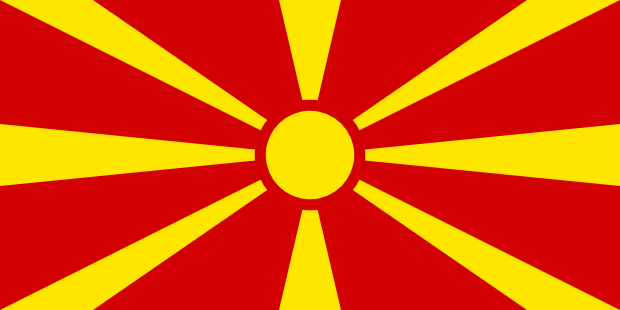
Flag is available in resolutions
| Icon 88x44 |  |
| Icon 32x16 |  |
Macedonia
The Republic of North Macedonia, a landlocked nation nestled in the heart of the Balkan Peninsula, is a country steeped in a rich and complex history, boasting a diverse geography, and a burgeoning economy. Its strategic location has, throughout millennia, made it a crossroads of civilizations, influencing its culture, language, and identity. From the ancient kingdoms of Macedon to the Ottoman Empire and the Yugoslav federation, North Macedonia’s past is a tapestry woven with threads of conquest, resilience, and the enduring spirit of its people. Understanding this historical context is crucial to appreciating the nation’s present-day character and its aspirations for the future. The very name of the country, North Macedonia, is a testament to this complex historical narrative and its ongoing geopolitical considerations, a point of contention and compromise that has shaped its recent past and continues to influence its international relations.
The demographic landscape of North Macedonia is a vibrant mosaic of ethnicities and cultures, reflecting its long history as a melting pot. The majority of the population identifies as ethnic Macedonians, speaking a South Slavic language, Macedonian, which uses the Cyrillic alphabet. However, a significant Albanian minority constitutes the largest and most prominent ethnic group after Macedonians. Their presence has shaped the country’s political and social dynamics, leading to periods of both cooperation and tension. Other ethnic groups, including Turks, Roma, Serbs, Bosniaks, and Vlachs, also contribute to the nation’s multicultural fabric, each bringing their unique traditions, languages, and customs. This diversity, while a source of cultural richness, has also presented challenges in nation-building and inter-ethnic relations. Religious affiliations are also varied, with the Macedonian Orthodox Church being the dominant religious institution among ethnic Macedonians, while a substantial Muslim population, primarily among Albanians and Turks, also plays a significant role in the countrys religious life. The interplay between these ethnic and religious communities is a defining characteristic of North Macedonia, influencing everything from its political discourse to its social interactions and the preservation of its cultural heritage.
Geographically, North Macedonia is a land of dramatic contrasts and breathtaking natural beauty. Its landscape is dominated by rugged mountains, deep river valleys, and a series of picturesque lakes, the most famous of which is Lake Ohrid. Designated a UNESCO World Heritage Site, Lake Ohrid is one of Europes oldest and deepest lakes, renowned for its exceptional biodiversity and crystal-clear waters. The country is crisscrossed by numerous rivers, with the Vardar River being the longest and most significant, flowing through the capital city, Skopje, and eventually emptying into the Aegean Sea. The mountainous terrain, characterized by ranges like the Šar Mountains and the Baba Mountains, offers opportunities for hiking, skiing, and exploring pristine natural environments. The climate is predominantly continental, with hot summers and cold winters, though the influence of the Mediterranean can be felt in the southern regions. This varied topography has historically influenced settlement patterns, trade routes, and the development of distinct regional identities within the country. The fertile river valleys are crucial for agriculture, while the mountainous regions are rich in mineral resources, which have played a role in the countrys industrial development.
The history of North Macedonia is a long and often turbulent chronicle, stretching back to antiquity. The region was once the heartland of the ancient Kingdom of Macedon, famously led by Philip II and his son, Alexander the Great, whose empire stretched across much of the known world. Following the decline of the Roman Empire, the area was settled by Slavic tribes in the early Middle Ages, who gradually established their own principalities and kingdoms. The region was subsequently ruled by various empires, including the Byzantine Empire, the Bulgarian Empire, and crucially, the Ottoman Empire, which held sway for nearly five centuries. This long period of Ottoman rule left an indelible mark on the culture, architecture, and social structures of the region. In the late 19th and early 20th centuries, nationalist movements gained momentum, leading to uprisings against Ottoman rule and subsequent Balkan Wars. Following World War I, the territory became part of the Kingdom of Yugoslavia. After World War II, it was established as the Socialist Republic of Macedonia within the Socialist Federal Republic of Yugoslavia. In 1991, following the dissolution of Yugoslavia, the country declared its independence, initially as the Republic of Macedonia. The subsequent dispute over its name with Greece led to a protracted diplomatic standoff until the Prespa Agreement in 2018, which resulted in the official name change to the Republic of North Macedonia. This historical journey underscores the nations struggle for self-determination and its enduring quest to solidify its identity on the global stage.
The economy of North Macedonia is a developing market economy that has undergone significant transformation since its independence. Historically, the country relied heavily on agriculture and mining. Today, while these sectors remain important, the economy has diversified. Key industries include metallurgy, chemicals, textiles, and food processing. The country has also been actively seeking foreign investment to foster growth and create jobs. Services, particularly tourism, are increasingly recognized as a sector with significant potential. The government has implemented reforms aimed at attracting foreign direct investment, improving the business environment, and integrating into global markets. However, challenges persist, including a relatively high unemployment rate, particularly among young people, and the need for further structural reforms to enhance competitiveness. The countrys aspiration to join the European Union is a significant driving force behind its economic policies, as it seeks to align its regulations and standards with those of the EU. The development of infrastructure, particularly transportation networks, is also a priority for facilitating trade and economic activity. The agricultural sector continues to be a significant employer, with products like tobacco, wine, and fruits being important exports.
North Macedonia is a treasure trove of historical, cultural, and natural attractions, making it a compelling destination for tourists. The capital city, Skopje, is a fascinating blend of old and new. The Old Bazaar (Čaršija), one of the largest and best-preserved in the Balkans, offers a glimpse into Ottoman-era life with its narrow cobblestone streets, historic mosques, hammams, and artisan shops. The Kale Fortress, overlooking the city, provides panoramic views and a sense of the citys ancient past. The Stone Bridge, a symbol of Skopje, connects the modern city center with the Old Bazaar. Beyond Skopje, the aforementioned Lake Ohrid is undoubtedly the crown jewel of North Macedonia’s tourism. The town of Ohrid, with its ancient theaters, medieval churches (earning it the moniker Jerusalem of the Balkans due to its supposed 365 churches), and charming waterfront, is a UNESCO World Heritage site and a must-visit. The nearby monastery of Saint Naum, with its peacocks and tranquil setting, adds to the spiritual and natural allure of the region. Other notable natural attractions include the Matka Canyon, a popular spot for hiking and kayaking, and the Mavrovo National Park, a vast mountainous area offering opportunities for winter sports and exploration of traditional villages. The country’s rich history is also evident in numerous archaeological sites, such as Heraclea Lyncestis near Bitola, which boasts well-preserved Roman mosaics. The warmth and hospitality of the Macedonian people further enhance the visitor experience, making North Macedonia a destination that offers a unique blend of history, culture, and natural splendor.
Information about Macedonia
The information comes from the publication CIA The World Factbook.
Automated text translation, excuse errors, please!
Country Macedonia is situated in a location / continent Europe. Macedonia has an area of 25 713 km2 and 2 082 370 residents. The highest point has a height 2 764 above sea level. and it is called Golem Korab (Maja e Korabit). The lowest point is located at the level of 50 above sea level and it is named Vardar River. System of government is republic and the date of independence 8th September 1991. The capital city is Skopje. Macedonia has the international abbreviation MK.
Macedonia - economy
Total gross domestic product (GDP) is 21 620 000 000 $. Total gross domestic product per capita in purchasing power parity is 10 500 $. GDP grows by 3.00 % a year. Inflation (consumer price index) is equal to 3.90 % a year. Macedonia have 942 400 working-age population (from a total population 2 082 370 people). Unemployment is at 31.40 %. Macedonia issued 6.90 % GDP to healt care and 6,00 % GDP to army. The public debt of the country is 28.20 % GDP. The total amount of foreign debt is 6 609 000 000 USD.
Macedonia - demography
As suggested above, Macedonia has 2 082 370 people. Population growth is in the amount 0.24 % per year. Number of children born per 1000 population per year is 11.80.Every mother has average 1.59 children. The infant mortality rate is 8.32 and maternal mortality 10.00 deaths per 100,000 births. Average estimated life expectancy makes 75.36 years. Mortality is 8.95 people per 1000 population per year.
Macedonia - transport and telecommunications
Macedonia has 13 736 km of roads, 699 km of railway lines and 14 airports.
Number of active mobile phones (sim card) in the country Macedonia is 2 257 000. Number of active fixed telephone lines is 413 500. Macedonia has 1 057 000 internet users, who have the available 62 718 Internet connections. Macedonia has been assigned a domain first Choose range .mk.
Macedonia - energetics
Macedonia consumes a year 9 024 000 000 kWh of electricity. Annual electricity production is 6 390 000 000 kWh in power plants with a total installed electrical capacity 1 540 000 kW. Macedonia exports 0 kWh and imports 2 634 000 000 kWh of electricity per year Energy mix of power generation is as follows: fossil fuels: 65.7 %, nuclear energy: 0 %, renewable: 0.0 %, hydropower: 34.3 %.
Keywords: world countries, list of flags, economy, Flags of countries, national flags, flags of countries in the world, flag, energetics, demography, list of countries, telecommunications, information, Flag of Macedonia, Macedonia, flag states, transport, all flags, politic.