Belgium
Flag of Belgium
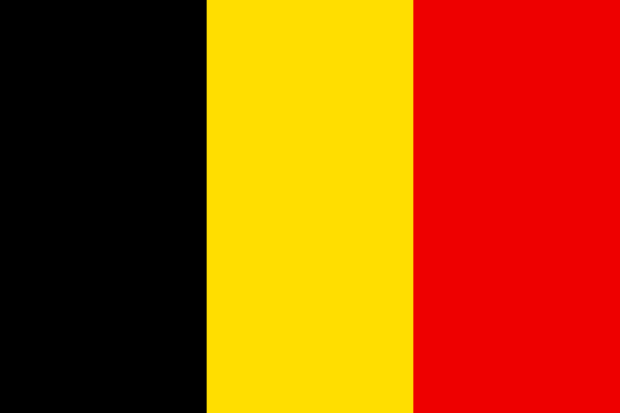
Flag is available in resolutions
| Icon 88x59 |  |
| Icon 32x21 |  |
Belgium
Belgium: A Crossroads of Europe
Belgium, officially the Kingdom of Belgium, is a small but incredibly significant nation nestled in the heart of Western Europe. Its strategic location has profoundly shaped its history, culture, and economy, making it a true crossroads of the continent. Bordered by the Netherlands to the north, Germany and Luxembourg to the east, France to the south, and the North Sea to the west, Belgium is a compact country with a rich tapestry of landscapes and experiences. Despite its modest size, it boasts a dense population, a complex political structure, and a vibrant cultural scene, all contributing to its unique identity. The country is divided into three federal regions: Flanders in the north, Wallonia in the south, and the Brussels-Capital Region, a bilingual enclave. This regional division is not merely administrative; it reflects deep-seated linguistic and cultural differences that have been a defining feature of Belgian society for centuries.
The population of Belgium is approximately 11.6 million people, making it one of the most densely populated countries in Europe. This demographic density is reflected in its well-developed infrastructure and bustling urban centers. The linguistic divide is a cornerstone of Belgian identity. Dutch, spoken by the Flemish majority in Flanders, is the most widely spoken language. French is the primary language in Wallonia, spoken by a significant minority. Brussels is officially bilingual, with both Dutch and French recognized. A small German-speaking minority resides in the eastern part of Wallonia. This linguistic diversity, while sometimes a source of political tension, has also fostered a rich cultural exchange and a unique blend of traditions. The population is predominantly urban, with major cities like Brussels, Antwerp, Ghent, and Lige serving as hubs of commerce, culture, and administration. The country’s high population density means that urban sprawl is a noticeable feature, but it is interspersed with surprisingly verdant agricultural lands and protected natural areas. Belgian society is characterized by a high standard of living, a strong social welfare system, and a commitment to international cooperation, as evidenced by its role as host to numerous international organizations.
Belgium’s history is a long and often tumultuous narrative of invasions, occupations, and periods of remarkable prosperity. For centuries, the region now known as Belgium was a battleground for ambitious European powers, earning it the moniker “the cockpit of Europe.” From Roman times, when it was part of Gallia Belgica, through the Frankish kingdoms, the Holy Roman Empire, and the Burgundian Netherlands, the area was a prize sought by many. The medieval period saw the rise of powerful city-states like Bruges, Ghent, and Antwerp, which became centers of trade, finance, and art, renowned throughout Europe for their textiles and wealth. The Spanish Netherlands, followed by the Austrian Netherlands, marked periods of foreign rule, interspersed with brief attempts at independence. The Napoleonic Wars brought French control, and after Napoleon’s defeat, Belgium was united with the Netherlands under Dutch rule in 1815. However, dissatisfaction with Dutch policies led to the Belgian Revolution of 1830, resulting in Belgium’s declaration of independence. The newly formed kingdom adopted a constitutional monarchy, with Leopold I becoming its first king. The 19th century was a period of industrialization and colonial expansion, with Belgium establishing a vast and exploitative colonial empire in the Congo. The 20th century brought the devastating impact of two World Wars, with Belgium suffering immense destruction and occupation by Germany in both conflicts. Post-war, Belgium emerged as a founding member of the European Economic Community, the precursor to the European Union, and its capital, Brussels, became the de facto capital of the EU. This history of being a battleground has instilled in Belgians a deep appreciation for peace and a strong commitment to multilateralism.
Geographically, Belgium is a relatively small country, covering an area of approximately 30,528 square kilometers. It can be broadly divided into three distinct geographical regions. The coastal plain, stretching along the North Sea, is characterized by sand dunes and polders, land reclaimed from the sea through extensive engineering. This region is largely flat and fertile, with a significant agricultural presence and popular seaside resorts. Inland, the central plateau is a gently undulating landscape of fertile plains and valleys, crisscrossed by numerous rivers and canals. This is the most densely populated and agriculturally productive part of the country. Further east and south lies the Ardennes, a region of rolling hills, dense forests, and rugged terrain. While less populated than the other regions, the Ardennes offer stunning natural beauty, with opportunities for hiking, cycling, and exploring charming villages. The Meuse River is a significant waterway, flowing through the Ardennes and the industrial heartland of Wallonia, before entering the Netherlands. Belgium’s climate is temperate maritime, with mild winters, cool summers, and abundant rainfall throughout the year. This climate is ideal for agriculture and contributes to the lush green landscapes that characterize much of the country. Despite its size, Belgiums diverse geography provides a surprising range of natural environments.
Belgium’s economy is highly developed and diversified, with a strong emphasis on international trade and services. It is a leading exporter of goods and services, benefiting from its central location and excellent transportation infrastructure. The country is a major player in several key industries. The chemical and pharmaceutical sectors are particularly strong, with numerous multinational companies having a significant presence. The automotive industry is also a vital component of the Belgian economy, with several major car manufacturers operating assembly plants. Advanced manufacturing, including machinery and electronics, contributes significantly to exports. The service sector is the largest employer, with finance, logistics, and tourism playing increasingly important roles. The port of Antwerp is one of the largest in Europe and a crucial gateway for international trade. Belgium is also renowned for its high-quality food products, most notably chocolate, waffles, and beer, which are celebrated worldwide. Despite its industrial prowess, agriculture remains important, with the cultivation of sugar beets, potatoes, and cereals being significant. The country’s commitment to innovation and research and development further strengthens its economic competitiveness. The high level of integration into the European Union’s single market has been a major driver of its economic success.
Belgium is a treasure trove of tourist attractions, offering a captivating blend of historical sites, vibrant cities, and picturesque landscapes. The capital city, Brussels, is a must-visit destination. Its Grand Place, a UNESCO World Heritage site, is considered one of the most beautiful squares in the world, surrounded by stunning guildhalls and the magnificent Town Hall. The city is also home to the iconic Atomium, a futuristic structure built for the 1958 World’s Fair, and the EU Quarter, a testament to Belgium’s role in European integration. Beyond Brussels, the medieval city of Bruges, often called the “Venice of the North,” enchants visitors with its picturesque canals, cobblestone streets, and well-preserved Gothic architecture. Ghent, another historic Flemish city, boasts a magnificent medieval center with the Gravensteen Castle and a lively arts scene. For history buffs, the World War I battlefields and memorials in Flanders Fields offer a poignant and moving experience, particularly the Menin Gate in Ypres. The Ardennes region provides a natural escape, with opportunities for outdoor activities and visits to charming towns like Dinant, perched dramatically on the Meuse River. Belgium’s culinary heritage is also a major draw. Indulging in world-famous Belgian chocolate, sampling the diverse array of local beers, and savoring delicious waffles are essential parts of any visit. The country’s rich artistic legacy is evident in its numerous museums, showcasing masterpieces from Flemish Primitives to contemporary art. From the grandeur of its historic cities to the tranquility of its natural landscapes, Belgium offers a diverse and rewarding experience for every traveler.
Information about Belgium
The information comes from the publication CIA The World Factbook.
Automated text translation, excuse errors, please!
Country Belgium is situated in a location / continent Europe. Belgium has an area of 30 528 km2 and 10 438 353 residents. The highest point has a height 694 above sea level. and it is called Signal de Botrange. The lowest point is located at the level of 0 above sea level and it is named North Sea. System of government is constitutional monarchy and the date of independence 4th October 1830. The capital city is Brussels. Belgium has the international abbreviation BE.
Belgium - economy
Total gross domestic product (GDP) is 418 600 000 000 $. Total gross domestic product per capita in purchasing power parity is 38 200 $. GDP grows by 1.90 % a year. Inflation (consumer price index) is equal to 3.50 % a year. Belgium have 5 177 000 working-age population (from a total population 10 438 353 people). Unemployment is at 7.70 %. Belgium issued 11.80 % GDP to healt care and 1,30 % GDP to army. The public debt of the country is 99.70 % GDP. The total amount of foreign debt is 1 399 000 000 000 USD.
Belgium - demography
As suggested above, Belgium has 10 438 353 people. Population growth is in the amount 0.06 % per year. Number of children born per 1000 population per year is 10.03.Every mother has average 1.65 children. The infant mortality rate is 4.28 and maternal mortality 8.00 deaths per 100,000 births. Average estimated life expectancy makes 79.65 years. Mortality is 10.63 people per 1000 population per year.
Belgium - transport and telecommunications
Belgium has 153 595 km of roads, 3 233 km of railway lines and 43 airports. The total length of waterways (navigable rivers, canals, etc.) is 2 043 km. There is registered 87 ships.
Number of active mobile phones (sim card) in the country Belgium is 12 541 000. Number of active fixed telephone lines is 4 631 000. Belgium has 8 113 000 internet users, who have the available 5 180 000 Internet connections. Belgium has been assigned a domain first Choose range .be.
Belgium - energetics
Belgium consumes a year 78 530 000 000 kWh of electricity. Annual electricity production is 89 250 000 000 kWh in power plants with a total installed electrical capacity 17 500 000 kW. Belgium exports 11 840 000 000 kWh and imports 12 410 000 000 kWh of electricity per year Energy mix of power generation is as follows: fossil fuels: 46.4 %, nuclear energy: 33.7 %, renewable: 11.7 %, hydropower: 0.6 %.
Keywords: economy, transport, list of flags, telecommunications, national flags, Flag of Belgium, Belgium, energetics, flags of countries in the world, information, world countries, flag states, demography, flag, all flags, Flags of countries, list of countries, politic.