France
Flag of France
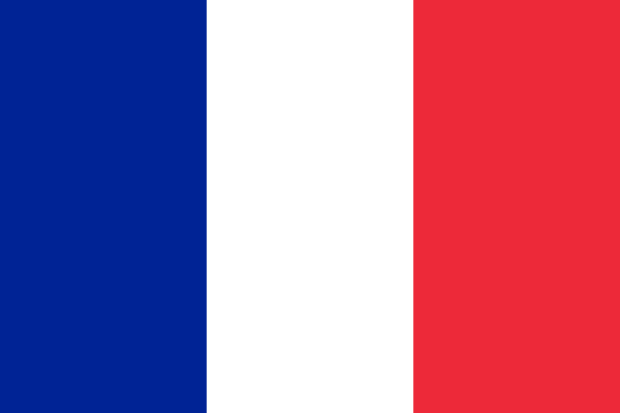
Flag is available in resolutions
| Icon 88x59 |  |
| Icon 32x21 |  |
France
France: A Tapestry of History, Culture, and Innovation
France, officially the French Republic, stands as a beacon of Western civilization, a nation whose influence has resonated across continents and through centuries. From its storied past, marked by revolutions and empires, to its vibrant present, characterized by a rich cultural heritage, economic prowess, and a commitment to its democratic ideals, France offers a compelling narrative. Its geographical diversity, encompassing rugged mountains, fertile plains, and a captivating coastline, further enriches its identity, providing a breathtaking backdrop for its ancient cities and picturesque countryside. The French people, known for their passion for art, gastronomy, and intellectual discourse, form a dynamic and multifaceted society, constantly evolving while deeply rooted in tradition.
The demographic landscape of France is as varied as its terrain. With a population exceeding 67 million people, it is one of the most populous countries in Europe. The French population is characterized by a relatively high life expectancy and a fertility rate that has, in recent decades, been among the highest in the European Union, contributing to a steady population growth. Paris, the capital and largest city, is a global metropolis, a hub of culture, finance, and fashion, attracting millions of residents and tourists alike. Beyond the capital, France boasts a network of vibrant cities, each with its own distinct character and economic importance, from the industrial heartland of Lyon to the historic port of Marseille and the renowned wine regions of Bordeaux and Burgundy. The French population is also increasingly diverse, with a significant proportion of its citizens having origins from former French colonies in Africa, Asia, and the Caribbean, adding a rich mosaic of cultures and traditions to the national fabric. This diversity is reflected in French society, contributing to its dynamic social and cultural evolution.
The history of France is a grand epic, a saga of kings, revolutionaries, artists, and thinkers who have shaped not only the nation but the course of world history. Its origins can be traced back to the ancient Gallic tribes, who were later conquered by the Roman Empire. Following the decline of Rome, the Franks, a Germanic tribe, established a powerful kingdom, from which France derives its name. The medieval period saw the rise of powerful monarchs, the construction of magnificent cathedrals, and the development of a distinct French culture. The Hundred Years War against England, though tumultuous, forged a stronger sense of national identity. The Renaissance brought an explosion of art, literature, and scientific inquiry, with figures like Leonardo da Vinci finding patronage in French courts. The 18th century was a watershed moment with the French Revolution, a seismic upheaval that overthrew the monarchy, championed the ideals of liberty, equality, and fraternity, and profoundly influenced political thought across the globe. Napoleon Bonaparte, a product of the Revolution, rose to power, conquering much of Europe and spreading French legal and administrative reforms. The 19th and 20th centuries were marked by further political transformations, including the establishment of the Third, Fourth, and Fifth Republics, two devastating World Wars, and Frances pivotal role in the formation of the European Union. Throughout these periods, France has consistently been at the forefront of intellectual and artistic movements, from the Enlightenment to Surrealism, solidifying its reputation as a cradle of culture and ideas.
Geographically, France is a land of remarkable contrasts and beauty. It is the largest country in Western Europe, boasting a diverse topography that ranges from the snow-capped peaks of the Alps and the Pyrenees in the south to the rolling hills and fertile plains of the north and west. The country is crisscrossed by major river systems, including the Seine, Loire, Rhône, and Garonne, which have historically served as vital arteries for trade and transportation. Frances extensive coastline stretches along the Atlantic Ocean, the English Channel, and the Mediterranean Sea, offering picturesque beaches, dramatic cliffs, and bustling port cities. The island of Corsica, situated in the Mediterranean, adds another dimension to Frances geographical richness, with its rugged mountains and unique cultural heritage. The varied climate, from oceanic in the west to continental in the east and Mediterranean in the south, supports a wide array of agricultural production, from wheat and corn to olives and grapes, contributing to Frances renowned culinary traditions. This geographical diversity not only shapes the landscape but also influences the regional identities and economies of France.
The French economy is one of the worlds largest and most diversified, characterized by a strong industrial base, a thriving services sector, and a significant agricultural output. France is a global leader in industries such as aerospace, automotive manufacturing, luxury goods, pharmaceuticals, and cosmetics. The country’s commitment to innovation and research and development fuels its competitiveness in these high-tech sectors. The services sector, which accounts for the majority of employment and GDP, encompasses finance, tourism, retail, and telecommunications. France is a major agricultural producer, renowned for its high-quality wines, cheeses, and other agricultural products, which are exported worldwide. The French government plays an active role in the economy, maintaining a robust social welfare system and investing in infrastructure and education. The countrys strategic location within the European Union provides access to a vast single market, further bolstering its economic strength. Despite economic challenges and global competition, France remains a key player in the international economic arena, with a strong emphasis on sustainable development and social equity.
France is a treasure trove of tourist attractions, drawing millions of visitors each year who come to experience its unparalleled blend of history, art, culture, and natural beauty. Paris, the quintessential City of Love and Light, is a must-see destination, boasting iconic landmarks such as the Eiffel Tower, the Louvre Museum, Notre Dame Cathedral, and the Arc de Triomphe. The citys charming streets, world-class museums, and vibrant nightlife offer an unforgettable experience. Beyond Paris, Frances diverse regions offer a wealth of attractions. The Loire Valley is famous for its magnificent châteaux, each with its own unique history and architectural splendor. The French Riviera, with its glamorous resorts like Nice, Cannes, and Monaco, attracts those seeking sun, sea, and sophistication. The historic regions of Normandy and Brittany offer a glimpse into Frances medieval past, with stunning abbeys, dramatic coastlines, and charming fishing villages. The wine regions of Bordeaux, Burgundy, and Champagne are pilgrimage sites for oenophiles, offering wine tastings and tours of picturesque vineyards. For those seeking natural beauty, the French Alps provide opportunities for skiing, hiking, and breathtaking mountain vistas, while the rugged landscapes of Provence and the Dordogne offer a glimpse into rural French life. From ancient Roman ruins to avant-garde art galleries, from bustling markets to serene countryside vistas, France offers a diverse and enriching travel experience for every kind of traveler.
Information about France
The information comes from the publication CIA The World Factbook.
Automated text translation, excuse errors, please!
Country France is situated in a location / continent Europe. France has an area of 643 801 km2 and 65 630 692 residents. The highest point has a height 4 807 above sea level. and it is called Mont Blanc. The lowest point is located at the level of -2 above sea level and it is named Rhone River delta. System of government is republic.The capital city is Paris. France has the international abbreviation FR.
France - economy
Total gross domestic product (GDP) is 2 246 000 000 000 $. Total gross domestic product per capita in purchasing power parity is 35 600 $. GDP grows by 1.70 % a year. Inflation (consumer price index) is equal to 2.30 % a year. France have 29 610 000 working-age population (from a total population 65 630 692 people). Unemployment is at 9.30 %. France issued 3.50 % GDP to healt care and 2,60 % GDP to army. The public debt of the country is 84.70 % GDP. The total amount of foreign debt is 5 633 000 000 000 USD.
France - demography
As suggested above, France has 65 630 692 people. Population growth is in the amount 0.50 % per year. Number of children born per 1000 population per year is 12.72.Every mother has average 2.08 children. The infant mortality rate is 3.37 and maternal mortality 8.00 deaths per 100,000 births. Average estimated life expectancy makes 81.46 years. Mortality is 8.85 people per 1000 population per year.
France - transport and telecommunications
France has 951 200 km of roads, 29 640 km of railway lines and 473 airports. The total length of waterways (navigable rivers, canals, etc.) is 8 501 km. There is registered 162 ships.
Number of active mobile phones (sim card) in the country France is 65 631 000. Number of active fixed telephone lines is 35 300 000. France has 45 262 000 internet users, who have the available 16 872 880 Internet connections. France has been assigned a domain first Choose range .fr.
France - energetics
France consumes a year 451 400 000 000 kWh of electricity. Annual electricity production is 539 000 000 000 kWh in power plants with a total installed electrical capacity 119 100 000 kW. France exports 66 600 000 000 kWh and imports 37 100 000 000 kWh of electricity per year Energy mix of power generation is as follows: fossil fuels: 20.5 %, nuclear energy: 53 %, renewable: 5.3 %, hydropower: 17.6 %. The country France is harvested annually 49 530 barrels of oil.
Keywords: telecommunications, Flag of France, France, flag, all flags, information, national flags, demography, Flags of countries, world countries, flags of countries in the world, transport, list of flags, energetics, list of countries, flag states, economy, politic.