Iceland
Flag of Iceland
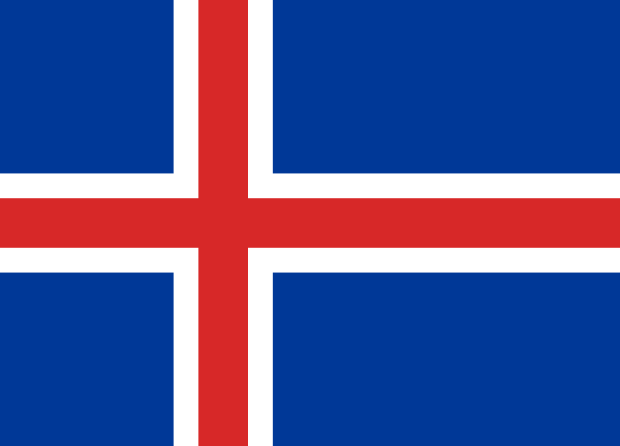
Flag is available in resolutions
| Icon 88x63 |  |
| Icon 32x23 |  |
Iceland
Iceland: Land of Fire and Ice
Iceland, officially the Republic of Iceland, is a Nordic island country situated in the North Atlantic Ocean. Its strategic location, straddling the Mid-Atlantic Ridge, has profoundly shaped its unique geology, its rich history, and its resilient culture. Often referred to as the „Land of Fire and Ice,“ Iceland is a place of stark contrasts, where active volcanoes coexist with vast glaciers, and where geothermal energy fuels a modern society. This captivating nation, though small in population, boasts a significant global presence due to its dramatic landscapes, its progressive social policies, and its thriving tourism industry. Understanding Iceland requires delving into its fascinating geography, its storied past, its diverse economy, and the captivating allure that draws millions of visitors to its shores each year.
The geography of Iceland is its most defining characteristic. It is a land sculpted by volcanic activity and glacial erosion, resulting in a landscape that is both breathtakingly beautiful and dynamically active. The island sits atop the Mid-Atlantic Ridge, a divergent tectonic plate boundary, which accounts for its high volcanic and seismic activity. This geological dynamism is evident in the numerous volcanoes, hot springs, geysers, and lava fields that dot the country. The most famous geothermal area is Haukadalur, home to the Strokkur geyser, which erupts every few minutes, sending a column of superheated water high into the air. Iceland is also home to numerous glaciers, covering approximately 11% of its landmass. Vatnajökull, the largest glacier in Europe, is a colossal ice cap that feeds into stunning glacial lagoons like Jökulsárlón, where icebergs calve from the glacier and drift serenely towards the sea. The coastline is deeply indented with fjords, particularly in the Westfjords region, offering dramatic cliffs and sheltered bays. Waterfalls are another ubiquitous and spectacular feature of Iceland’s natural landscape, with Gullfoss, Skógafoss, and Seljalandsfoss being among the most iconic. The interior of the country is largely uninhabited, a vast expanse of highlands characterized by volcanic deserts, mountains, and glacial rivers. This extreme environment has fostered a unique ecosystem, with resilient flora and fauna adapted to the harsh conditions. The climate, despite its northerly latitude, is moderated by the Gulf Stream, resulting in surprisingly mild winters and cool summers. However, the weather can be notoriously unpredictable, with rapid changes and strong winds being commonplace.
Iceland’s history is a testament to human endurance and adaptation in a challenging environment. The first settlers, believed to be Norse explorers and Irish monks, arrived in the late 9th century. The establishment of the Alingi, the Icelandic parliament, in 930 AD, makes it one of the oldest parliamentary institutions in the world. For centuries, Iceland was an independent commonwealth, governed by its own laws and traditions. However, in the 13th century, it fell under Norwegian rule, and later, in the 14th century, under Danish rule. This period, known as the “Oldenburg Period,” was marked by economic hardship, natural disasters, and outbreaks of disease. The struggle for independence was a long and arduous one, culminating in the granting of home rule in 1918 and full independence in 1944, when Denmark was occupied by Nazi Germany. The 20th century saw Iceland undergo significant social and economic transformation. The country embraced modernization, developing its fishing industry, which remains a cornerstone of its economy, and harnessing its abundant geothermal and hydroelectric resources. Iceland played a strategic role during World War II, being occupied by British and later American forces to prevent German control. Post-war, Iceland became a founding member of NATO, a decision that reflected its geopolitical importance. The Icelandic Sagas, a collection of medieval prose literature written in Old Norse, are a vital part of the nation’s cultural heritage, offering invaluable insights into the lives, beliefs, and social structures of its early inhabitants. These literary masterpieces continue to be studied and admired worldwide.
The population of Iceland is remarkably small, with approximately 370,000 inhabitants, making it one of the least densely populated countries in Europe. The majority of the population resides in the capital city of Reykjavík and its surrounding southwestern region. This concentration is largely due to the availability of infrastructure, employment opportunities, and the milder climate in this area. Icelanders are known for their strong sense of community, their resilience, and their deep connection to nature. The Icelandic language, a descendant of Old Norse, has remained remarkably pure, a testament to the island’s isolation. Education is highly valued, and literacy rates are among the highest in the world. The society is known for its egalitarianism, its progressive social policies, and its high standard of living. Iceland has consistently ranked high in global indices for gender equality, happiness, and human development. The welfare state is comprehensive, providing universal healthcare and education. Despite its small size, Iceland has a vibrant cultural scene, with a strong tradition in literature, music, and the arts. The country’s unique folklore, with its belief in elves and hidden people, adds another layer to its rich cultural tapestry.
Iceland’s economy has evolved significantly over the decades, moving from a primarily agrarian and fishing-based economy to a more diversified and service-oriented one. The fishing industry and fish processing remain crucial, accounting for a substantial portion of the country’s exports. However, Iceland has also become a leader in renewable energy. Its abundant geothermal and hydroelectric resources have allowed for the development of a highly sustainable energy sector. This has attracted energy-intensive industries, such as aluminum smelting, which is a significant export earner. The tourism industry has experienced explosive growth in recent decades, becoming a major driver of the economy. The dramatic landscapes, the unique natural phenomena, and the opportunities for adventure tourism have made Iceland a world-renowned destination. The country’s pristine natural beauty, from its glaciers and volcanoes to its hot springs and waterfalls, attracts visitors seeking both relaxation and adventure. The government has focused on sustainable tourism practices to preserve the delicate ecosystems. Technology and innovation are also playing an increasingly important role, with a growing number of tech startups and a focus on knowledge-based industries. The financial sector, though it experienced challenges during the 2008 global financial crisis, has also been a significant part of the economy. The resilience and adaptability of the Icelandic economy are notable, with the nation having navigated various economic downturns and emerged stronger.
The tourist attractions in Iceland are as diverse as its landscapes. Reykjavík, the northernmost capital city in the world, offers a charming blend of colorful buildings, vibrant nightlife, and a rich cultural heritage. The Hallgrímskirkja church, with its distinctive modernist design, offers panoramic views of the city. The Harpa Concert Hall, a stunning architectural masterpiece, hosts a variety of performances and events. Outside the capital, the Golden Circle is a popular tourist route, encompassing ingvellir National Park, a UNESCO World Heritage site where the North American and Eurasian tectonic plates are pulling apart; the Haukadalur geothermal area with its geysers; and the majestic Gullfoss waterfall. The Blue Lagoon, a geothermal spa renowned for its milky-blue, mineral-rich waters, is another must-visit destination, offering a unique and relaxing experience amidst a volcanic landscape. For those seeking adventure, glacier hiking, ice caving, and whale watching tours are popular activities. The South Coast is famous for its black sand beaches, such as Reynisfjara, with its dramatic basalt columns, and the stunning waterfalls of Skógafoss and Seljalandsfoss, the latter of which can be walked behind. The Northern Lights, or Aurora Borealis, are a spectacular natural phenomenon that draws many visitors during the winter months. The remote Westfjords offer a more rugged and less-traveled experience, with dramatic cliffs, charming fishing villages, and abundant birdlife. Iceland’s commitment to preserving its natural environment ensures that these breathtaking sights can be enjoyed by generations to come. The country’s unique blend of raw natural beauty, fascinating history, and welcoming culture makes it an unforgettable destination for any traveler.
Information about Iceland
The information comes from the publication CIA The World Factbook.
Automated text translation, excuse errors, please!
Country Iceland is situated in a location / continent Europe. Iceland has an area of 103 000 km2 and 313 183 residents. The highest point has a height 2 110 above sea level. and it is called Hvannadalshnukur. The lowest point is located at the level of 0 above sea level and it is named Atlantic Ocean. System of government is republic and the date of independence First December 1918. The capital city is Reykjavik. Iceland has the international abbreviation IC.
Iceland - economy
Total gross domestic product (GDP) is 12 570 000 000 $. Total gross domestic product per capita in purchasing power parity is 38 500 $. GDP grows by 3.10 % a year. Inflation (consumer price index) is equal to 4.00 % a year. Iceland have 175 700 working-age population (from a total population 313 183 people). Unemployment is at 7.40 %. Iceland issued 4.20 % GDP to healt care and 0,00 % GDP to army. The public debt of the country is 128.30 % GDP. The total amount of foreign debt is 124 500 000 000 USD.
Iceland - demography
As suggested above, Iceland has 313 183 people. Population growth is in the amount 0.67 % per year. Number of children born per 1000 population per year is 13.23.Every mother has average 1.89 children. The infant mortality rate is 3.18 and maternal mortality 5.00 deaths per 100,000 births. Average estimated life expectancy makes 81.00 years. Mortality is 7.02 people per 1000 population per year.
Iceland - transport and telecommunications
Iceland has 12 869 km of roads and 99 airports. There is registered 2 ships.
Number of active mobile phones (sim card) in the country Iceland is 344 100. Number of active fixed telephone lines is 189 500. Iceland has 301 600 internet users, who have the available 360 910 Internet connections. Iceland has been assigned a domain first Choose range .is.
Iceland - energetics
Iceland consumes a year 15 980 000 000 kWh of electricity. Annual electricity production is 16 770 000 000 kWh in power plants with a total installed electrical capacity 2 571 000 kW. Iceland exports 0 kWh and imports 0 kWh of electricity per year Energy mix of power generation is as follows: fossil fuels: 4.7 %, nuclear energy: 0 %, renewable: 22.4 %, hydropower: 72.9 %.
Keywords: list of flags, flag, demography, transport, flags of countries in the world, world countries, national flags, economy, energetics, Flags of countries, information, Flag of Iceland, list of countries, all flags, flag states, telecommunications, Iceland, politic.