Malta
Flag of Malta
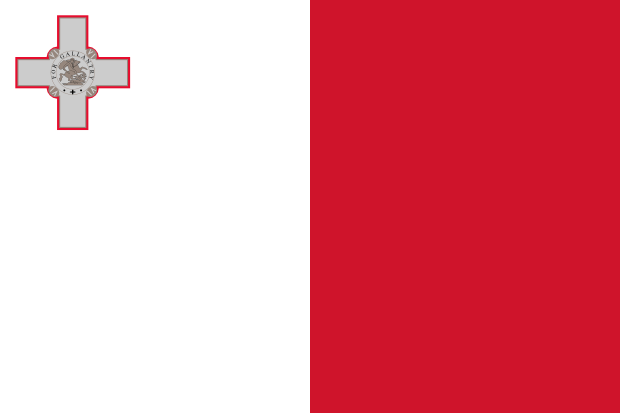
Flag is available in resolutions
| Icon 88x59 |  |
| Icon 32x21 |  |
Malta
Malta: An Archipelago of Enduring Charm and Rich Heritage
Nestled in the heart of the Mediterranean Sea, Malta, a captivating archipelago, stands as a testament to millennia of human history, strategic importance, and enduring cultural fusion. Comprising three main islands – Malta, Gozo, and Comino – this sovereign nation, though small in size, punches far above its weight in terms of its profound historical legacy, vibrant contemporary life, and breathtaking natural beauty. The Maltese archipelago, positioned equidistant from Sicily and North Africa, has long been a coveted prize, a crossroads of civilizations that has shaped its unique identity and left an indelible mark on its landscape and its people.
The Maltese population, numbering just over half a million, is characterized by a strong sense of national pride and a deep connection to their heritage. The official languages are Maltese, a Semitic language with significant Latin influences, and English, a legacy of its colonial past under British rule. This linguistic duality fosters a welcoming environment for international visitors and facilitates robust engagement in global commerce. The Maltese people are known for their warmth, hospitality, and strong family values. Life on the islands often revolves around community, with a rich tapestry of local festivals, religious celebrations, and social gatherings that punctuate the year. The archipelago has a high population density, particularly on the main island of Malta, leading to a compact and efficient urban landscape, yet one that is interspersed with charming villages and verdant agricultural areas. The educational system is well-developed, and there is a high literacy rate, reflecting a commitment to intellectual development and lifelong learning.
The history of Malta is a sprawling epic, a narrative etched in stone and whispered through the ages. Its strategic location has made it a focal point for empires and civilizations for over 7,000 years. The earliest inhabitants, dating back to around 5200 BC, left behind the awe-inspiring megalithic temples, such as those at aar Qim and Mnajdra, which predate Stonehenge and the Egyptian pyramids, standing as some of the oldest freestanding structures in the world. These enigmatic builders, whose exact identity remains a subject of scholarly debate, possessed remarkable architectural and astronomical knowledge. Following these prehistoric peoples, Malta was successively ruled by the Phoenicians, Carthaginians, Romans, Byzantines, and Arabs, each leaving their distinct imprint. The Knights of St. John, a military and religious order, arrived in 1530 and established a formidable presence, defending the islands against Ottoman sieges, most notably the Great Siege of 1565. They transformed Malta into a fortified bastion, evident in the magnificent architecture of Valletta, the capital city, and the imposing fortifications that still encircle its harbors. The Napoleonic Wars brought a brief French occupation, which was soon replaced by British rule in 1800. Under the British, Malta served as a crucial naval base and played a vital role in both World Wars, enduring heavy bombardment during the Second World War and earning the George Cross for its bravery. Malta gained its independence on September 21, 1964, and became a republic in 1974, eventually joining the European Union in 2004.
Geographically, Malta is a collection of low-lying islands in the central Mediterranean, south of Italy and east of Tunisia. The main island, Malta, is the largest and most populous. Gozo, to the north, is greener and more rural, offering a more tranquil escape. Comino, the smallest of the inhabited islands, is largely uninhabited save for a small number of residents and is renowned for its stunning Blue Lagoon, a popular destination for swimming and snorkeling. The islands are characterized by a rugged coastline, dotted with bays, cliffs, and natural harbors. The landscape is predominantly rocky, with fertile valleys and terranized fields where olives, grapes, and vegetables are cultivated. The climate is Mediterranean, with hot, dry summers and mild, wet winters, making it an attractive destination for tourism year-round. Despite its small size, the archipelago boasts a surprising diversity of natural landscapes, from the dramatic Dingli Cliffs on the western coast of Malta to the picturesque inlets of Gozo. The scarcity of freshwater has historically been a challenge, leading to the development of sophisticated water management systems, including desalination plants.
Maltas economy has undergone a significant transformation in recent decades. While historically reliant on agriculture and shipbuilding, it has diversified into a robust service-based economy. Tourism is a cornerstone, attracting millions of visitors annually who are drawn to its historical sites, beautiful beaches, and vibrant culture. The financial services sector has grown exponentially, with Malta becoming a reputable hub for international banking, insurance, and investment funds, benefiting from its favorable tax regime and skilled workforce. The i-gaming industry is another significant contributor, with numerous online gaming companies establishing their operations on the islands. The maritime sector, including shipping and ship repair, remains important, leveraging Maltas strategic location and extensive port facilities. The construction industry is also active, driven by both domestic demand and foreign investment in real estate. The country has successfully transitioned from a manufacturing base to a knowledge-based economy, embracing innovation and technological advancement.
The tourist attractions of Malta are as diverse as its history. Valletta, a UNESCO World Heritage site, is a living museum, its narrow streets lined with Baroque palaces, churches, and fortifications. St. Johns Co-Cathedral, with its opulent interior adorned with Caravaggio masterpieces, is a must-see. The Upper Barrakka Gardens offer panoramic views of the Grand Harbour, a natural deep-water harbor that has witnessed centuries of maritime activity. The ancient city of Mdina, the former capital, known as the Silent City, is a remarkably preserved medieval walled town, offering a glimpse into Maltas past. The prehistoric temples of aar Qim and Mnajdra, along with the Hypogeum of al Saflieni, an underground burial complex dating back to 3300 BC, provide an unparalleled insight into the islands ancient civilizations. Gozo offers a more relaxed pace, with the Cittadella in Victoria, a fortified citadel offering stunning views, and the Azure Window site (though the natural arch has collapsed, the area remains popular for diving and snorkeling). The Blue Lagoon on Comino is an idyllic spot for swimming in crystal-clear turquoise waters. Beyond the historical and natural wonders, Malta offers a lively cultural scene, with numerous festivals, concerts, and traditional village feasts throughout the year. The culinary scene is a delightful fusion of Mediterranean influences, with fresh seafood, rabbit dishes, and pastizzi (savory pastries) being local specialties.
In conclusion, Malta is a jewel of the Mediterranean, a place where ancient history seamlessly blends with modern dynamism. Its strategic position has shaped its past, its resilient people have preserved its heritage, and its forward-looking economy promises a bright future. From the awe-inspiring megalithic temples to the bustling streets of Valletta, from the tranquil landscapes of Gozo to the vibrant blue waters of the Blue Lagoon, Malta offers an unforgettable experience for every visitor, a journey through time and a celebration of enduring charm.
Information about Malta
The information comes from the publication CIA The World Factbook.
Automated text translation, excuse errors, please!
Country Malta is situated in a location / continent Europe. Malta has an area of 316 km2 and 409 836 residents. The highest point has a height 253 above sea level.. The lowest point is located at the level of 0 above sea level and it is named Mediterranean Sea. System of government is republic and the date of independence 21st September 1964. The capital city is Valletta. Malta has the international abbreviation MT.
Malta - economy
Total gross domestic product (GDP) is 10 890 000 000 $. Total gross domestic product per capita in purchasing power parity is 25 800 $. GDP grows by 2.10 % a year. Inflation (consumer price index) is equal to 2.70 % a year. Malta have 170 500 working-age population (from a total population 409 836 people). Unemployment is at 6.40 %. Malta issued 16.50 % GDP to healt care and 0,70 % GDP to army. The public debt of the country is 70.40 % GDP. The total amount of foreign debt is 48 790 000 000 USD.
Malta - demography
As suggested above, Malta has 409 836 people. Population growth is in the amount 0.36 % per year. Number of children born per 1000 population per year is 10.31.Every mother has average 1.53 children. The infant mortality rate is 3.65 and maternal mortality 8.00 deaths per 100,000 births. Average estimated life expectancy makes 79.85 years. Mortality is 8.72 people per 1000 population per year.
Malta - transport and telecommunications
Malta has 3 096 km of roads and 1 airports. There is registered 1 650 ships.
Number of active mobile phones (sim card) in the country Malta is 521 700. Number of active fixed telephone lines is 229 300. Malta has 240 600 internet users, who have the available 14 687 Internet connections. Malta has been assigned a domain first Choose range .mt.
Malta - energetics
Malta consumes a year 1 991 000 000 kWh of electricity. Annual electricity production is 2 168 000 000 kWh in power plants with a total installed electrical capacity 571 500 kW. Malta exports 0 kWh and imports 0 kWh of electricity per year Energy mix of power generation is as follows: fossil fuels: 99.7 %, nuclear energy: 0 %, renewable: 0.3 %, hydropower: 0.0 %.
Keywords: flag, demography, list of countries, telecommunications, transport, list of flags, economy, energetics, world countries, national flags, Flags of countries, flags of countries in the world, information, flag states, Flag of Malta, Malta, all flags, politic.