Czech Republic
Flag of Czech Republic
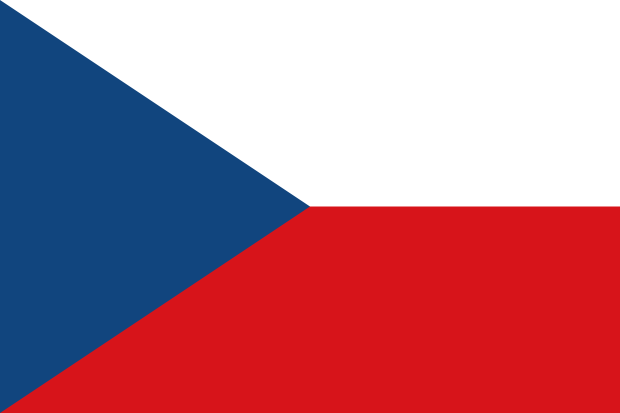
Flag is available in resolutions
| Icon 88x59 |  |
| Icon 32x21 |  |
Czech Republic
The Czech Republic: A Tapestry of History, Culture, and Natural Beauty
Nestled in the heart of Europe, the Czech Republic, or Česká republika, is a landlocked nation that boasts a rich and complex history, a vibrant culture, and a breathtaking array of natural landscapes. For centuries, this Bohemian realm has been a crossroads of European civilizations, a stage for epic battles, and a cradle of artistic and intellectual innovation. From its medieval castles to its bustling modern cities, the Czech Republic offers a captivating journey through time and a delightful immersion into the heart of Central Europe.
The Czech Republic’s population, currently numbering around 10.5 million, is predominantly of Slavic origin, with the Czechs forming the largest ethnic group. However, throughout its history, the territory has been a melting pot of various nationalities, including Germans, Slovaks, Poles, and Roma. This diverse heritage is reflected in the country’s multifaceted culture, its culinary traditions, and its linguistic nuances. The official language is Czech, a West Slavic tongue that shares similarities with Slovak and Polish. While the majority of the population identifies as irreligious or atheist, a significant portion adheres to Christianity, primarily Roman Catholicism. The Czech people are often characterized by their resilience, their dry sense of humor, and their deep appreciation for arts and literature. This affinity for intellectual pursuits is evident in the country’s high literacy rates and its numerous theaters, museums, and galleries. The social fabric is woven with threads of community spirit, often expressed through local festivals, traditional folk customs, and a strong sense of national pride.
The history of the Czech Republic is a saga of kingdoms, empires, and nations struggling for identity and independence. The roots of the Czech state can be traced back to the Great Moravian Empire in the 9th century, which laid the groundwork for a distinct Slavic culture and script, thanks to the missionaries Cyril and Methodius. The subsequent Bohemian Kingdom, under the Přemyslid dynasty, rose to prominence in the Middle Ages, becoming a powerful and influential entity within the Holy Roman Empire. Prague, its capital, flourished as a center of trade, learning, and art, attracting scholars and artisans from across Europe. The reign of Charles IV in the 14th century marked a golden age, with the founding of Charles University, the construction of iconic landmarks like the Charles Bridge, and the elevation of Prague to imperial status. However, this era of prosperity was followed by periods of turmoil, including the Hussite Wars in the 15th century, a religious reformation movement that challenged the authority of the Catholic Church and foreshadowed later religious conflicts. The Battle of White Mountain in 1620 proved to be a turning point, ushering in centuries of Habsburg rule, during which Czech national consciousness was suppressed but never extinguished. The 19th century witnessed a resurgence of Czech nationalism, fueled by a desire for self-determination and cultural revival. This aspiration culminated in the formation of Czechoslovakia in 1918, following the collapse of the Austro-Hungarian Empire after World War I. The interwar period saw the young republic flourish as a democratic nation, boasting a strong economy and a vibrant cultural scene. However, this independence was short-lived. The Munich Agreement of 1938 led to the dismemberment of Czechoslovakia by Nazi Germany, and the subsequent occupation plunged the country into the horrors of World War II. After the war, Czechoslovakia fell under Soviet influence, becoming a communist state in 1948. The Prague Spring of 1968, a brief period of liberalization, was brutally crushed by Warsaw Pact forces, reinforcing the iron grip of communist rule. It wasnt until the Velvet Revolution in 1989 that the nation peacefully reclaimed its freedom, leading to the dissolution of the communist regime and the establishment of a democratic government. In 1993, Czechoslovakia peacefully dissolved into two independent nations, the Czech Republic and Slovakia, a testament to the understanding and respect between the two peoples. Since then, the Czech Republic has become a member of NATO and the European Union, reintegrating itself into the broader European community.
Geographically, the Czech Republic is a land of diverse and picturesque landscapes. It is situated in Central Europe, bordered by Germany to the west and north, Poland to the northeast, Slovakia to the east, and Austria to the south. The country is characterized by rolling hills, fertile plains, and a network of rivers, the most significant being the Vltava (Moldau) and the Elbe (Labe). The western part of the country is dominated by the Bohemian Massif, a range of low mountains and highlands, including the Krkonoše (Giant Mountains), which form the highest peak, Sněžka, at 1,603 meters. These mountains offer excellent opportunities for hiking, skiing, and enjoying the pristine natural beauty. To the east lies the Moravian region, characterized by gentler terrain, vineyards, and the picturesque White Carpathians. The country’s climate is temperate, with warm summers and cold winters, making it an attractive destination throughout the year. The numerous national parks and protected areas, such as Bohemian Switzerland and Podyjí National Park, showcase the country’s rich biodiversity and offer breathtaking vistas of sandstone formations, dense forests, and meandering rivers.
The Czech Republic’s economy has undergone a remarkable transformation since the transition to a market economy. Historically, the region has been a hub of industrial activity, particularly in mining, metallurgy, and manufacturing. Today, the Czech Republic is a highly industrialized nation with a strong and diversified economy. Key sectors include automotive manufacturing, mechanical engineering, electronics, and chemicals. The country is a major producer of automobiles, with renowned brands like Škoda Auto having their roots here. The services sector is also growing, with tourism, finance, and information technology playing increasingly important roles. The nation has successfully attracted foreign investment, which has contributed significantly to its economic growth and modernization. The commitment to innovation and research and development is evident in its burgeoning high-tech industries. Furthermore, agriculture remains an important part of the economy, particularly in the fertile Moravian plains, where grains, sugar beets, and hops are cultivated. The Czech Republic is also a significant producer of beer, a beverage deeply ingrained in its national identity and a major export. The country’s strategic location in the heart of Europe has facilitated its integration into global supply chains and its role as a transit country for trade.
The Czech Republic is a treasure trove of tourist attractions, appealing to a wide range of interests. Prague, the capital city, is undoubtedly the crown jewel, often referred to as the City of a Hundred Spires. Its historical center, a UNESCO World Heritage site, is a mesmerizing labyrinth of cobblestone streets, Gothic cathedrals, Baroque palaces, and charming squares. Prague Castle, a sprawling complex overlooking the Vltava River, is the largest ancient castle in the world and a symbol of Czech statehood. The Charles Bridge, adorned with statues of saints, offers iconic views of the city, while the Old Town Square, with its Astronomical Clock, is a vibrant hub of activity. Beyond Prague, the country offers a wealth of historical and natural wonders. Český Krumlov, a picturesque medieval town in South Bohemia, is another UNESCO World Heritage site, renowned for its well-preserved castle and Renaissance architecture. The spa towns, such as Karlovy Vary (Carlsbad) and Mariánské Lázně (Marienbad), have been drawing visitors seeking relaxation and rejuvenation for centuries with their mineral springs and elegant architecture. The numerous castles and châteaux scattered throughout the country, like Karlštejn, Hluboká, and Lednice, offer glimpses into the country’s noble past and architectural grandeur. For nature lovers, the Bohemian Switzerland National Park, with its dramatic sandstone formations and hiking trails, provides an unforgettable experience. The Moravian region, with its rolling vineyards and charming wine cellars, offers a delightful journey for those who appreciate fine wine and traditional hospitality. The Czech Republic’s rich cultural heritage is also evident in its numerous festivals, traditional folk music performances, and its world-renowned glassmaking and puppet-making traditions. From the grandeur of its imperial past to the serenity of its natural landscapes, the Czech Republic invites visitors to discover its enduring charm and its captivating stories.
Information about Czech Republic
The information comes from the publication CIA The World Factbook.
Automated text translation, excuse errors, please!
Country Czech Republic is situated in a location / continent Europe. Czech Republic has an area of 78 867 km2 and 10 177 300 residents. The highest point has a height 1 602 above sea level. and it is called Snezka. The lowest point is located at the level of 115 above sea level and it is named Elbe. and the date of independence First January 1993. The capital city is Prague. Czech Republic has the international abbreviation EZ.
Czech Republic - economy
Total gross domestic product (GDP) is 288 600 000 000 $. Total gross domestic product per capita in purchasing power parity is 27 400 $. GDP grows by 1.70 % a year. Inflation (consumer price index) is equal to 1.90 % a year. Czech Republic have 5 410 000 working-age population (from a total population 10 177 300 people). Unemployment is at 8.50 %. Czech Republic issued 7.60 % GDP to healt care .The public debt of the country is 40.70 % GDP. The total amount of foreign debt is 101 600 000 000 USD.
Czech Republic - demography
As suggested above, Czech Republic has 10 177 300 people. Population growth is in the amount -0.13 % per year. Number of children born per 1000 population per year is 8.62.Every mother has average 1.27 children. The infant mortality rate is 3.70 and maternal mortality 5.00 deaths per 100,000 births. Average estimated life expectancy makes 77.38 years. Mortality is 10.94 people per 1000 population per year.
Czech Republic - transport and telecommunications
Czech Republic has 127 797 km of roads, 9 469 km of railway lines and 128 airports. The total length of waterways (navigable rivers, canals, etc.) is 664 km. There is registered 1 ships.
Number of active mobile phones (sim card) in the country Czech Republic is 12 810 000. Number of active fixed telephone lines is 2 202 000. Czech Republic has 6 681 000 internet users, who have the available 4 140 000 Internet connections. Czech Republic has been assigned a domain first Choose range .cz.
Czech Republic - energetics
Czech Republic consumes a year 58 880 000 000 kWh of electricity. Annual electricity production is 80 440 000 000 kWh in power plants with a total installed electrical capacity 18 320 000 kW. Czech Republic exports 21 590 000 000 kWh and imports 6 642 000 000 kWh of electricity per year Energy mix of power generation is as follows: fossil fuels: 60 %, nuclear energy: 20.9 %, renewable: 7.1 %, hydropower: 5.7 %. The country Czech Republic is harvested annually 9 162 barrels of oil.
Keywords: all flags, flag states, demography, transport, telecommunications, Czech Republic, list of flags, energetics, Flags of countries, flag, flags of countries in the world, list of countries, Flag of Czech Republic, economy, information, world countries, national flags, politic.