Germany
Flag of Germany
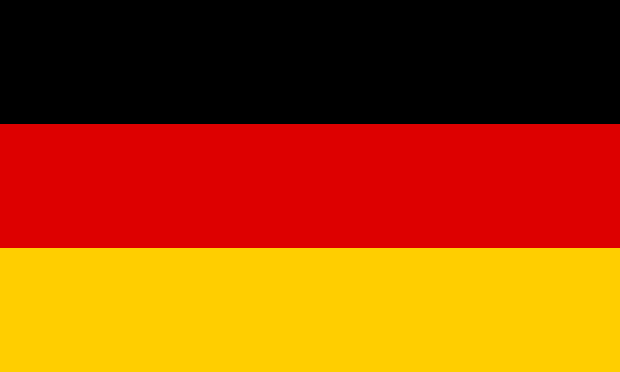
Flag is available in resolutions
| Icon 88x53 |  |
| Icon 32x19 |  |
Germany
Germany: A Nation Forged in History, Thriving in Modernity
Germany, officially the Federal Republic of Germany, stands as a cornerstone of Europe, a nation whose rich tapestry of history, diverse geography, and robust economy has profoundly shaped the continent and the world. Its story is one of division and reunification, of innovation and resilience, and of a deep commitment to democratic values and international cooperation. From the imposing peaks of the Bavarian Alps to the windswept coasts of the North Sea, Germany offers a captivating blend of natural beauty, historical significance, and vibrant modern culture, making it a perennial destination for travelers and a significant player on the global stage.
The German population, numbering over 83 million, is a testament to the country’s historical migrations and its welcoming policies in recent decades. While predominantly German, the nation has become increasingly diverse, with a significant presence of individuals from across the globe, particularly from Turkey, Syria, and other European nations. This demographic evolution has enriched the cultural landscape, bringing new perspectives, cuisines, and traditions to German society. The German people are often characterized by their industriousness, efficiency, and a strong sense of community. While stereotypes of sternness may persist, a closer look reveals a warmth and a deep appreciation for culture, arts, and the simple pleasures of life. The country boasts a high standard of living, with excellent healthcare, education, and social welfare systems, contributing to a generally high level of public satisfaction and well-being. The federal structure of Germany, comprising 16 states (Länder), fosters a sense of regional identity and pride, with each state offering its unique dialect, customs, and attractions. This decentralization allows for a dynamic interplay between national unity and regional diversity, a key element of Germanys successful governance.
Germany’s history is a complex and often tumultuous narrative, stretching back millennia. From the ancient Germanic tribes who resisted Roman expansion to the Holy Roman Empire, a loose confederation of states that dominated Central Europe for centuries, the land that is now Germany was a stage for significant historical developments. The Reformation, initiated by Martin Luther in the 16th century, had a profound and lasting impact on religious, political, and cultural life across Europe. The unification of Germany in 1871 under Otto von Bismarck marked a pivotal moment, creating a powerful new nation-state that would soon exert considerable influence on the international scene. The 20th century, however, brought immense suffering and devastation. Two World Wars, initiated by Germany, left the nation in ruins and forever altered the global order. The Holocaust, the systematic genocide of European Jews by the Nazi regime, remains a dark stain on human history and a constant reminder of the dangers of intolerance and unchecked extremism. The subsequent division of Germany into West and East Germany after World War II, a stark symbol of the Cold War, lasted for over four decades. The fall of the Berlin Wall in 1989 and the subsequent reunification in 1990 were moments of immense joy and hope, signifying the triumph of freedom and self-determination. This period of division and reunification has deeply shaped Germany’s national identity and its commitment to peace and reconciliation.
Geographically, Germany presents a remarkable diversity of landscapes. The north is characterized by the flat plains of the North German Plain, bordering the North Sea and the Baltic Sea, offering picturesque coastal towns and islands. Moving south, the terrain gradually rises, transitioning into rolling hills and fertile river valleys, such as those of the Rhine, Danube, and Elbe rivers, which have been vital arteries of trade and settlement for centuries. Further south still, Germany reaches its mountainous southern border, dominated by the majestic Bavarian Alps, offering breathtaking vistas, pristine lakes, and opportunities for winter sports. The Black Forest (Schwarzwald) in the southwest is renowned for its dense coniferous forests, charming villages, and the cuckoo clock tradition. Germany is also home to numerous national parks and nature reserves, protecting its rich biodiversity and offering sanctuary for a variety of flora and fauna. The Rhine Valley, in particular, is a UNESCO World Heritage site, celebrated for its cultural landscape, its historic castles, and its world-renowned vineyards.
The German economy is a global powerhouse, consistently ranking among the largest in the world. It is characterized by a strong emphasis on exports, particularly in the automotive, mechanical engineering, chemical, and pharmaceutical sectors. German companies, such as Volkswagen, BMW, Mercedes-Benz, Siemens, and Bayer, are recognized worldwide for their quality, innovation, and reliability. The countrys commitment to research and development, coupled with a highly skilled workforce and a stable political environment, has fostered a robust and competitive industrial base. Germany is also a leader in renewable energy technologies, with significant investments in wind and solar power, reflecting a growing commitment to sustainability and environmental responsibility. The Mittelstand, a sector of small and medium-sized enterprises, forms the backbone of the German economy, often specializing in niche markets and driving innovation. The country’s social market economy model aims to balance free-market principles with social welfare provisions, ensuring a strong social safety net and a relatively equitable distribution of wealth.
Germany’s tourist attractions are as varied as its landscapes and history. For history buffs, Berlin, the capital city, offers a compelling journey through time, from the remnants of the Berlin Wall and Checkpoint Charlie to the Brandenburg Gate and the Reichstag building, symbolizing both past struggles and present democracy. The historic city of Munich, the capital of Bavaria, is famous for its annual Oktoberfest, its magnificent palaces, and its proximity to the stunning Neuschwanstein Castle, a fairytale-like structure that inspired Walt Disney. Cologne, with its magnificent Gothic cathedral, is a vibrant city on the Rhine, known for its lively carnival celebrations. Dresden, often called the “Florence on the Elbe,” has been painstakingly rebuilt after wartime destruction, showcasing its baroque splendor. Medieval towns like Rothenburg ob der Tauber and Heidelberg, with its romantic castle ruins, transport visitors to another era. The scenic Romantic Road, a themed tourist route, winds through picturesque villages and castles, offering a quintessential German experience. For nature lovers, the Bavarian Alps provide unparalleled opportunities for hiking, skiing, and enjoying breathtaking mountain scenery. The Baltic coast, with its sandy beaches and charming seaside resorts, offers a different, yet equally appealing, coastal experience. Germany’s excellent public transportation system, including its efficient train network, makes it easy for visitors to explore its diverse regions and discover its many treasures. From the bustling metropolises to the tranquil countryside, Germany continues to captivate visitors with its enduring charm, its rich heritage, and its forward-looking spirit.
Information about Germany
The information comes from the publication CIA The World Factbook.
Automated text translation, excuse errors, please!
Country Germany is situated in a location / continent Europe. Germany has an area of 357 022 km2 and 81 305 856 residents. The highest point has a height 2 963 above sea level. and it is called Zugspitze. The lowest point is located at the level of -3,54 above sea level and it is named Neuendorf bei Wilster. System of government is Federal Republic and the date of independence 18th January 1871. The capital city is Berlin. Germany has the international abbreviation GM.
Germany - economy
Total gross domestic product (GDP) is 3 139 000 000 000 $. Total gross domestic product per capita in purchasing power parity is 38 400 $. GDP grows by 3.10 % a year. Inflation (consumer price index) is equal to 2.30 % a year. Germany have 43 620 000 working-age population (from a total population 81 305 856 people). Unemployment is at 6.00 %. Germany issued 8.10 % GDP to healt care and 1,50 % GDP to army. The public debt of the country is 81.80 % GDP. The total amount of foreign debt is 5 624 000 000 000 USD.
Germany - demography
As suggested above, Germany has 81 305 856 people. Population growth is in the amount -0.20 % per year. Number of children born per 1000 population per year is 8.33.Every mother has average 1.41 children. The infant mortality rate is 3.51 and maternal mortality 7.00 deaths per 100,000 births. Average estimated life expectancy makes 80.19 years. Mortality is 11.04 people per 1000 population per year.
Germany - transport and telecommunications
Germany has 644 480 km of roads, 41 981 km of railway lines and 541 airports. The total length of waterways (navigable rivers, canals, etc.) is 7 467 km. There is registered 427 ships.
Number of active mobile phones (sim card) in the country Germany is 108 700 000. Number of active fixed telephone lines is 51 800 000. Germany has 65 125 000 internet users, who have the available 20 416 000 Internet connections. Germany has been assigned a domain first Choose range .de.
Germany - energetics
Germany consumes a year 509 500 000 000 kWh of electricity. Annual electricity production is 576 800 000 000 kWh in power plants with a total installed electrical capacity 146 900 000 kW. Germany exports 57 920 000 000 kWh and imports 42 960 000 000 kWh of electricity per year Energy mix of power generation is as follows: fossil fuels: 50.5 %, nuclear energy: 13.9 %, renewable: 28.3 %, hydropower: 2.7 %. The country Germany is harvested annually 100 300 barrels of oil.
Keywords: flag, demography, flags of countries in the world, transport, national flags, Germany, flag states, list of flags, economy, Flag of Germany, world countries, all flags, information, Flags of countries, telecommunications, list of countries, energetics, politic.